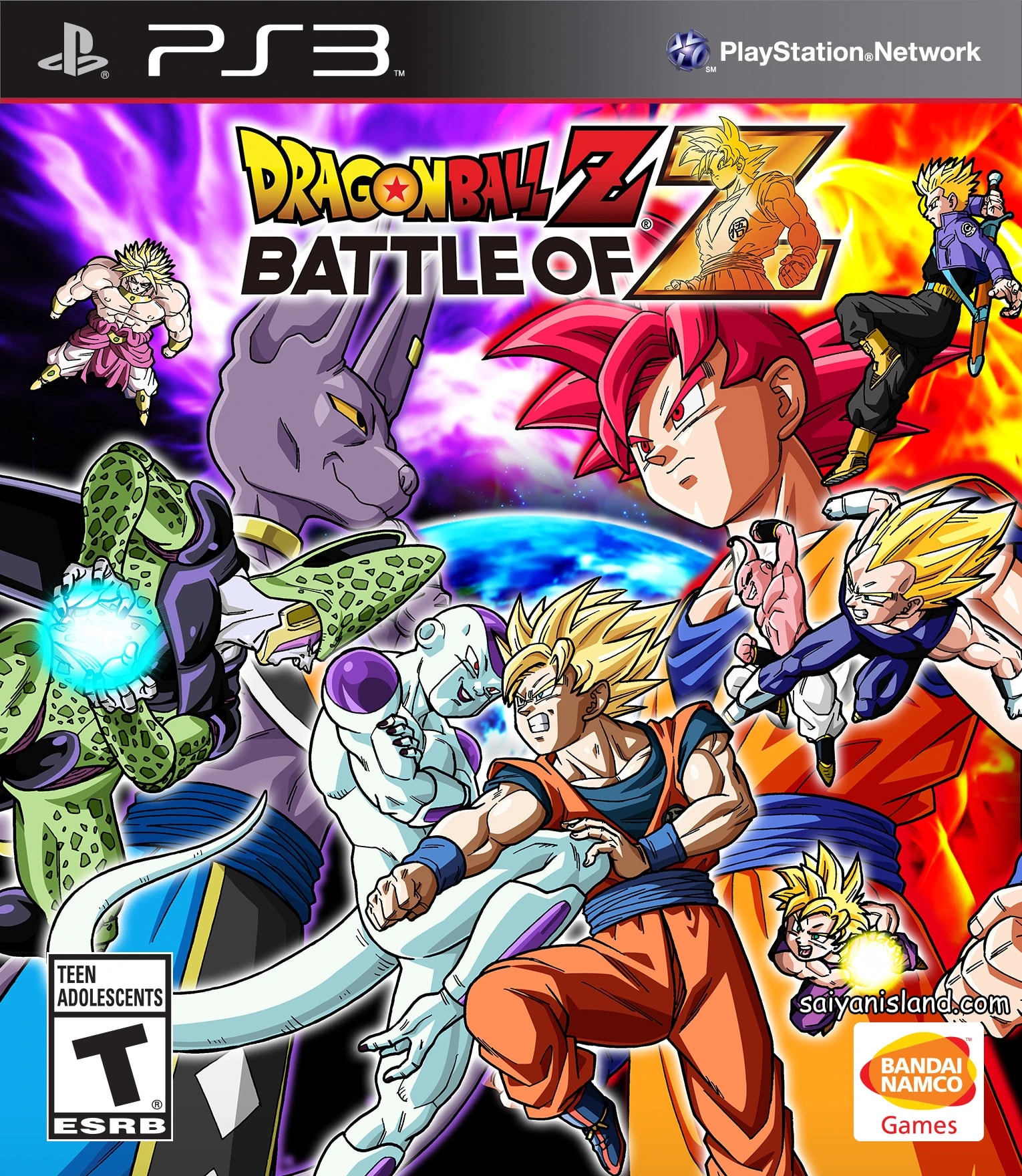
Dragon Ball Z: Battle of Z
GameDragon Ball Z: Battle of Z is a fighting video game based on the Dragon Ball Z series and released by Bandai Namco for , , and (in digital format only outside of Japan and Australia)
Gameplay
Dragon Ball Z: Battle of Z is a team-based action fighting game published by Bandai Namco for PlayStation 3, Xbox 360, and PlayStation Vita. The game centers on four-versus-four battles in which players control one member of a team sharing a collective GENKI Gauge. This energy meter charges during combat and, once full, enables ultimate attacks that any teammate can choose to execute. The cooperative structure encourages players to coordinate actions such as Synchro Rush, which chains teammates' strikes into a continuous assault, and Meteor Chain, in which partners follow each other's blows in rapid succession before the opponent can counter.
Up to four players can join cooperative sessions online to complete missions together, and the game also supports online competitive multiplayer and PS Vita ad-hoc connections. A notable multiplayer restriction prevents two players from sharing a single console, a design choice the developers attributed to maintaining full-screen graphical quality for each participant. The card system adds a progression layer: players earn ability-boosting cards from missions, with harder missions dropping higher-value cards ranging from +10 to +50. A rare +100 card is available through weekly bonuses or premium point purchases, providing the most significant single-item power boost in the game.
The roster exceeds 70 characters, with each transformation listed as a separate selectable fighter rather than an in-battle transition. Giant boss characters including Great Ape Vegeta, Meta-Cooler Core, and Hirudegarn appear in team battles, scaling up the scope of encounters beyond standard one-on-one fights. Single Mission mode offers 60 missions across faction routes for both the Z Fighters and their antagonists, including a special history scenario centered on the Saiyan bloodline.


Story and Content
Battle of Z structures its narrative across multiple saga routes, covering the Saiyan, Frieza, Cell, and Majin Buu storylines from both the hero and villain perspectives. The original manga and anime conflicts are re-framed as team engagements: the climactic battle against Frieza on Namek, for example, places Piccolo, Gohan, and Krillin alongside Goku for the final confrontation rather than isolating Goku as the sole fighter. These modifications serve the four-player team format while preserving the dramatic beats of the source material.
The game also includes a Saiyan-specific alternate history scenario that imagines different outcomes for the warrior race, and a separate encounter pitting players against a combined team drawn from Goku's entire family tree, including Gohan, Goten, Raditz, and Bardock. These what-if scenarios expand the replay value of Single Mission mode beyond straightforward saga reenactments.
Several DLC characters were tied to pre-order and day-one offers. In North America, Super Saiyan Bardock was available through GameStop pre-orders and Super Vegito through Best Buy. A special Goku Edition collector's release for PlayStation 3 and Xbox 360 in Europe included the full game, a developer art book, and an exclusive Super Saiyan Goku figurine alongside the Naruto Sage Mode costume DLC for Goku.
Reception and Context
Battle of Z arrived as Bandai Namco consolidated its position as the primary publisher of Dragon Ball games in Western markets. The game's visual and mechanical style drew comparisons to Dragon Ball: Zenkai Battle, the arcade title that served as a direct predecessor to its team-combat framework. Critics acknowledged the novelty of the cooperative four-player structure but noted that the restriction barring two players from sharing a console limited the accessibility of local multiplayer.
The game occupies a distinctive niche in the Dragon Ball fighting catalog as one of the few entries to place team coordination at the center of its design rather than treating multiplayer as a secondary mode. While it did not become a defining title in the franchise's competitive history, it offered an experience shaped around shared action that found an audience among players who valued cooperative play over the traditional one-on-one format that characterized most Dragon Ball fighting games of its era.
Related Reading
See all
Chiaotzu is Chi-Chi's Boo: Why the Guy Who Never Wins Finally Wins
The least likely man in Dragon Ball just took the biggest win in our catalog. The story behind our R&B record about Chiaotzu, Chi-Chi, and a house Goku is never in....

Krillin's on the Tinder: How the Ultimate Short King Survived the Height Filter
Tinder built a height filter. Dragon Ball built a five foot legend. What happened when we sent the ultimate short king into the modern dating hellscape....

Frequently Asked Questions
What is Dragon Ball Z: Battle of Z?
Dragon Ball Z: Battle of Z is a team-based action fighting game published by Bandai Namco for PlayStation 3, Xbox 360, and PlayStation Vita. The game centers on four-versus-four battles in which players control one member of a team sharing a collective GENKI Gauge. This energy meter charges during combat and, once full, enables ultimate attacks that any teammate can choose to execute.
When was Dragon Ball Z: Battle of Z released?
Dragon Ball Z: Battle of Z was released in 2014. It was published by Bandai Namco.
Who published Dragon Ball Z: Battle of Z?
Dragon Ball Z: Battle of Z was published by Bandai Namco. It was released in 2014.
What platforms is Dragon Ball Z: Battle of Z available on?
Dragon Ball Z: Battle of Z was released on PlayStation 3, PlayStation Vita, PlayStation, Xbox 360, and Xbox. The game first launched in 2014.
Which Dragon Ball era does Dragon Ball Z: Battle of Z tie into?
Dragon Ball Z: Battle of Z ties into the Dragon Ball Z era of the franchise. Dragon Ball Z: Battle of Z is a fighting video game based on the Dragon Ball Z series and released by Bandai Namco for, and (in digital format only outside of Japan and Australia)
Sources & Information
Looking for more on Dragon Ball Z: Battle of Z? The Dragon Ball Wiki on Fandom has a dedicated page with community notes.
View on FandomThis content is original writing by Daddy Jim Headquarters based on the Dragon Ball anime series, manga, and official materials. Episode and chapter references are cited where applicable.
Character and scene imagery on this site is original artwork by Daddy Jim Headquarters, not screenshots or licensed imagery. Official cover art is used on three types of pages for editorial commentary:
- Movie pages: theatrical posters and key visuals, credited to Toei Animation and Shueisha.
- Game pages: official box art, credited to Bandai Namco, Atari, and other publishers.
- Manga chapter pages: Jump Comics volume covers, credited to Shueisha and Akira Toriyama.
Browse our episode guides:
Official resources:
Help Us Keep This Wiki Accurate
Daddy Jim Headquarters maintains this encyclopedia. If you spot an error, a translation issue, or something that doesn't look right, let us know.