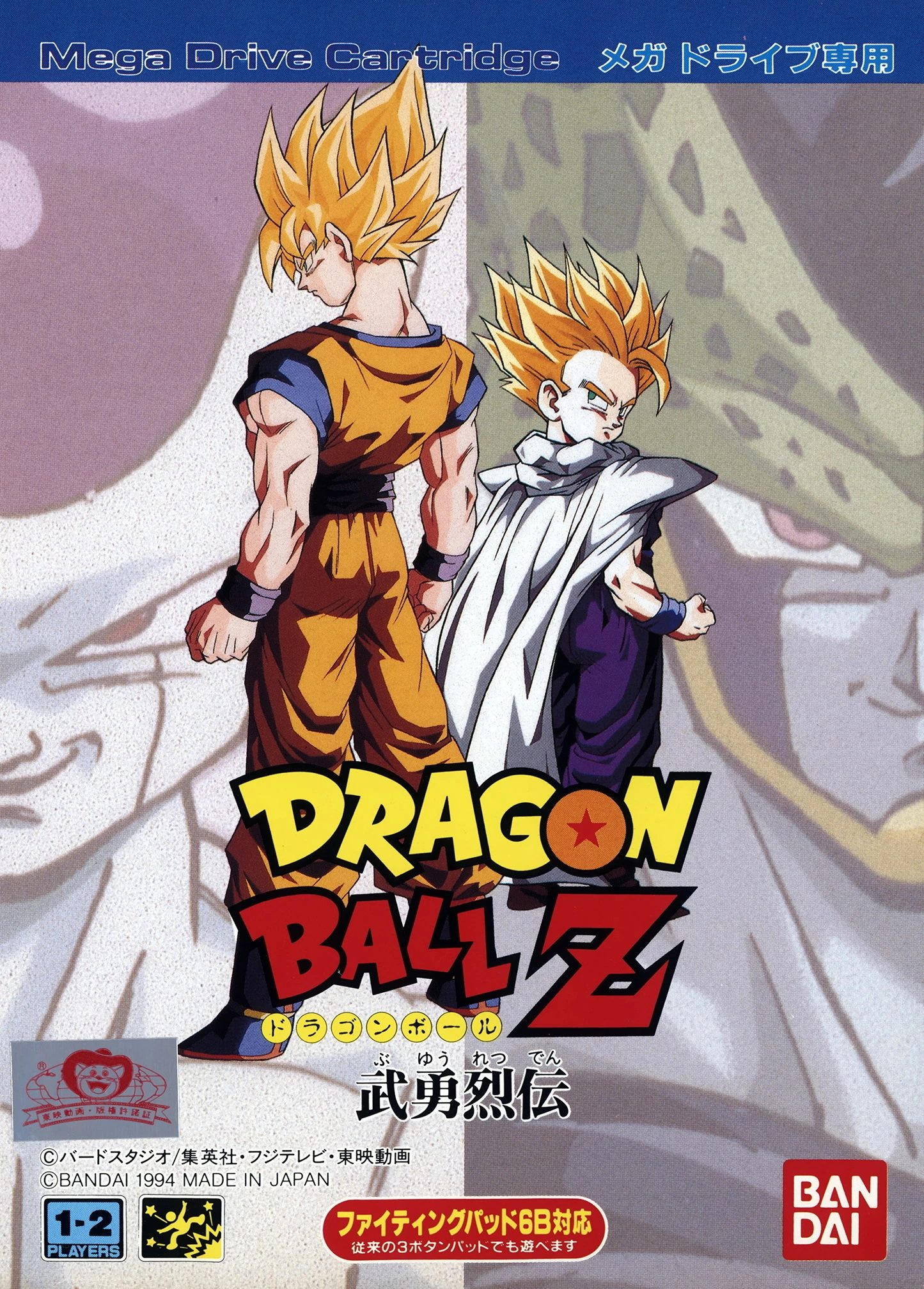
Dragon Ball Z: Buyū Retsuden
GameDragon Ball Z: Buyū Retsuden勇烈伝|Doragon Bōru Zetto Buyū Retsuden|lit. Dragon Ball Z: Violent Bravery Legend}} is a Dragon Ball Z fighting video game. It was released on April 1, 1994, in Japan for the Mega Drive. A French version of the game was also released in some European countries under the name Dragon Ball Z: L'appel Du Destin ("Dragon Ball Z: The Call of Destiny") in June 1994 and the Japanese version was also sold in Portugal, packaged with a regional converter (Mega Key III), but the game was never translated into English or released in America.
Gameplay
Dragon Ball Z: Buyu Retsuden is a 2D fighting game released for the Sega Mega Drive on April 1, 1994, in Japan. The game's mechanics and visual presentation align closely with the Butoden series released for the Super Famicom, carrying over a similar fighting style, sprite aesthetic, and structural approach to matches. Two fighters face off on a flat plane, executing punches, kicks, and special techniques drawn from the Dragon Ball Z anime. Each character's move set is built around their signature abilities from the series.
Eleven characters are playable: Super Saiyan Goku, Super Saiyan 2 Gohan, Piccolo, Super Saiyan Vegeta, Super Saiyan Future Trunks, Perfect Cell, Android 18, Krillin, Frieza in Final Form, Recoome, and Captain Ginyu. The selection spans both heroes and villains from the Frieza and Cell arcs, with most fighters appearing in their most powerful canonical states. Battle stages number nine and include locations drawn from the series: the World Martial Arts Tournament arena, rocky areas, the Hyperbolic Time Chamber, a mountain road, island terrain, and two Namek environments.
The story mode takes a loose, what-if approach to the Dragon Ball Z narrative rather than following the anime exactly. Android 18's scenario, for example, depicts her already married to Krillin, while Krillin's route has him defending her from Cell's absorption attempts. These divergences from the canonical timeline give each character's story path a distinct shape and encourage multiple playthroughs to see different narrative outcomes. A French localization titled Dragon Ball Z: L'appel Du Destin was released in several European countries in June 1994, making it one of the few Western localizations in this era of the franchise's gaming history.


Story and Setting
Buyu Retsuden draws its narrative framework from the latter portions of Dragon Ball Z, concentrating on the characters and conflicts of the Frieza and Cell sagas. The game's what-if framing allows each fighter's story to diverge from the events of the anime while using the same cast and setting as reference points. Krillin's path, in which he attempts to disable Android 18 before Cell can absorb her, runs directly counter to Android 18's own story in the same game, creating a mirrored set of perspectives on the same situation.
The Hyperbolic Time Chamber stage acknowledges one of the saga's most important training locations, while the Namek stages ground the game in the planet that served as the battleground for the series' first major escalation in power. The roster's concentration of Super Saiyan transformations reflects the importance of those power states to the Cell saga's dramatic arc, with both Goku and Gohan appearing at their respective Super Saiyan peaks.
The Japanese version was also sold in Portugal packaged with a regional Mega Key III converter, extending its availability beyond standard European distribution. The game was never translated into English or released in North America, limiting its audience primarily to Japanese and French-speaking players during its commercial lifespan.


Legacy
Buyu Retsuden holds a place in Dragon Ball gaming history as one of the only Dragon Ball Z fighting games released for the Sega Mega Drive, a platform that the franchise largely bypassed in favor of Nintendo and later Sony hardware. Its European release under the L'appel Du Destin title made it more accessible to French-speaking players than most Dragon Ball games of its era, and its mechanical similarity to the Butoden series gave it a familiar structure for players who had engaged with those Super Famicom releases.
The game is primarily remembered by collectors and franchise historians as a regional curiosity from an early period in Dragon Ball gaming, predating the international commercial breakthroughs of the Budokai and Budokai Tenkaichi series by nearly a decade. Its what-if storytelling approach, though modest in execution, anticipated a design choice that later Dragon Ball games would develop into a more substantial feature. Buyu Retsuden stands as a document of the franchise's reach into the European market during the 16-bit era.
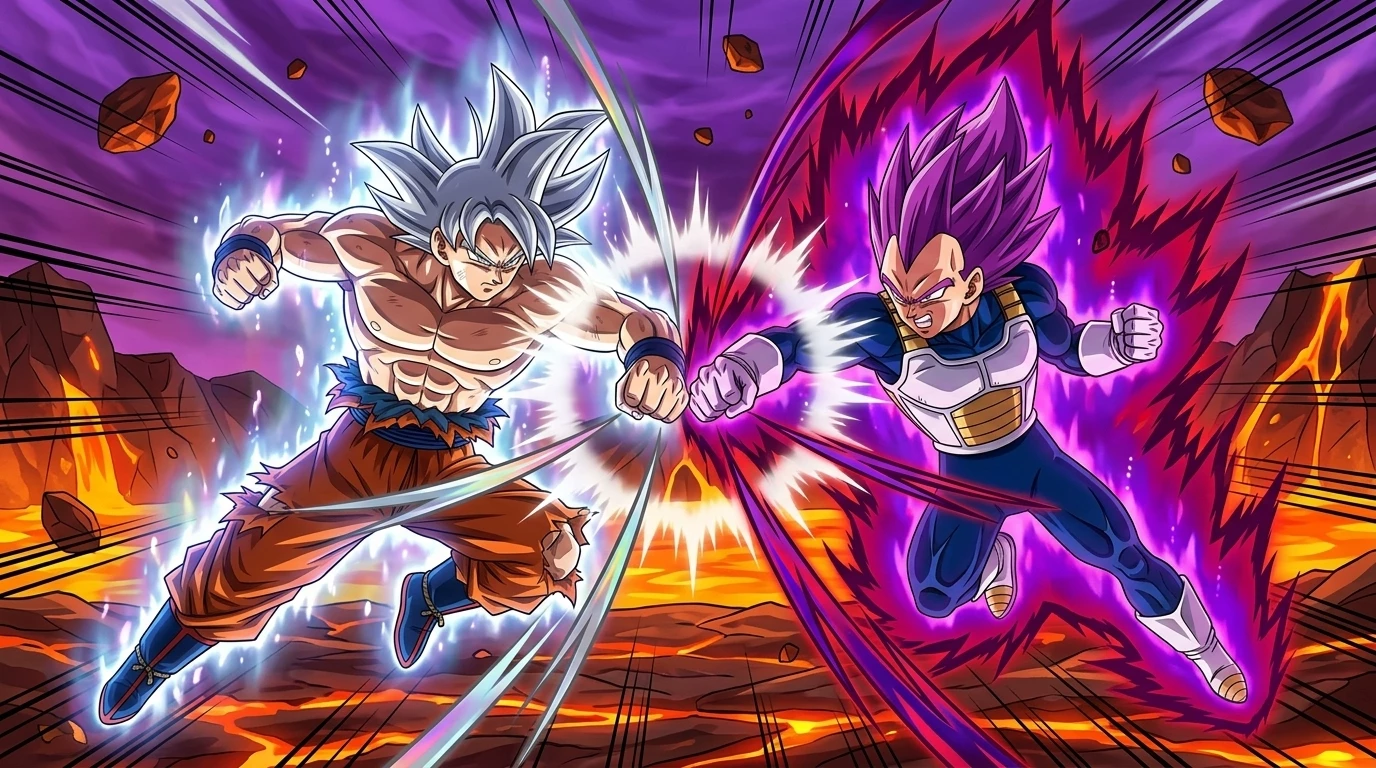
Sparking Zero May 26 Update Adds Demon World Stage and Reworks Transformation Healing
May 27, 2026Bandai Namco shipped a free Dragon Ball: Sparking Zero update on May 26, 2026 that introduces a new Demon World stage, overhauls transformation healing, and confirms the Daima Character Pack and Shallot DLC for release on June 27, 2026....
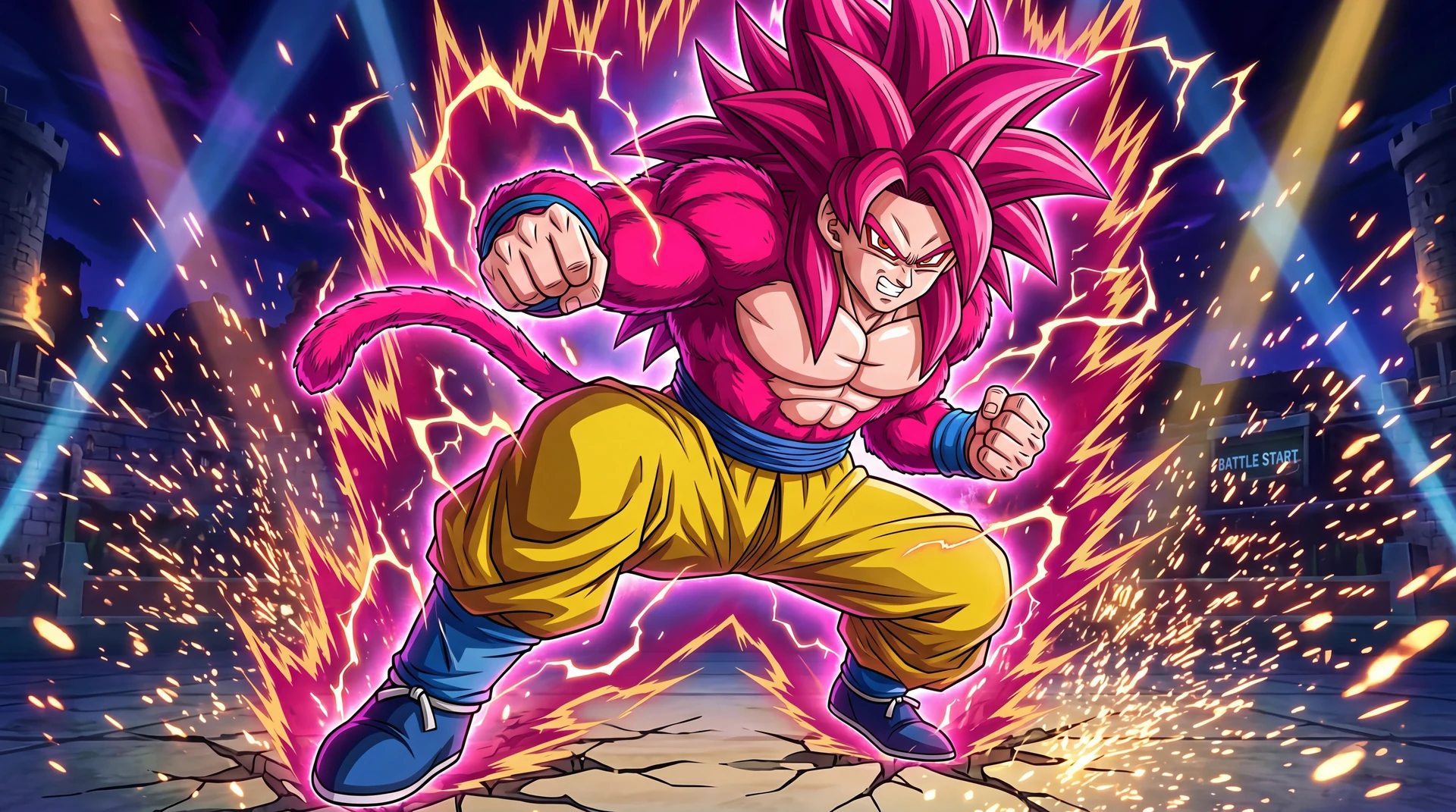
Dragon Ball FighterZ Adds Super Saiyan 4 Goku From Daima
May 25, 2026Dragon Ball FighterZ added Super Saiyan 4 Goku, the form featured in the Daima anime, as DLC on April 22, 2026. The 2018 fighting game is still getting new content nearly eight years on....
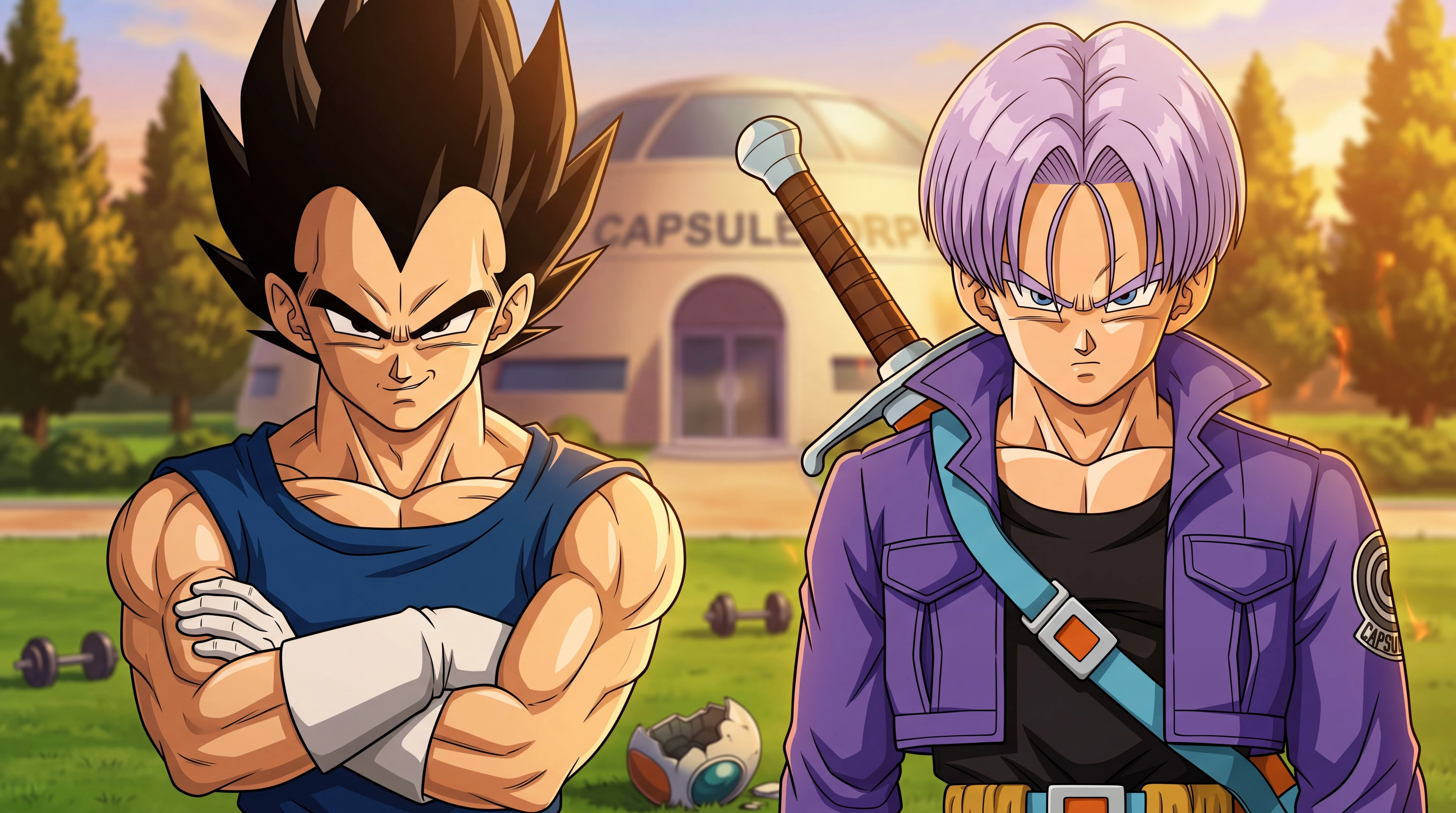
Dragon Ball Sparking Zero Super Limit-Breaking NEO DLC Adds 30 Plus Fighters for Summer 2026
Apr 20, 2026Bandai Namco and Spike Chunsoft unveiled the Super Limit-Breaking NEO expansion for Dragon Ball Sparking Zero at Battle Hour 2026. Summer 2026 release, 30 plus characters, four new stages, and a new solo mode....
Sources & Information
Looking for more on Dragon Ball Z: Buyū Retsuden? The Dragon Ball Wiki on Fandom has a dedicated page with community notes.
View on FandomThis content is original writing by Daddy Jim Headquarters based on the Dragon Ball anime series, manga, and official materials. Episode and chapter references are cited where applicable.
Character and scene imagery on this site is original artwork by Daddy Jim Headquarters, not screenshots or licensed imagery. Official cover art is used on three types of pages for editorial commentary:
- Movie pages: theatrical posters and key visuals, credited to Toei Animation and Shueisha.
- Game pages: official box art, credited to Bandai Namco, Atari, and other publishers.
- Manga chapter pages: Jump Comics volume covers, credited to Shueisha and Akira Toriyama.
Browse our episode guides:
Official resources:
Dragon Ball Music by Daddy Jim Headquarters
Come listen to some Dragon Ball R&B.
Help Us Keep This Wiki Accurate
Daddy Jim Headquarters maintains this encyclopedia across 13 languages. If you spot an error, a translation issue, or something that doesn't look right, let us know.