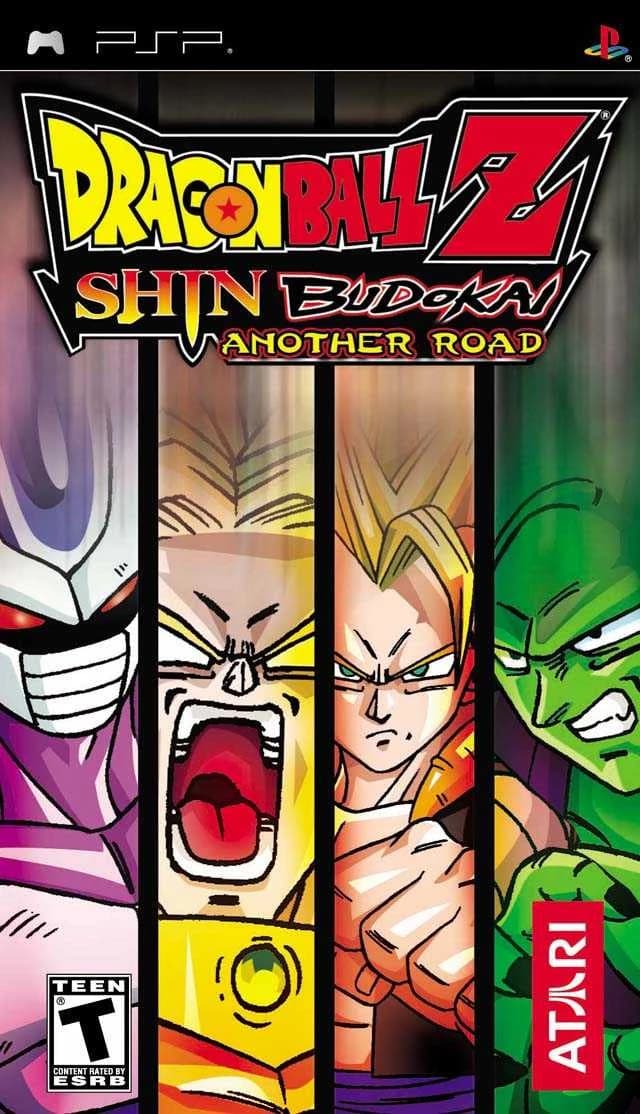
Dragon Ball Z: Shin Budokai - Another Road
GameDragon Ball Z: Shin Budokai - Another Road, known as in Japan and Europe, is a fighting video game that is the sequel to the best-selling game Dragon Ball Z: Shin Budokai, and the second Dragon Ball Z game to be released for the PlayStation Portable. It was developed by Dimps and released on in 2007.
Gameplay
Dragon Ball Z: Shin Budokai - Another Road is a portable fighting game developed by Dimps for the PlayStation Portable, released in 2007 as a direct sequel to Dragon Ball Z: Shin Budokai. The game retains the foundational control scheme of its predecessor while introducing additional mechanics and expanding the move pool with over fifty new fighting skills and ultimate attacks. The core fighting engine remains fast-paced, with players chaining together rush attacks, smash attacks, energy blasts, and guard moves using the PSP's face buttons and shoulder inputs.
The story mode incorporates a branching power level system reminiscent of the approach used in Dragon Ball Z: Budokai 3 and Dragon Ball Z: Budokai Tenkaichi 2, rewarding players who clear stages efficiently with stronger character progression. In-game transformations allow fighters to shift to more powerful forms during a match, escalating the intensity of key encounters. Seven game modes total are available, including the main story arc, network battles, and a camera angle adjustment feature that gives players additional control over how fights are framed on screen.
The roster consists of twenty-four unique playable characters drawn from Dragon Ball Z, spanning both heroes and villains. The game also supports ad-hoc wireless multiplayer, allowing two PSP owners to compete in high-speed local battles without requiring an internet connection.

Story
Another Road features a completely original story set in Future Trunks' alternate timeline. In this version of events, Majin Buu is released in a world that lacks many of the warriors who stopped him in the main Dragon Ball Z continuity. Future Trunks must confront this threat largely on his own, recruiting allies and battling enemies in a world already scarred by the devastation of the Androids. The premise allows the game to explore a dramatic what-if scenario that the anime itself never addressed.
The story is considered a side narrative to the main Dragon Ball series, similar in spirit to the standalone Dragon Ball Z theatrical films. Its focus on Future Trunks as the central figure gives the game a distinctive emotional tone, as players navigate a timeline defined by loss and urgency. The original plot was a significant selling point for the game, distinguishing it from fighting titles that simply retell events from the anime rather than building something new.
Related Reading
See all
Namek Has No Women, and Piccolo Pulls Anyway
There are no women on Namek. That isn't an oversight, it's the biology. Why we handed Piccolo the one thing his own species rules out, and why it had to be trap soul....
1000 Times Over: Who Is John Dragon Ball Singing To?
Dragon Ball handed us a protagonist with no history and the internet named him John Dragon Ball. So we built him somebody to talk to....
Context and Legacy
Shin Budokai - Another Road was released in Japan under the title Dragon Ball Z: Shin Budokai 2, and carried the same name in Europe, while the subtitle "Another Road" was used in other markets to clarify its position as a sequel. The game built on the strong sales of Shin Budokai, which had established the PSP as a viable platform for the Dragon Ball Z franchise. Dimps brought their fighting game expertise to the sequel, refining the mechanics and adding fresh content to justify the follow-up.
The title is remembered fondly within the PSP Dragon Ball library for its original story and polished fighting engine. Its willingness to build a new narrative around Future Trunks rather than retreading familiar anime arcs gave it a creative identity that set it apart from many licensed sequels of the era.
Frequently Asked Questions
How to unlock all characters in DBZ shin budokai another road?
Another Road features a completely original story set in Future Trunks' alternate timeline. In this version of events, Majin Buu is released in a world that lacks many of the warriors who stopped him in the main Dragon Ball Z continuity. Future Trunks must confront this threat largely on his own, recruiting allies and battling enemies in a world already scarred by the devastation of the Androids.
What is Dragon Ball Z: Shin Budokai - Another Road?
Dragon Ball Z: Shin Budokai, Another Road, known as in Japan and Europe, is a fighting video game that is the sequel to the best-selling game Dragon Ball Z: Shin Budokai, and the second Dragon Ball Z game to be released for the PlayStation Portable. It was developed by Dimps and released on in 2007.
When was Dragon Ball Z: Shin Budokai - Another Road released?
Dragon Ball Z: Shin Budokai, Another Road was released in 2007. It was developed by Dimps and published by Atari.
What is Dragon Ball Z: Shin Budokai - Another Road about?
Dragon Ball Z: Shin Budokai, Another Road is a portable fighting game developed by Dimps for the PlayStation Portable, released in 2007 as a direct sequel to Dragon Ball Z: Shin Budokai. The game retains the foundational control scheme of its predecessor while introducing additional mechanics and expanding the move pool with over fifty new fighting skills and ultimate attacks. The core fighting engine remains fast-paced, with players chaining together rush attacks, smash attacks, energy blasts, and guard moves using the PSP's face buttons and shoulder inputs.
Who developed Dragon Ball Z: Shin Budokai - Another Road?
Dragon Ball Z: Shin Budokai, Another Road was developed by Dimps. The game was published by Atari in 2007.
Sources & Information
Looking for more on Dragon Ball Z: Shin Budokai - Another Road? The Dragon Ball Wiki on Fandom has a dedicated page with community notes.
View on FandomThis content is original writing by Daddy Jim Headquarters based on the Dragon Ball anime series, manga, and official materials. Episode and chapter references are cited where applicable.
Rights holders
- Created byAkira Toriyama
- Published byShueisha
- Animated byToei Animation
All rights belong to their respective owners.
Character and scene imagery on this site is original artwork by Daddy Jim Headquarters, not screenshots or licensed imagery. Official cover art is used on three types of pages for editorial commentary:
- Movie pages: theatrical posters and key visuals, credited to Toei Animation and Shueisha.
- Game pages: official box art, credited to Bandai Namco, Atari, and other publishers.
- Manga chapter pages: Jump Comics volume covers, credited to Shueisha and Akira Toriyama.
Browse our episode guides:
Official resources:
Help Us Keep This Wiki Accurate
Daddy Jim Headquarters maintains this encyclopedia. If you spot an error, a translation issue, or something that doesn't look right, let us know.