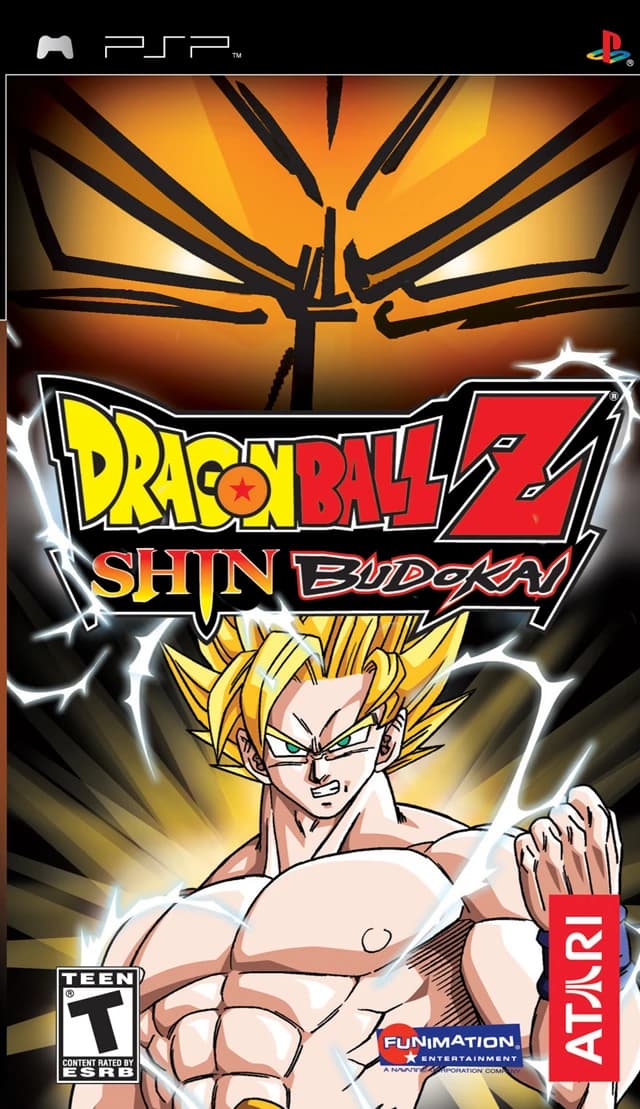
Dragon Ball Z: Shin Budokai
Gameis a fighting video game that was developed by Dimps, and was released worldwide throughout Spring 2006. It is part of the Budokai series of games and was released following Dragon Ball Z: Budokai 3. It is the first Dragon Ball Z game on the PlayStation Portable. Its sequel is Dragon Ball Z: Shin Budokai - Another Road.
Gameplay
Dragon Ball Z: Shin Budokai is a fighting game developed by Dimps for the PlayStation Portable, released worldwide in spring 2006 as the first Dragon Ball Z title on that platform. The game is built on a streamlined version of the Saiyan Overdrive fighting system from the Budokai series, with simplifications designed to suit the PSP's button layout and the on-the-go play style of portable gaming. Most interactive button prompts such as Dragon Rushes are removed in favor of more direct mechanics, and ultimate attacks can be performed freely without requiring elaborate input sequences.
A new technique called the Aura Burst allows characters to dash across the screen at high speed toward the opponent. Connecting an attack immediately after a Burst deals fast combos or stunning blows, enabling chain combos that reward players who master the timing. Special attacks chargeable by holding a directional input alongside the energy blast button add an extra layer of depth, letting players trade ki consumption for increased damage and duration.
Seven game modes are available: Dragon Road story mode, Arcade mode, Z Trial mode with Survival and Time Attack sub-types, Versus mode, Training mode, and Profile Card mode. Profile Card mode allows players to build and customize an in-game character card displaying their name and power level, which can be personalized with items purchased from the in-game store.

Story
Dragon Road, the story mode of Shin Budokai, is set two years after the defeat of Kid Buu and adapts the events of the film Dragon Ball Z: Fusion Reborn. The story begins with Goku and his friends on a camping trip that is interrupted when a portal from Hell opens on Earth, releasing the dead back into the world of the living. Goku and his allies must fight their way through a series of battles from the Earth's surface down into the ruins of Hell to close the portal. The narrative branches based on the player's choices at key decision points, leading to different story developments depending on the path taken.
Dragon Road is divided into five chapters with branching routes, offering players meaningful decisions that affect how the story unfolds. Friendly battles such as a sparring match between Goku and Krillin appear alongside major confrontations, giving the story mode variety in tone. The mode reimagines events from Fusion Reborn in ways that differ from the film, treating the game's version as its own interpretation of the source material rather than a straightforward adaptation.
Related Reading
See all
Namek Has No Women, and Piccolo Pulls Anyway
There are no women on Namek. That isn't an oversight, it's the biology. Why we handed Piccolo the one thing his own species rules out, and why it had to be trap soul....
1000 Times Over: Who Is John Dragon Ball Singing To?
Dragon Ball handed us a protagonist with no history and the internet named him John Dragon Ball. So we built him somebody to talk to....

Context and Legacy
Shin Budokai launched alongside the PlayStation Portable itself in many Western markets, positioning it as a flagship title for the new handheld. It is a direct follow-up to Dragon Ball Z: Budokai 3 within the Budokai game line, taking the series from home consoles to portable hardware. Dimps, the Japanese developer responsible for the Budokai series, brought their deep familiarity with Dragon Ball Z's fighting mechanics to the PSP version, ensuring that the portable entry felt connected to its console predecessors.
The game received generally positive reviews for its polished presentation and accessible fighting system. Critics who found the removal of Dragon Rushes and cinematic ultimate attacks to be a regression still acknowledged that Shin Budokai's mechanics had more nuance than they initially appeared. The game sold well enough to prompt a direct sequel, Shin Budokai - Another Road, released the following year on the same platform.
Frequently Asked Questions
What is Dragon Ball Z Shin Budokai?
Dragon Ball Z: Shin Budokai is a fighting video game that was developed by Dimps, and was released worldwide throughout Spring 2006. It is part of the Budokai series of games and was released following Dragon Ball Z: Budokai 3. It is the first Dragon Ball Z game on the PlayStation Portable.
What is the order of Dragon Ball Z Shin Budokai?
Dragon Ball Z: Shin Budokai is a fighting game developed by Dimps for the PlayStation Portable, released worldwide in spring 2006 as the first Dragon Ball Z title on that platform. The game is built on a streamlined version of the Saiyan Overdrive fighting system from the Budokai series, with simplifications designed to suit the PSP's button layout and the on-the-go play style of portable gaming. Most interactive button prompts such as Dragon Rushes are removed in favor of more direct mechanics, and ultimate attacks can be performed freely without requiring elaborate input sequences.
Which characters appear in Dragon Ball Z: Shin Budokai?
Dragon Road, the story mode of Shin Budokai, is set two years after the defeat of Kid Buu and adapts the events of the film Dragon Ball Z: Fusion Reborn. The story begins with Goku and his friends on a camping trip that is interrupted when a portal from Hell opens on Earth, releasing the dead back into the world of the living. Goku and his allies must fight their way through a series of battles from the Earth's surface down into the ruins of Hell to close the portal.
When was Dragon Ball Z: Shin Budokai released?
Dragon Ball Z: Shin Budokai was released in 2006. It was developed by Dimps and published by Bandai / Atari.
Who developed Dragon Ball Z: Shin Budokai?
Dragon Ball Z: Shin Budokai was developed by Dimps. The game was published by Bandai / Atari in 2006.
Sources & Information
Looking for more on Dragon Ball Z: Shin Budokai? The Dragon Ball Wiki on Fandom has a dedicated page with community notes.
View on FandomThis content is original writing by Daddy Jim Headquarters based on the Dragon Ball anime series, manga, and official materials. Episode and chapter references are cited where applicable.
Rights holders
- Created byAkira Toriyama
- Published byShueisha
- Animated byToei Animation
All rights belong to their respective owners.
Character and scene imagery on this site is original artwork by Daddy Jim Headquarters, not screenshots or licensed imagery. Official cover art is used on three types of pages for editorial commentary:
- Movie pages: theatrical posters and key visuals, credited to Toei Animation and Shueisha.
- Game pages: official box art, credited to Bandai Namco, Atari, and other publishers.
- Manga chapter pages: Jump Comics volume covers, credited to Shueisha and Akira Toriyama.
Browse our episode guides:
Official resources:
Help Us Keep This Wiki Accurate
Daddy Jim Headquarters maintains this encyclopedia. If you spot an error, a translation issue, or something that doesn't look right, let us know.