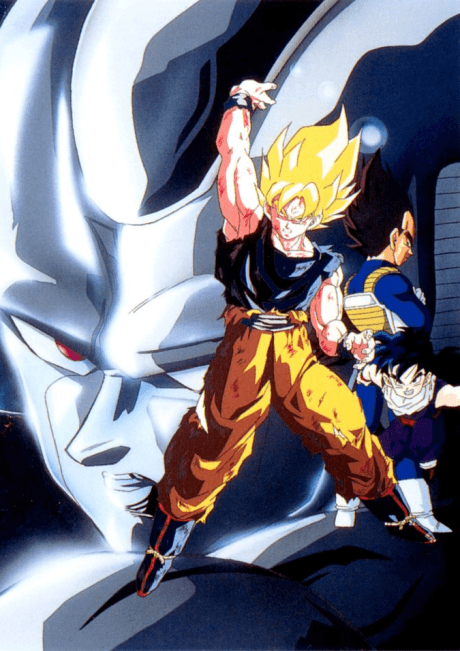
Dragon Ball Z: The Return of Cooler
MovieCooler survived the sun. Fused with a massive machine planet called the Big Gete Star, he returns as an army of metallic clones to enslave New Namek. Goku and Vegeta must combine their Super Saiyan power to face a villain who repairs himself after every wound.
A Tyrant Reborn in Metal
The Big Gete Star drifts through space like a mechanical parasite, latching onto New Namek and draining the planet's life force. On Earth, Dende, now serving as the planet's Guardian, senses his people's distress across the cosmos and calls upon Goku for help. The response is immediate. Goku, Gohan, Piccolo, Krillin, Oolong, Yajirobe, and Master Roshi travel to New Namek to find the Namekians being rounded up by an army of robotic soldiers. These Cyclopian Guards are foot soldiers for a far greater threat.
The Face Behind the Metal
When Goku demands that the invaders leave peacefully, their leader steps forward with a face that should be impossible: Cooler, Frieza's elder brother, the same warrior Goku had sent plummeting into the sun in their previous encounter. Cooler explains that he survived, though barely. His shattered remains drifted through space until the Big Gete Star absorbed them, allowing his consciousness to fuse with the machine planet's central computer. He is no longer flesh and blood. He is Meta-Cooler: sleeker, stronger, and backed by a planet-sized repair system that can fix any damage to his body instantly.
Super Saiyans Against the Machine
Goku engages Meta-Cooler alone while the others battle the Cyclopian Guards. Even in Super Saiyan form, Goku finds himself outmatched. Every time he damages Meta-Cooler, the Big Gete Star analyzes the attack, repairs the body, and strengthens it against the same technique being used again. When Goku rips off Meta-Cooler's arm, it regenerates within seconds, now resistant to that exact type of force. The fight seems unwinnable until Vegeta arrives, having followed Goku to New Namek in his space pod. He transforms into a Super Saiyan, and together, the two Saiyans pour their combined power into a devastating joint attack that finally destroys the Meta-Cooler body.
An Army of One Thousand
Their victory lasts only seconds. From the surface of the Big Gete Star, an army of identical Meta-Coolers emerges, hundreds of gleaming copies, each one as powerful as the original. Goku and Vegeta, already drained from their combined assault, are captured and dragged into the heart of the machine planet.
Inside, they discover the truth. Cooler's real form is grotesque: a mass of organic tissue fused with cables and circuitry, the Meta-Cooler Core, a brain piloting a planet. He begins draining their Saiyan energy to power his machine army. But Goku and Vegeta turn the trap against him, deliberately flooding the system with more energy than it can handle. The overload cascades through the Big Gete Star, destroying every Meta-Cooler clone simultaneously and freeing the captured Namekians.
The Core's Last Gamble
In desperation, Meta-Cooler Core attacks Goku directly with mechanical tendrils. Vegeta severs the arm holding Goku, and Goku fires a concentrated energy blast directly into the Core's body. The Big Gete Star detaches from New Namek and detonates in orbit. As the Z Fighters celebrate on the planet's surface, Vegeta is already flying home in his space pod, crushing the Big Gete Star's central computer chip in his fist. The threat is eliminated permanently.
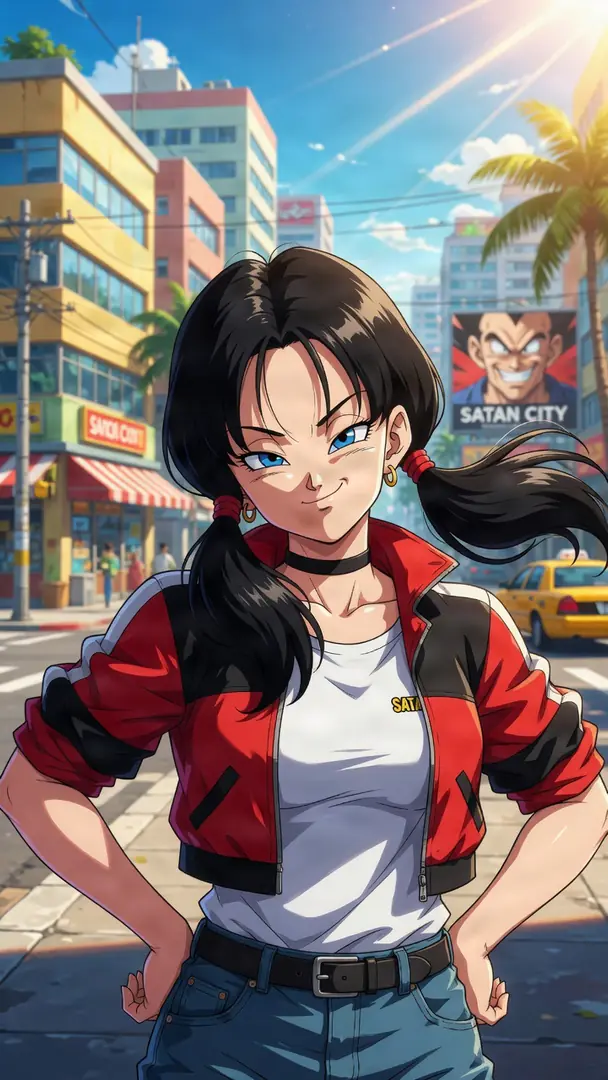


Clash of Ten Billion Power Warriors
The Return of Cooler derives its action from a central horror: fighting an enemy that learns from every wound you inflict. Meta-Cooler is not just stronger than the original Cooler; he is theoretically invincible in a prolonged fight. Each repair cycle makes him more resilient, turning the heroes' greatest strength, their ability to escalate, into a liability.
Goku and Vegeta: Reluctant Partners
This film marks Vegeta's first appearance in a Dragon Ball Z movie, and his dynamic with Goku drives the second act. Vegeta does not arrive to help. He arrives because the idea of Cooler killing Goku before he can is intolerable. Their combined attack against Meta-Cooler is one of the few moments in the franchise where the two Saiyans synchronize perfectly, channeling their energy into a single devastating beam. The sequence underscores a truth the series would revisit repeatedly: Goku and Vegeta are each dangerous alone, but together they are nearly unstoppable.
The Army Reveal
The moment the camera pulls back to reveal hundreds of Meta-Coolers standing in formation is one of the best visual shocks in any Dragon Ball film. The audience, like Goku and Vegeta, believed the fight was won. That single wide shot demolishes that belief instantly. It transforms a victory into a defeat without a single punch being thrown, using composition and scale to deliver impact that no energy beam could match.
Overloading the System
The final strategy, deliberately feeding too much energy into the Big Gete Star, is clever because it uses the machine's greatest strength against it. A system designed to absorb and process energy cannot handle an unlimited supply from two Super Saiyans who refuse to stop powering up. It is a rare moment in Dragon Ball where the heroes win through intelligence rather than raw power, and it gives Vegeta's pride a practical purpose: neither Saiyan is willing to stop before the other.
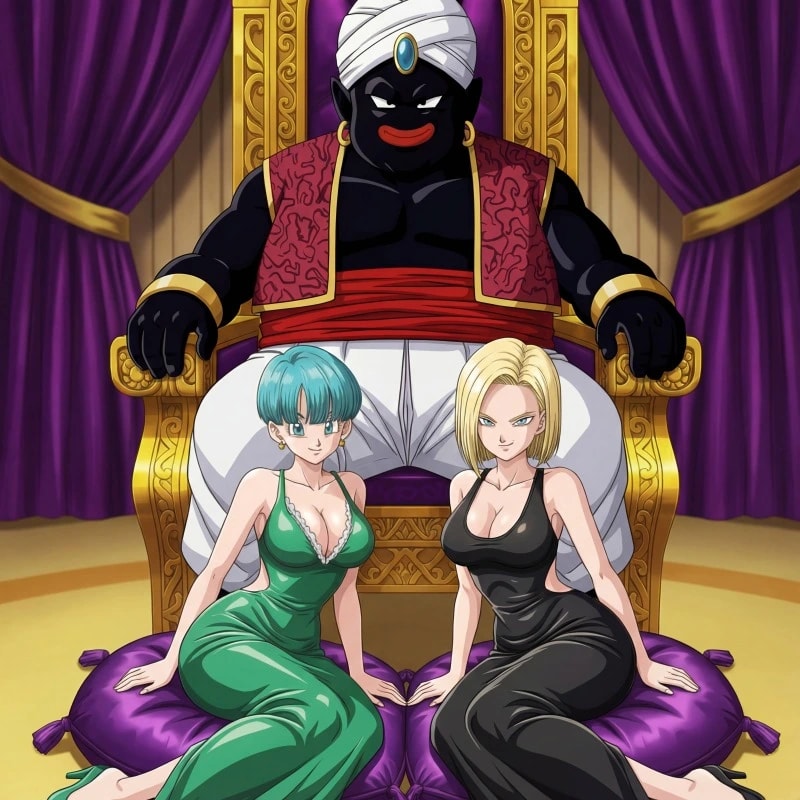
Cooler's Mechanical Encore
Released on March 7, 1992, The Return of Cooler was directed by Daisuke Nishio with a screenplay by Takao Koyama. It grossed 2.72 billion yen at the Japanese box office, making it one of the higher-grossing entries in the Dragon Ball Z film series. The film serves as a direct sequel to Cooler's Revenge and represents the first time Vegeta appeared in a theatrical Dragon Ball Z movie, a significant milestone given his popularity among fans.
A Sci-Fi Departure
The Return of Cooler stands out from other DBZ films for its science fiction elements. The Big Gete Star introduces mechanical and cybernetic themes that feel closer to classic mecha anime than typical Dragon Ball fare. The concept of a villain fused with a machine planet, creating an army of self-repairing clones, pushes the franchise into territory it rarely explores. These ideas would echo faintly in later Dragon Ball material, but nowhere else in the film series does technology so thoroughly dominate the threat landscape.
Home Video Legacy
Funimation released the English dub on VHS and DVD in August 2002, and the film received a limited theatrical run in the United States on March 17, 2006, as a double feature with Fusion Reborn. This made The Return of Cooler one of the first Dragon Ball productions to screen theatrically in North America. The Double Feature Blu-ray release alongside Cooler's Revenge in November 2008 provided a remastered widescreen transfer with both the original Japanese score by Shunsuke Kikuchi and the replacement score by Mark Menza. Meta-Cooler has since become a staple of Dragon Ball video games, appearing in the Budokai Tenkaichi series, Xenoverse, and Dragon Ball FighterZ, solidifying his status as one of the franchise's most memorable movie villains.
Related Reading
See all
Krillin's on the Tinder: How the Ultimate Short King Survived the Height Filter
Tinder built a height filter. Dragon Ball built a five foot legend. What happened when we sent the ultimate short king into the modern dating hellscape....
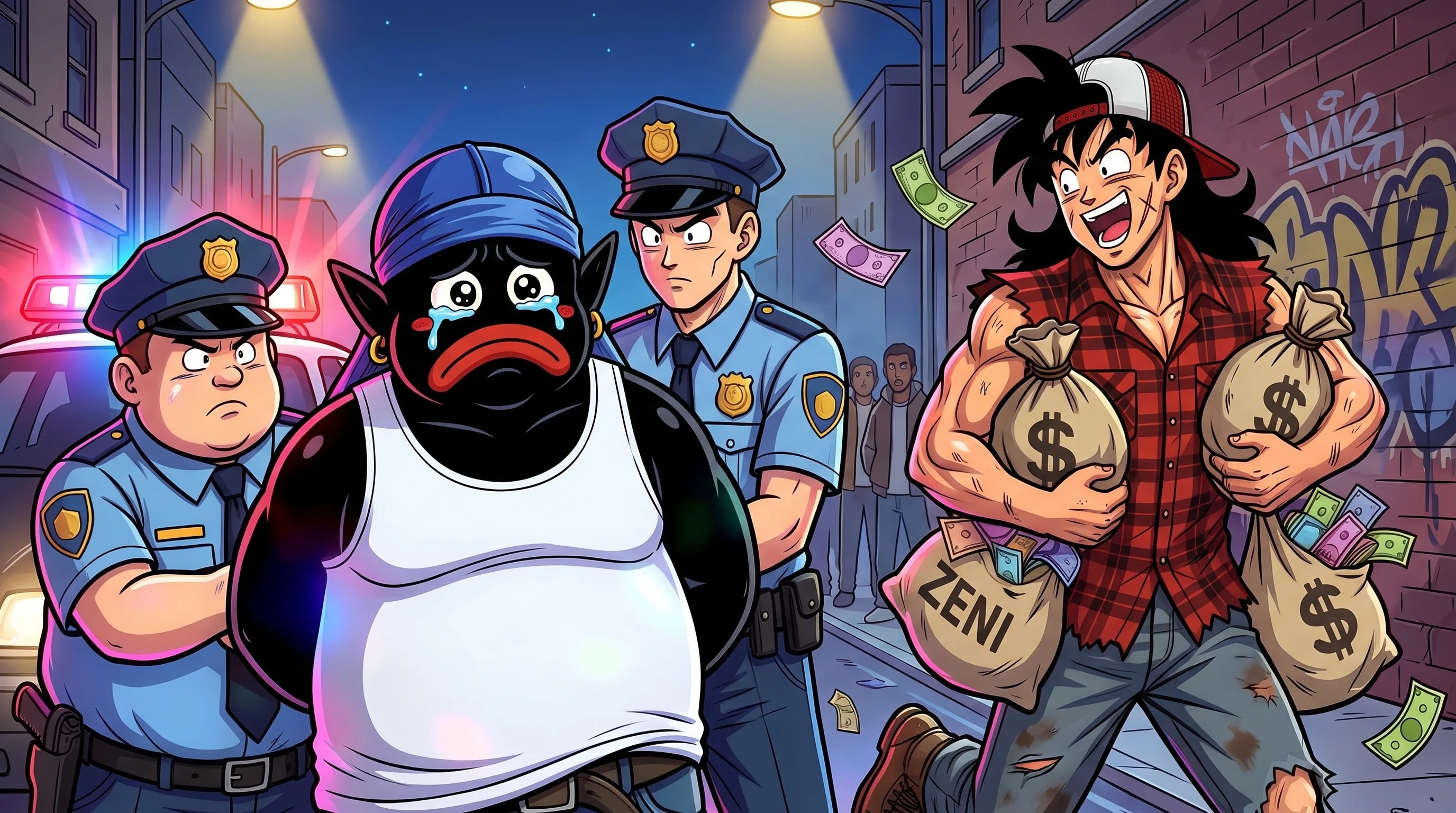
Infinite Zeni Glitch: When Yamcha Never Pays and Mr. Popo Always Does
The internet found an infinite money glitch. So did Yamcha. A smooth R&B track about the easiest money in the Dragon Ball world and the one man who keeps paying for it....
Frequently Asked Questions
Is DBZ return of Cooler canon?
Dragon Ball Z: The Return of Cooler is a theatrical film from the Dragon Ball Z era. It was released on March 7, 1992.
What is Dragon Ball Z: The Return of Cooler?
Cooler survived the sun. Fused with a massive machine planet called the Big Gete Star, he returns as an army of metallic clones to enslave New Namek. Goku and Vegeta must combine their Super Saiyan power to face a villain who repairs himself after every wound.
What happens in Dragon Ball Z: The Return of Cooler?
The Big Gete Star, an enormous self-evolving space machine, latches onto New Namek and begins draining the planet's energy while enslaving the Namekians. Dende, now Earth's Guardian, senses his people's distress and alerts Goku. A rescue team including Goku, Gohan, Piccolo, Krillin, Oolong, Yajirobe, and Master Roshi travels to New Namek.
When was Dragon Ball Z: The Return of Cooler released?
Dragon Ball Z: The Return of Cooler was released on March 7, 1992. It is a theatrical film in the Dragon Ball Z era.
Who is the main villain in Dragon Ball Z: The Return of Cooler?
The main antagonist of Dragon Ball Z: The Return of Cooler is Meta-Cooler. The Big Gete Star, an enormous self-evolving space machine, latches onto New Namek and begins draining the planet's energy while enslaving the Namekians.
Sources & Information
Looking for more on Dragon Ball Z: The Return of Cooler? The Dragon Ball Wiki on Fandom has a dedicated page with community notes.
View on FandomThis content is original writing by Daddy Jim Headquarters based on the Dragon Ball anime series, manga, and official materials. Episode and chapter references are cited where applicable.
Character and scene imagery on this site is original artwork by Daddy Jim Headquarters, not screenshots or licensed imagery. Official cover art is used on three types of pages for editorial commentary:
- Movie pages: theatrical posters and key visuals, credited to Toei Animation and Shueisha.
- Game pages: official box art, credited to Bandai Namco, Atari, and other publishers.
- Manga chapter pages: Jump Comics volume covers, credited to Shueisha and Akira Toriyama.
Browse our episode guides:
Official resources:
Help Us Keep This Wiki Accurate
Daddy Jim Headquarters maintains this encyclopedia. If you spot an error, a translation issue, or something that doesn't look right, let us know.