Bio-Android
RaceArtificial life forms constructed through biological engineering rather than mechanical assembly. Cell, Dr. Gero's ultimate creation grown from the cells of the universe's greatest warriors, is the original Bio-Android. The classification later expanded to include Cell's offspring and clones.
Life Built from Stolen Cells
Bio-Androids represent the most ambitious and dangerous branch of artificial life in the Dragon Ball universe. Unlike mechanical androids built from metal and circuitry, Bio-Androids are organic beings constructed through biological engineering. The original, Cell, was grown inside Dr. Gero's underground supercomputer from the collected cells of the strongest warriors in the galaxy: Goku, Vegeta, Piccolo, Frieza, and King Cold. This cocktail of DNA gave Cell access to the signature abilities of every donor, from Saiyan power boosts to Namekian regeneration to Frieza's survivability in the vacuum of space.
What makes Bio-Androids unique among all Android types is that they possess organic ki. Because their energy is derived from the living cells of ki-wielding warriors, Bio-Androids can be sensed through standard ki detection, unlike their purely mechanical or cyborg counterparts. This biological foundation also means they can grow stronger through combat, exploit Saiyan Power to return from near-death experiences more powerful than before, and regenerate from catastrophic damage thanks to their Namekian cellular components.
A Life Cycle of Monsters
Bio-Androids have a defined life cycle that mirrors insectoid development. Cell began as a larval form, a small, cicada-like creature that emerged from the supercomputer's gestation pod and burrowed underground to mature. Over time, he molted into his Imperfect Form, a tall, insectoid humanoid with a long tail designed to absorb other beings. Through absorption of Androids 17 and 18, Cell progressed to his Semi-Perfect and Perfect Forms, each transformation representing a dramatic increase in power and a shift toward a more humanoid appearance. Cell could also reproduce asexually, spawning Cell Juniors, smaller blue versions of himself that possessed a significant fraction of his power.


The Cell Games and Perfection
Cell's arc during the Android and Cell Sagas remains one of Dragon Ball Z's most complex villain storylines. Traveling back in time from Future Trunks' alternate timeline, Cell arrived in the present era as a larva and spent years growing in secret. He emerged in his Imperfect Form and terrorized entire cities, using his tail to absorb thousands of humans to increase his power. His sole objective was to find and absorb Androids 17 and 18, which would allow him to achieve his Perfect Form.
After absorbing Android 17, Cell transformed into his Semi-Perfect state, already strong enough to overpower most of the Z Fighters. Vegeta, in a moment of arrogance that defined his character, actually allowed Cell to absorb Android 18 because he wanted to fight Cell at full power. The result was Perfect Cell, a being so confident in his superiority that he constructed a martial arts arena and announced the Cell Games, a tournament broadcast to the entire world with Earth's survival as the stake.
The Cell Games culminated in one of Dragon Ball's most pivotal moments. After Goku forfeited his match and nominated Gohan as his replacement, Cell systematically pushed Gohan past his breaking point. When Android 16 was destroyed trying to protect Gohan, the young half-Saiyan snapped, ascending to Super Saiyan 2 in a surge of rage that completely overwhelmed Perfect Cell. Even after Cell self-destructed in a failed attempt to destroy Earth, his Saiyan cells allowed him to regenerate from a single surviving cell, returning stronger than before. It took Gohan's full-power Father-Son Kamehameha, supported by Goku's spirit from the afterlife, to finally destroy Cell completely.
Beyond Cell
The Bio-Android classification expanded significantly in later Dragon Ball media. In Dragon Ball Online, a clone designated Cell-X established a nest in a cave behind a waterfall on Papaya Island, spawning eggs that hatched into various forms of Bio-Androids. This created an entire ecosystem of Cell-derived creatures with their own life cycle stages, from sentient eggs to larval forms to mature fighters resembling Cell's various transformation states.
Android 21, introduced in Dragon Ball FighterZ, represents a further evolution of the concept. Classified as a "New Type Android," she possesses cells from the Z Fighters, Frieza, Cell himself, and both the good and evil versions of Majin Buu, giving her access to Buu's Transfiguration Beam and a hunger-driven transformation. The Demon Realm also produced its own Bio-Androids, including Mira, a demonic Bio-Metal being composed of Earthling and Demon Realm Race DNA, and his son Fu, who inherited all of Mira's genetic material plus additional samples from the multiverse's strongest fighters.
Cell himself returned to relevance in Dragon Ball Super: Super Hero, where Cell Max, a new Bio-Android built by Dr. Hedo under the manipulated Red Ribbon Army, served as the film's final threat. Though less intelligent than the original Cell due to being activated prematurely, Cell Max was physically devastating, requiring the combined efforts of Gohan, Piccolo, and the other Z Fighters to bring down. The Bio-Android legacy, it seems, is one that the Dragon Ball universe cannot fully put behind it.
Related Reading
See all
Krillin's on the Tinder: How the Ultimate Short King Survived the Height Filter
Tinder built a height filter. Dragon Ball built a five foot legend. What happened when we sent the ultimate short king into the modern dating hellscape....
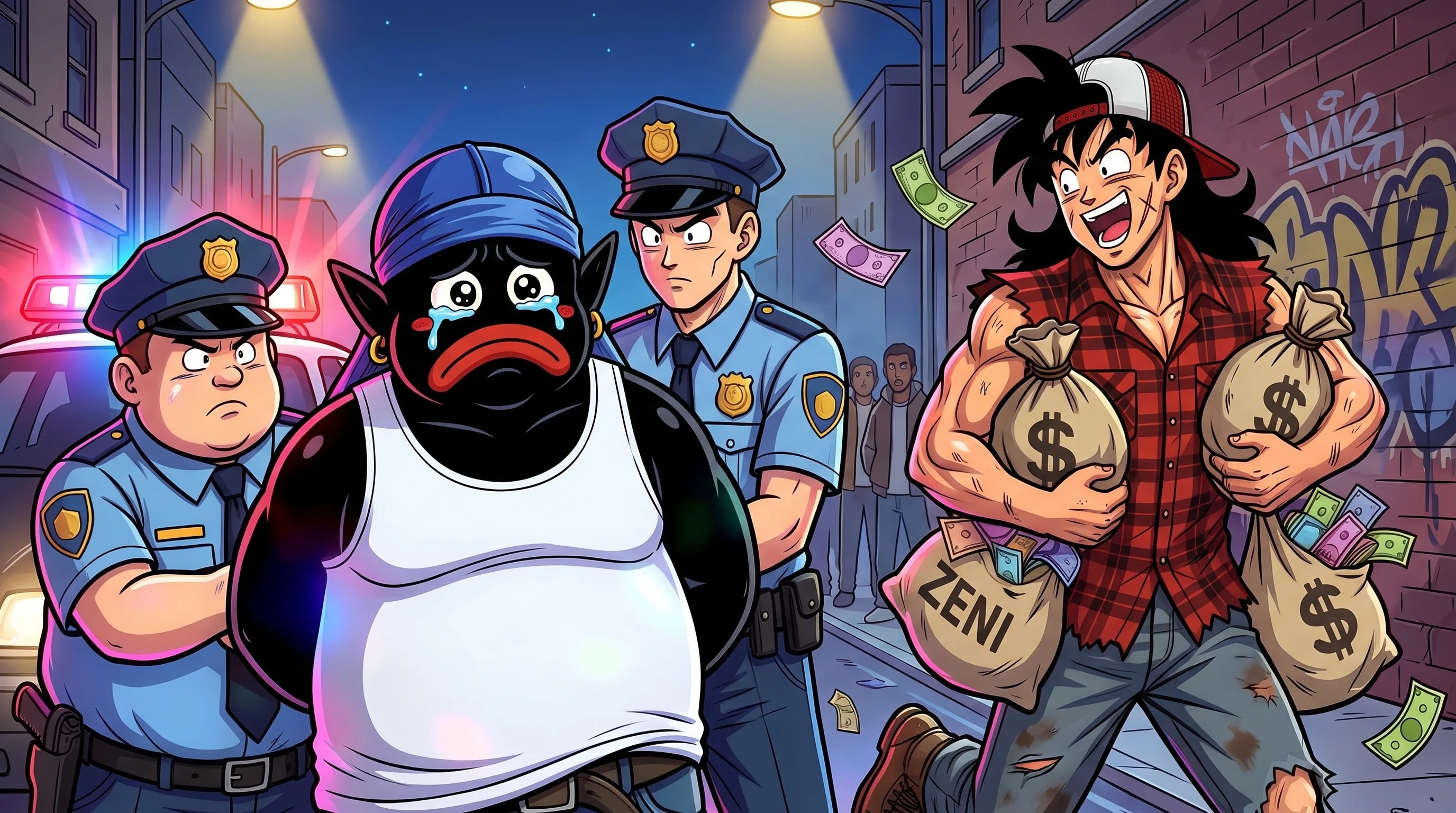
Infinite Zeni Glitch: When Yamcha Never Pays and Mr. Popo Always Does
The internet found an infinite money glitch. So did Yamcha. A smooth R&B track about the easiest money in the Dragon Ball world and the one man who keeps paying for it....
Frequently Asked Questions
Does Android 18 wear a bra?
Artificial life forms constructed through biological engineering rather than mechanical assembly. Cell, Dr. Gero's ultimate creation grown from the cells of the universe's greatest warriors, is the original Bio-Android.
What is the homeworld of the Bio-Android?
The Bio-Android originate from Earth. Dr. Gero created Cell by collecting cells from the strongest fighters.
What do the Bio-Android look like?
Varies depending on the form and generation. Cell progressed through Imperfect, Semi-Perfect, and Perfect forms. Bio-Androids absorb biomatter from victims and can regenerate from even a single cell if their core nucleus survives.
What abilities do the Bio-Android have?
Cell possessed techniques from every warrior whose cells he contained, including Kamehameha, Special Beam Cannon, Solar Flare, Instant Transmission, and regeneration. He could also produce Cell Juniors, miniature versions of himself.
What is the culture of the Bio-Android like?
They consume bio-essence from absorbed victims and can also absorb damage energy. Dr.
Sources & Information
Looking for more on Bio-Android? The Dragon Ball Wiki on Fandom has a dedicated page with community notes.
View on FandomThis content is original writing by Daddy Jim Headquarters based on the Dragon Ball anime series, manga, and official materials. Episode and chapter references are cited where applicable.
Character and scene imagery on this site is original artwork by Daddy Jim Headquarters, not screenshots or licensed imagery. Official cover art is used on three types of pages for editorial commentary:
- Movie pages: theatrical posters and key visuals, credited to Toei Animation and Shueisha.
- Game pages: official box art, credited to Bandai Namco, Atari, and other publishers.
- Manga chapter pages: Jump Comics volume covers, credited to Shueisha and Akira Toriyama.
Browse our episode guides:
Official resources:
Help Us Keep This Wiki Accurate
Daddy Jim Headquarters maintains this encyclopedia. If you spot an error, a translation issue, or something that doesn't look right, let us know.