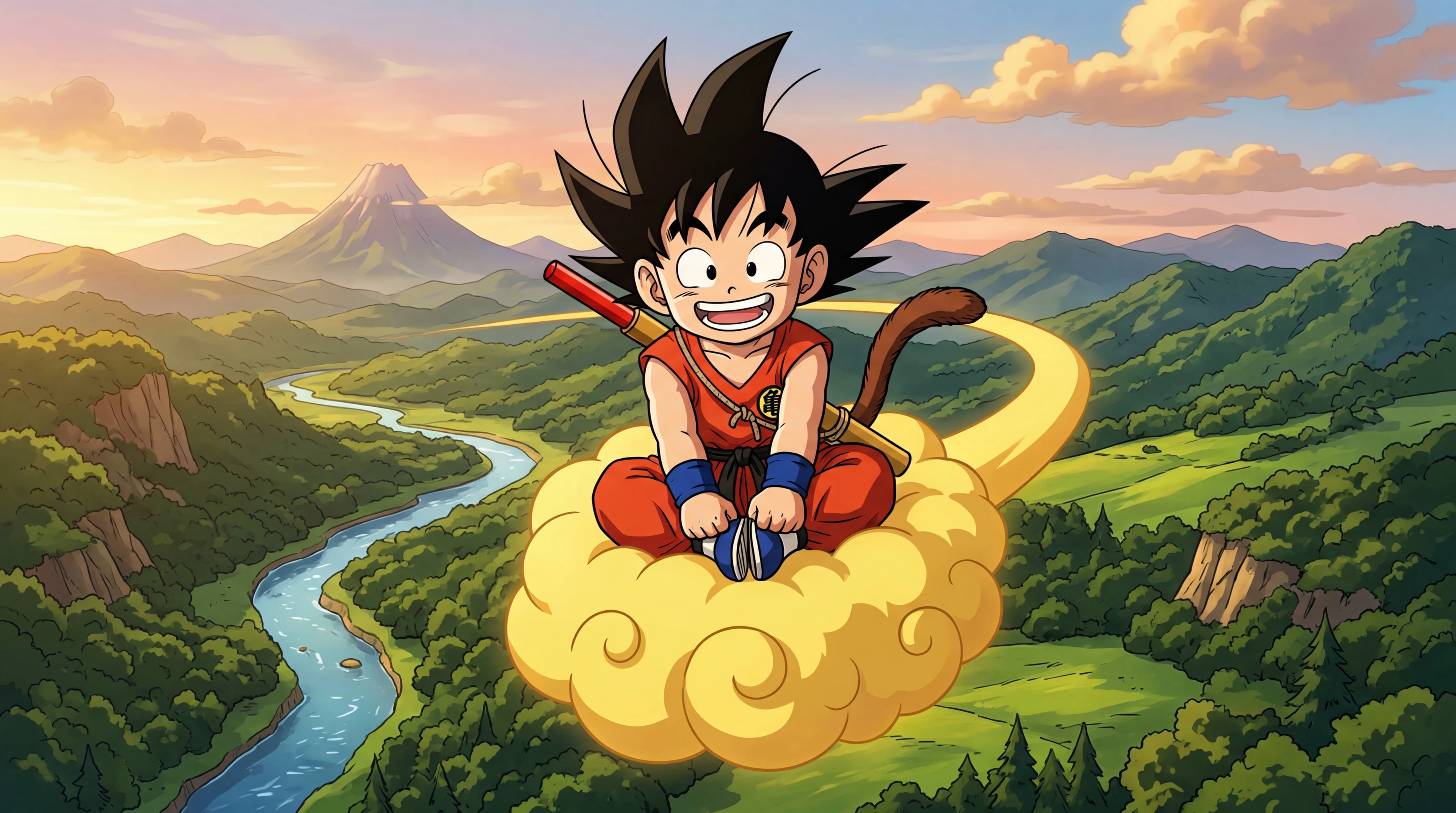
Dragon
RaceDragons are a rare but significant species in the Dragon Ball universe, existing on Earth, Gaspa, the Demon Realm, and other worlds. They range from ordinary winged reptilian creatures like Icarus to the awe-inspiring Eternal Dragons created from the Dragon Balls. The Dragon God Zalama sits at the apex of their kind.
Wings, Scales, and Fire
Ordinary dragons in the Dragon Ball universe are large, winged reptilian creatures capable of flight and, in most cases, breathing fire. They inhabit multiple worlds across the cosmos, with a known population on the planet Gaspa in Universe 7 and demonic variants dwelling in the Third Demon World of the Demon Realm. Their sizes vary dramatically, from relatively modest flying creatures to enormous beasts that rival dinosaurs in scale.
The most common abilities shared among dragons include flight via their wings and fire breath. Some display additional traits like prehensile tongues or aquatic adaptation. Their intelligence ranges widely; some appear to operate on animal instinct while others demonstrate sapient-level cognition and can form bonds with other species.
Drakes and Demon Dragons
Beyond ordinary dragons, the universe contains Drakes, a related species that exists in both Universe 7 and Universe 9. Chappil, a Drake from Universe 9, competed in the Tournament of Power with skin said to be as hard as iron. Dragon Ball Daima expanded dragon lore considerably by introducing Demon Beast Dragons that inhabit the Third Demon World, flying creatures that breathe fire over the Sea of Darkness and serve as both transportation and natural hazards for those traversing the Demon Realm.



Gohan's Companion and the Dragon God
The most prominent ordinary dragon in the series is Icarus, who first appeared in the film Dragon Ball Z: The Tree of Might. Icarus formed a close friendship with young Gohan, becoming a loyal companion who accompanied him on several adventures. The bond between Gohan and Icarus represented one of the more tender relationships in the series, showcasing Gohan's gentle nature even as the threats around him grew increasingly dangerous.
At the absolute pinnacle of dragon-kind sits the Dragon God Zalama, a divine being responsible for creating the Super Dragon Balls, the original and most powerful set of wish-granting orbs in existence. Zalama also created the first Eternal Dragon, Super Shenron, whose body stretches across galaxies and who can grant any wish without limitation. A failed prototype of the Super Dragon Balls, the Omnificence Crystal, also came from Zalama's work. The Namekian Dragon Clan later used fragments of the Super Dragon Balls to create their own sets, including the Namekian Dragon Balls and their Eternal Dragon Porunga, as well as Earth's Dragon Balls and Shenron.
From Cymbal to the Shadow Dragons
Dragons hold deep symbolic and cultural significance throughout the Dragon Ball universe. King Piccolo's Dark Vassal Cymbal was deliberately created to resemble a dragon, and Namekian Dragon Clansmen who settled on various worlds brought dragon-themed magic wherever they went. The very title of the franchise derives from the dragon-shaped orbs that drive so much of the story's action.
Notable dragons include Icarus, Gohan's loyal companion from the films; Chappil, the iron-skinned Drake from Universe 9 who fought in the Tournament of Power; the Demon Beast Dragons of the Third Demon World; and the draconic creature that swallowed the Four-Star Dragon Ball during the Buu Saga, only to be forced to spit it back out after Master Roshi deployed one of his less dignified techniques. In Dragon Ball GT, the accumulation of negative energy from wish abuse created the Shadow Dragons, corrupted Eternal Dragons that each embodied a specific wish's consequences and served as the final antagonists of that series.
The dragons of the Dragon Ball universe ultimately span a spectrum from ordinary wildlife to beings of cosmic power. Whether as pets, predators, or divine entities capable of reshaping reality, they are central to the identity of the franchise that bears their name.
Related Reading
See all
Krillin's on the Tinder: How the Ultimate Short King Survived the Height Filter
Tinder built a height filter. Dragon Ball built a five foot legend. What happened when we sent the ultimate short king into the modern dating hellscape....

Infinite Zeni Glitch: When Yamcha Never Pays and Mr. Popo Always Does
The internet found an infinite money glitch. So did Yamcha. A smooth R&B track about the easiest money in the Dragon Ball world and the one man who keeps paying for it....
Frequently Asked Questions
What is the name of the dragon in Dragon Ball?
Dragons are a rare but significant species in the Dragon Ball universe, existing on Earth, Gaspa, the Demon Realm, and other worlds. They range from ordinary winged reptilian creatures like Icarus to the awe-inspiring Eternal Dragons created from the Dragon Balls. The Dragon God Zalama sits at the apex of their kind.
Who are the notable members of the Dragon?
Notable members of the Dragon include Icarus, Chappil, and Demon Beast Dragons. Dragons are a rare but significant species in the Dragon Ball universe, existing on Earth, Gaspa, the Demon Realm, and other worlds.
What is the homeworld of the Dragon?
The Dragon originate from Earth. Ordinary dragons like Icarus exist in Universe 7, with a known population on planet Gaspa. Drakes such as Chappil appear in both Universe 7 and Universe 9.
What do the Dragon look like?
Varies widely, from small flying creatures to massive winged beasts. Dragons are a rare but significant species in the Dragon Ball universe, existing on Earth, Gaspa, the Demon Realm, and other worlds.
What abilities do the Dragon have?
Varies by type. Some breathe fire, while Demon Beast Dragons possess dark powers.
Sources & Information
Looking for more on Dragon? The Dragon Ball Wiki on Fandom has a dedicated page with community notes.
View on FandomThis content is original writing by Daddy Jim Headquarters based on the Dragon Ball anime series, manga, and official materials. Episode and chapter references are cited where applicable.
Character and scene imagery on this site is original artwork by Daddy Jim Headquarters, not screenshots or licensed imagery. Official cover art is used on three types of pages for editorial commentary:
- Movie pages: theatrical posters and key visuals, credited to Toei Animation and Shueisha.
- Game pages: official box art, credited to Bandai Namco, Atari, and other publishers.
- Manga chapter pages: Jump Comics volume covers, credited to Shueisha and Akira Toriyama.
Browse our episode guides:
Official resources:
Help Us Keep This Wiki Accurate
Daddy Jim Headquarters maintains this encyclopedia. If you spot an error, a translation issue, or something that doesn't look right, let us know.