Human
RaceIn the Dragon Ball universe, "Human" or "Ningen" is a broad classification encompassing all mortal beings who are not gods and do not possess godly ki. This term applies to Saiyans, Namekians, Earthlings, and countless other species. Mortals occupy the living world and, upon death, proceed to either Heaven or Hell based on their actions in life.
More Than Just Earthlings
The term "Human," rendered as "Ningen" in Japanese, carries a far broader meaning in Dragon Ball than its English translation might suggest. Rather than referring specifically to the species commonly called Earthlings, it encompasses every living being who exists outside the divine hierarchy. Saiyans, Namekians, Frieza's race, and every other species in the multiverse all fall under the umbrella of "Human" in this cosmic context.
Mortals occupy the living world within each of the twelve universes. Their existence is bounded by death, after which they are judged and sent to either Heaven or Hell in Other World. This cycle of mortal life and afterlife judgment forms one of the fundamental structures of the Dragon Ball cosmos, overseen by the various Kais and their divine counterparts.
The Blurred Line Between Mortal and God
Despite the seemingly rigid boundary between mortals and deities, Dragon Ball repeatedly demonstrates that this line can be crossed. Mortals can attain the rank of Guardian, as Kami and later Dende did for Earth. Sufficiently powerful mortals can even become Gods of Destruction, as Beerus's own origin suggests. Future Trunks served as an apprentice Supreme Kai in the manga, and Frieza himself has held divine positions in certain storylines.
Most dramatically, mortal Saiyans discovered the ability to wield Godly ki through the Super Saiyan God ritual and subsequent training under Whis. This development terrified many deities, who viewed the idea of mortals accessing divine power as a fundamental threat to the cosmic order.


The Tournament That Judged All Mortals
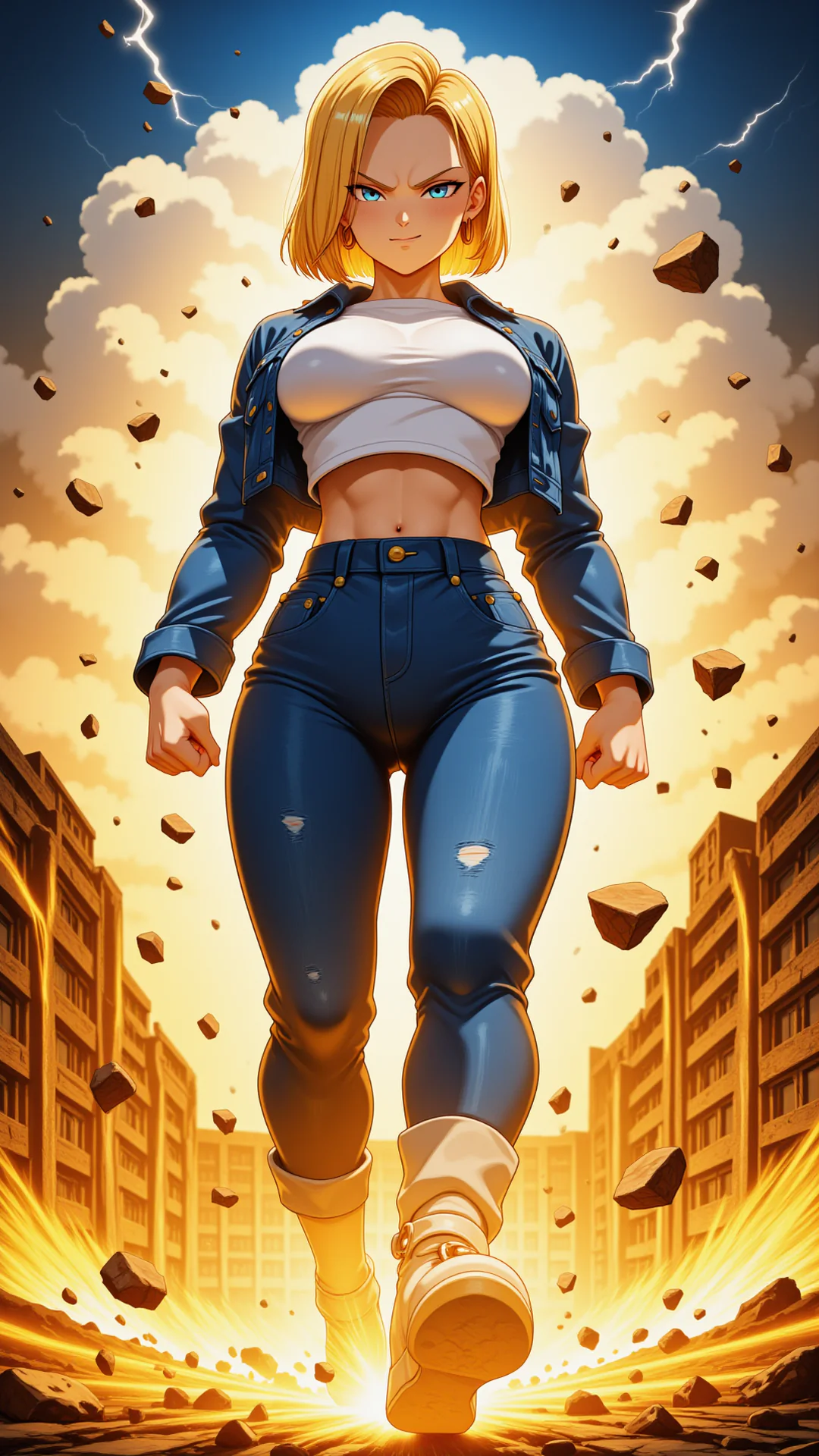
The concept of mortal worth became a central plot point during the Tournament of Power in Dragon Ball Super. Each universe was ranked by its Mortal Level, an aggregate score reflecting the overall quality of its mortal population. Zeno organized the tournament to test whether mortals from the lower-ranked universes could demonstrate their worth and change their ways. Any universe with a Mortal Level above 7 was exempted from the tournament, sparing Universes 1, 5, 8, and 12.
Universe 7's Mortal Level sat at a dismal 3.18, despite being home to extraordinary fighters like Goku and Vegeta who had achieved godly ki. The ranking reflected the entire population, not just its strongest warriors. Power levels were only one factor; the number of inhabited worlds, the advancement of civilizations, and the cultural and technological achievements of each planet all contributed to the final score.
The Mortal Level system revealed that the Gods of Creation (Supreme Kais) and Gods of Destruction share direct responsibility for cultivating their mortal populations. When these deities perform their duties diligently, the Mortal Level rises. Universe 7's low ranking implicitly criticized Shin's inexperience and Beerus's tendency to destroy planets on a whim rather than nurturing civilizations.
Angels, Neutrality, and the Cost of Intervention
Angel law strictly forbids Angels from interfering in mortal affairs. Any Angel who violates this neutrality faces complete eradication, a punishment that seems harsh until one considers the consequences. An Angel's power could easily upset the natural balance of an entire universe and stifle the organic growth of its mortal population.
The case of Merus illustrates both the rule and its exception. A Trainee Angel serving undercover in the Galactic Patrol, Merus used his true angelic power to assist Goku against Planet Eater Moro. This violation caused Merus to begin fading from existence. After Moro's defeat, Shin petitioned the Grand Minister to revive Merus, and the request was granted with a condition: Merus would return as a mortal with a finite lifespan. Merus accepted this willingly, showing that even divine beings can choose mortality.
The Mortal Condition
What defines a mortal in Dragon Ball is ultimately not weakness but impermanence. Mortals live, die, and face judgment. They can grow stronger, challenge gods, and even join divine ranks, but they remain bound to a cycle that deities stand outside of. This tension between mortal ambition and divine authority has fueled some of the franchise's most compelling arcs, from Zamasu's hatred of mortals to Goku's cheerful refusal to stay within any boundary set for him.
Related Reading
See all
Chiaotzu is Chi-Chi's Boo: Why the Guy Who Never Wins Finally Wins
The least likely man in Dragon Ball just took the biggest win in our catalog. The story behind our R&B record about Chiaotzu, Chi-Chi, and a house Goku is never in....
Krillin's on the Tinder: How the Ultimate Short King Survived the Height Filter
Tinder built a height filter. Dragon Ball built a five foot legend. What happened when we sent the ultimate short king into the modern dating hellscape....
Frequently Asked Questions
Who is human in Dragon Ball?
In the Dragon Ball universe, "Human" or "Ningen" is a broad classification encompassing all mortal beings who are not gods and do not possess godly ki. This term applies to Saiyans, Namekians, Earthlings, and countless other species. Mortals occupy the living world and, upon death, proceed to either Heaven or Hell based on their actions in life.
What do the Human look like?
The term "Human," rendered as "Ningen" in Japanese, carries a far broader meaning in Dragon Ball than its English translation might suggest. Rather than referring specifically to the species commonly called Earthlings, it encompasses every living being who exists outside the divine hierarchy.
What abilities do the Human have?
Mortals can attain divine rank, such as becoming a Guardian or God of Destruction through training and appointment. In the Dragon Ball universe, "Human" or "Ningen" is a broad classification encompassing all mortal beings who are not gods and do not possess godly ki.
What is the culture of the Human?
Mortals occupy the living world across all universes. Upon death, they are sent to either Heaven or Hell in the Other World.
What is the history of the Human?
The distinction between mortals and gods is central to the Dragon Ball cosmology, particularly during the Future Trunks Saga where Zamasu's hatred of mortals drives the conflict. In the Dragon Ball universe, "Human" or "Ningen" is a broad classification encompassing all mortal beings who are not gods and do not possess godly ki.
Sources & Information
Looking for more on Human? The Dragon Ball Wiki on Fandom has a dedicated page with community notes.
View on FandomThis content is original writing by Daddy Jim Headquarters based on the Dragon Ball anime series, manga, and official materials. Episode and chapter references are cited where applicable.
Character and scene imagery on this site is original artwork by Daddy Jim Headquarters, not screenshots or licensed imagery. Official cover art is used on three types of pages for editorial commentary:
- Movie pages: theatrical posters and key visuals, credited to Toei Animation and Shueisha.
- Game pages: official box art, credited to Bandai Namco, Atari, and other publishers.
- Manga chapter pages: Jump Comics volume covers, credited to Shueisha and Akira Toriyama.
Browse our episode guides:
Official resources:
Help Us Keep This Wiki Accurate
Daddy Jim Headquarters maintains this encyclopedia. If you spot an error, a translation issue, or something that doesn't look right, let us know.