Infinite History Saga
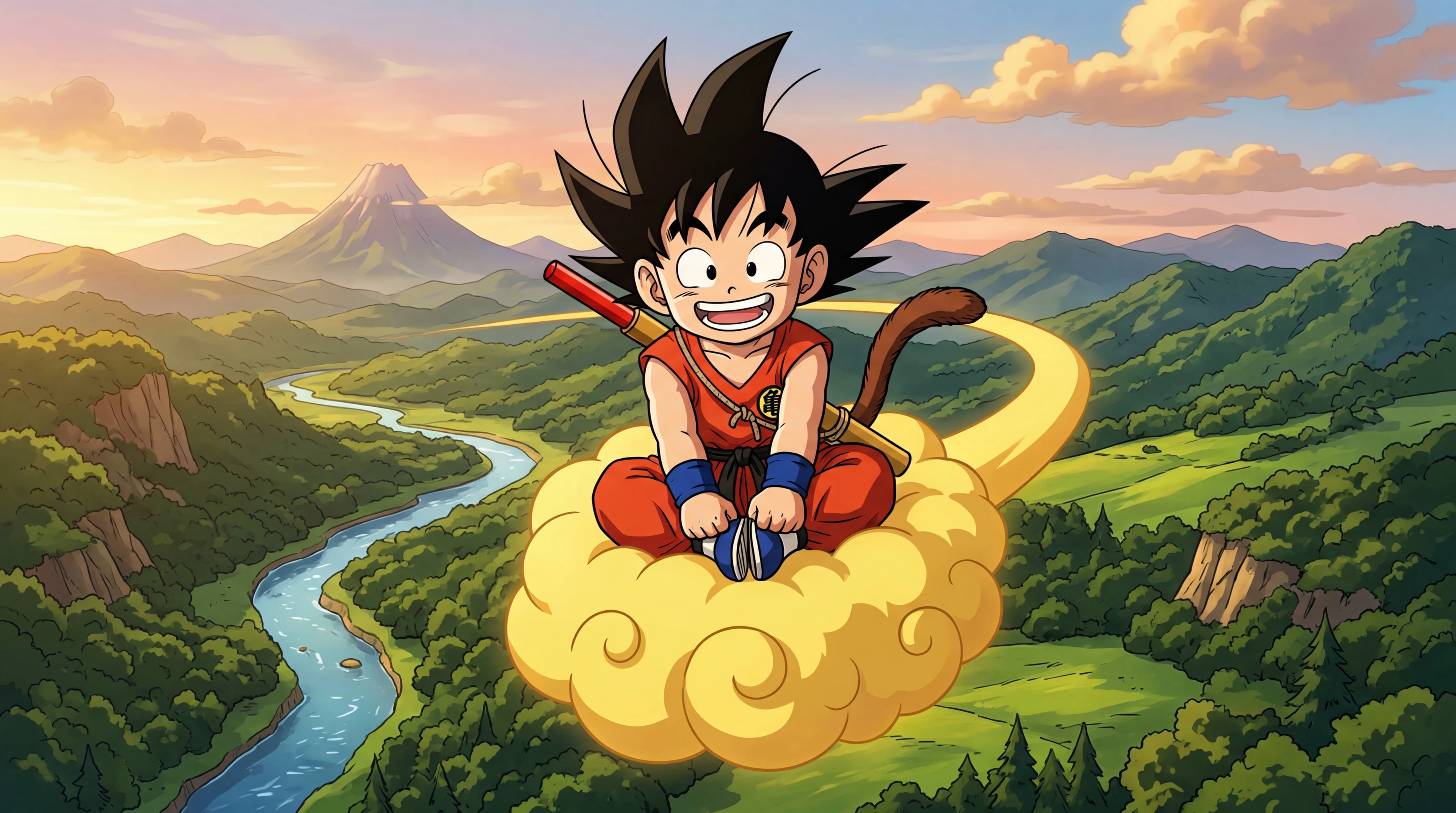
SagaA Dragon Ball Xenoverse 2 DLC storyline where the Future Warrior teams up with their instructor to investigate mysterious time rifts. The enigmatic scientist Fu manipulates history for his experiments, while Dabura secretly plots revenge against the Time Patrol from the shadows.
Rifts, Partners, and a Scientist's Game
The Infinite History Saga arrives as bonus content in Dragon Ball Xenoverse 2, delivered through the Extra Pack 2 DLC. Unlike the main campaign, this saga operates as its own self-contained story mode called Extra Story, and it introduces a unique mechanic: the Future Warrior's current instructor joins them as a combat partner, and the storyline changes depending on which instructor is selected. The branching paths give the saga tremendous replay value, with different dialogue, battle scenarios, and endings layered across each run.
A World Where Demigra Won
The saga opens with a disorienting scene. The Future Warrior walks through the Time Nest only to find Demon God Demigra casually standing there, addressed by Trunks: Xeno as the Supreme Kai of Time. Chronoa is gone. Nobody remembers her. The entire history of the Time Patrol has been rewritten so thoroughly that its members accept Demigra as their leader without question. Only the Future Warrior retains memories of how things should be, and a mysterious swordsman lurking near the Time Vault reveals himself as the architect of the change before attempting to absorb the Warrior's energy.
Reality snaps back. The Warrior finds themselves in the real Time Nest, surrounded by Chronoa and the others, who assume they were daydreaming. But the threat is real: new time rifts have appeared that brainwash every Time Patroller sent to investigate them. With Trunks: Xeno and his partner occupied containing the affected officers, Chronoa calls in the Warrior's instructor to serve as their partner for the mission ahead.
Fu's Playground
The first rift drops the duo into a training space resembling the one Whis created for Goku and Vegeta in Age 779. A figure who appears to be Whis is coaching the two Saiyans, but the Future Warrior can see through the disguise: it is Fu, a charismatic and morally ambiguous scientist who claims he did not create the rifts but is eager to study them. Fu exposes Goku and Vegeta to Blutz Waves, causing them to transform into Super Saiyan 4 instead of Super Saiyan Blue, derailing the timeline within the rift entirely. He then absorbs the energy generated by this historical deviation, revealing his true ability and his true agenda.
From this point forward, the Warrior faces a choice at each new rift: cooperate with Fu to alter history and let him harvest the resulting energy, or oppose Fu and attempt to restore the correct timeline through the Time Patrol's methods. Both paths lead through escalating battles and shifting alliances, with the instructor partner adding unique twists depending on who they are.



Branching Battles Across Broken Timelines
Each tier of the saga presents a new rift with its own scenario. In one, Fu brings the Future Androids and Android 13 to fight Perfect Cell in an early, unauthorized Cell Games. In another, the Warrior encounters warped versions of the Buu Saga or the Tournament of Power. The battles shift dramatically depending on the chosen partner. Partnering with Goku can trigger a humorous argument between two versions of himself about which Saiyan form is superior. Choosing Bardock leads to a moment where Cell mistakes him for Goku, only for a frustrated Bardock to clarify that he is Goku's father. Selecting Vegeta unlocks a scenario where both Vegetas abandon the fight mid-battle because Bulma reminded one of them about a promise to take Trunks to the amusement park.
The Two Paths Diverge
Helping Fu means joining forces with the androids to overwhelm Cell, then watching as Fu's manipulations cause Goku to be killed by the androids, who afterward feel strangely empty and purposeless. Opposing Fu means fighting alongside the Time Patrol to correct the changes before Fu can absorb their energy. The consequences ripple forward: choosing one path in a given tier can lock the player out of the other path in later tiers, and Elder Kai refuses to cooperate with anyone who has aided Fu, viewing it as a fundamental betrayal.
The saga's final tiers reveal the true mastermind behind the rifts. Dabura, the Demon King defeated by Majin Buu in the main timeline, has been manipulating events from the shadows, seeking revenge on the Time Patrol. The confrontation with Dabura serves as the saga's climax, with the outcome again shaped by which partner stands alongside the Warrior and which path they have walked.
A Story That Changes Every Time
The Infinite History Saga stands apart from every other story arc in the Xenoverse series because of its structural ambition. By tying narrative outcomes to the player's instructor choice and moral decisions, it transforms what could have been a simple DLC expansion into something closer to a role-playing experience. Goku, Vegeta, Broly, Beerus, Whis, Android 18, Cell, Bardock, Gotenks, Hercule, and Jaco all serve as potential partners, each bringing their own personality and combat style to the missions.
Fu's Debut
This saga marks Fu's first major appearance in the Xenoverse continuity. His morally gray nature, enthusiastic about science but indifferent to the consequences, would carry forward into Super Dragon Ball Heroes, where he becomes a central figure. His ability to absorb energy from historical changes introduces a mechanic that the broader Heroes franchise would expand upon considerably. For players encountering Fu here for the first time, his charm and unpredictability made him an immediately memorable addition to the Dragon Ball extended universe.
The Infinite History Saga also deepens the relationship between the Future Warrior and their instructor, giving that bond narrative weight beyond simple gameplay mentorship. Whether the partner is a beloved hero or a reformed villain, the saga treats the partnership as its emotional core, making each playthrough feel personal in a way that the main Xenoverse 2 campaign rarely achieved.
Related Reading
See all
Krillin's on the Tinder: How the Ultimate Short King Survived the Height Filter
Tinder built a height filter. Dragon Ball built a five foot legend. What happened when we sent the ultimate short king into the modern dating hellscape....
Infinite Zeni Glitch: When Yamcha Never Pays and Mr. Popo Always Does
The internet found an infinite money glitch. So did Yamcha. A smooth R&B track about the easiest money in the Dragon Ball world and the one man who keeps paying for it....
Frequently Asked Questions
Is Dragon Ball Moro arc coming in 2027?
A Dragon Ball Xenoverse 2 DLC storyline where the Future Warrior teams up with their instructor to investigate mysterious time rifts. The enigmatic scientist Fu manipulates history for his experiments, while Dabura secretly plots revenge against the Time Patrol from the shadows.
Who is the main villain of the Infinite History Saga?
The main villain of the Infinite History Saga is Fu. A Dragon Ball Xenoverse 2 DLC storyline where the Future Warrior teams up with their instructor to investigate mysterious time rifts. The enigmatic scientist Fu manipulates history for his experiments, while Dabura secretly plots revenge against the Time Patrol from the shadows.
What are the key events of the Infinite History Saga?
Key events in the Infinite History Saga include Fu creates alternate histories, what-if scenarios across Dragon Ball timeline, Time Patrol navigates altered battles, and Fu's experimental approach contrasted with previous time villains. A Dragon Ball Xenoverse 2 DLC storyline where the Future Warrior teams up with their instructor to investigate mysterious time rifts.
Where does the Infinite History Saga fall in the Dragon Ball saga order?
The Infinite History Saga is the 1st saga in Dragon Ball Xenoverse 2. A Dragon Ball Xenoverse 2 DLC storyline where the Future Warrior teams up with their instructor to investigate mysterious time rifts. The enigmatic scientist Fu manipulates history for his experiments, while Dabura secretly plots revenge against the Time Patrol from the shadows.
What is some trivia about the Infinite History Saga?
The Infinite History Saga was added as DLC content for Xenoverse 2 and proved popular for its creative reimagining of classic Dragon Ball moments. A Dragon Ball Xenoverse 2 DLC storyline where the Future Warrior teams up with their instructor to investigate mysterious time rifts.
Sources & Information
Looking for more on Infinite History Saga? The Dragon Ball Wiki on Fandom has a dedicated page with community notes.
View on FandomThis content is original writing by Daddy Jim Headquarters based on the Dragon Ball anime series, manga, and official materials. Episode and chapter references are cited where applicable.
Character and scene imagery on this site is original artwork by Daddy Jim Headquarters, not screenshots or licensed imagery. Official cover art is used on three types of pages for editorial commentary:
- Movie pages: theatrical posters and key visuals, credited to Toei Animation and Shueisha.
- Game pages: official box art, credited to Bandai Namco, Atari, and other publishers.
- Manga chapter pages: Jump Comics volume covers, credited to Shueisha and Akira Toriyama.
Browse our episode guides:
Official resources:
Help Us Keep This Wiki Accurate
Daddy Jim Headquarters maintains this encyclopedia. If you spot an error, a translation issue, or something that doesn't look right, let us know.