Supreme Kai of Time Saga
SagaThe Super Dragon Ball Heroes saga where former Supreme Kai of Time Aeos hosts a deadly tournament across space and time, erasing the losing teams and their entire universes. Goku, Vegeta, and warriors from parallel timelines fight to prevent total annihilation.
The Tournament at the End of Time
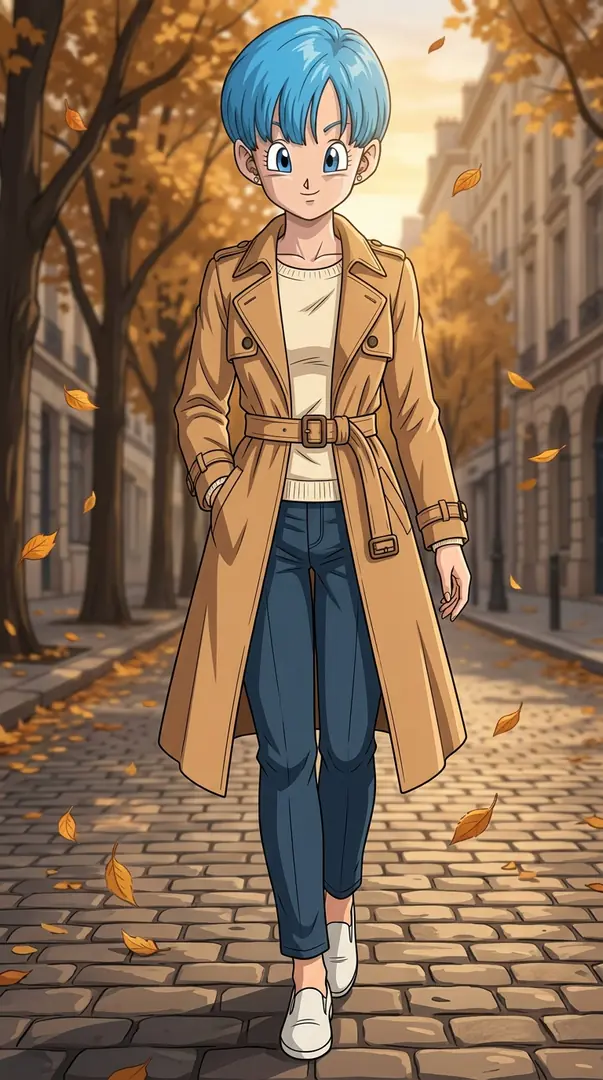
The Supreme Kai of Time Saga opens at the Time Nest, where the former Supreme Kai of Time, Aeos, confronts her successor Chronoa. Aeos declares that the timelines have been allowed to multiply beyond control and announces her intention to seize the Time Scrolls by force. Before Chronoa can respond, she finds herself surrounded by the mysterious Warriors in Black, agents loyal to Aeos who operate outside the boundaries of any known timeline.
An Invitation to Armageddon
On Earth, a Mysterious Guide approaches Goku with an invitation to the Super Space-Time Tournament, a competition to determine the strongest fighter across every existing timeline. Goku accepts without hesitation. Upon arrival, he reunites with familiar faces: Gohan, Piccolo, Vegeta, Hit, Jiren, and, unexpectedly, Yamcha. Twelve teams of seven warriors each are assembled, totaling eighty-four competitors drawn from across the multiverse.
The first round is a survival battle with a 50-takk time limit, roughly 24 minutes. Victory goes to any team that captures one of three flying fairy warriors or eliminates all other teams. The competitors are scattered across a massive battlefield, and the battles begin immediately. Goku encounters his timeline counterpart Xeno Goku, and the two are thrilled to face each other again. Elsewhere, Jiren fights Broly, Hit faces the towering Hirudegarn, and Kid Buu battles Janemba. Yamcha, recognizing he is outclassed, hides in the bushes until he stumbles upon a fairy and captures it, securing his team's advancement.
The Stakes Revealed
Three teams survive the first round. Then Aeos reveals the horrifying truth through her Warriors in Black: every team that lost in the first round has been erased from existence, along with their entire universe and timeline. The Scrolls of Eternity that defined those realities have been destroyed. Xeno Trunks, furious at the genocide, attacks the Future Warrior in Black, but their clash is halted by Aeos herself, who demonstrates her overwhelming power by casually deflecting both combatants' strongest attacks.


Survival Across Dimensions
The second round scatters the remaining warriors to different planets and timelines, forcing smaller confrontations with ever-higher stakes. Gohan and Piccolo find themselves on a Namek-like world facing King Cold, Frieza, Frost, and others drawn from parallel timelines. A Namekian in Black removes his cloak to reveal himself as an alternate-reality Piccolo, adding personal stakes to the encounter.
Goku vs. Goku, Round Two
The rematch between Goku and Xeno Goku becomes one of the saga's signature battles. Goku transforms into Super Saiyan Blue while Xeno Goku ascends to Super Saiyan 4, reprising the clash of transformation philosophies that has defined the Heroes franchise. Their fight shakes the tournament's structure itself, though Aeos watches with satisfaction rather than concern. She has engineered this tournament to consolidate the strongest warriors under her control while culling the weaker timelines.
The Darkness Returns
As the tournament progresses, a new threat emerges from outside the competition entirely. Dark forces begin to infiltrate the tournament structure, and the Warriors in Black reveal their own agendas that diverge from Aeos's plans. The battles escalate to divine proportions, with confrontations occurring across multiple dimensions simultaneously. Unity becomes the only viable strategy, as warriors from rival timelines must set aside their competitive instincts to address a threat that could consume every timeline at once.
The saga's later chapters build toward a climactic duel between the strongest warriors remaining, a fight that carries the weight of every erased timeline behind it. The stakes are not merely personal victory but the survival of entire realities.

When Timelines Collide
The Supreme Kai of Time Saga represents Super Dragon Ball Heroes at its most ambitious, weaving together characters and transformations from across the entire franchise into a single narrative about the consequences of infinite timelines. Aeos's philosophy provides the saga with genuine intellectual stakes: she is not simply a villain but a cosmic authority who believes that unchecked timeline proliferation will eventually destroy reality. Her solution is brutal, erase the weak to preserve the strong, but it follows a logic that the heroes must address rather than simply punch through.
Yamcha's Unlikely Heroism
In a franchise where Yamcha has been the subject of jokes for decades, this saga gives him a moment of genuine narrative importance. His survival strategy in the first round, hiding and then stumbling onto a fairy, is exactly the kind of pragmatic thinking that keeps his team alive. It is a reminder that in Dragon Ball, not every contribution needs to involve a planetary-scale energy blast.
The saga also functions as a celebration of the Heroes franchise's greatest asset: the ability to pit characters against each other who would never meet in the mainline canon. Jiren versus Broly, Hit versus Hirudegarn, alternate Piccolos fighting side by side. These matchups exist because the Heroes games have built a framework that allows them, and the Supreme Kai of Time Saga uses that framework to tell a story about whether the multiverse can survive its own complexity.
Dragon Ball Daima Blu-ray Confirmed for August 11 Release After March Delay
May 27, 2026Crunchyroll confirmed an August 11, 2026 Blu-ray release for Dragon Ball Daima after the originally planned March 3 date was pulled. Standard and limited editions opened for pre-order on the Crunchyroll Store the same week as the new announcement....
New Dragon Ball Super: Beerus Trailer Reveals Frieza
May 25, 2026The Super Gekitou trailer for Dragon Ball Super: Beerus debuted on April 19, 2026 at Dragon Ball Games Battle Hour and ends with Frieza awaiting his resurrection. The enhanced remake of the original anime premieres in Fall 2026....
Masako Nozawa Stars in McDonald's Japan Baki Dating Sim Spoof for the Chicken Tatsuta Campaign
Apr 20, 2026McDonald's Japan dropped a 35-second dating sim parody starring Masako Nozawa, the voice of Goku since 1986, opposite Baki Hanma and Kaio Retsu, built around the Spring Chicken Tatsuta burger....
Sources & Information
Looking for more on Supreme Kai of Time Saga? The Dragon Ball Wiki on Fandom has a dedicated page with community notes.
View on FandomThis content is original writing by Daddy Jim Headquarters based on the Dragon Ball anime series, manga, and official materials. Episode and chapter references are cited where applicable.
Character and scene imagery on this site is original artwork by Daddy Jim Headquarters, not screenshots or licensed imagery. Official cover art is used on three types of pages for editorial commentary:
- Movie pages: theatrical posters and key visuals, credited to Toei Animation and Shueisha.
- Game pages: official box art, credited to Bandai Namco, Atari, and other publishers.
- Manga chapter pages: Jump Comics volume covers, credited to Shueisha and Akira Toriyama.
Browse our episode guides:
Official resources:
Dragon Ball Music by Daddy Jim Headquarters
Come listen to some Dragon Ball R&B.
Help Us Keep This Wiki Accurate
Daddy Jim Headquarters maintains this encyclopedia across 13 languages. If you spot an error, a translation issue, or something that doesn't look right, let us know.