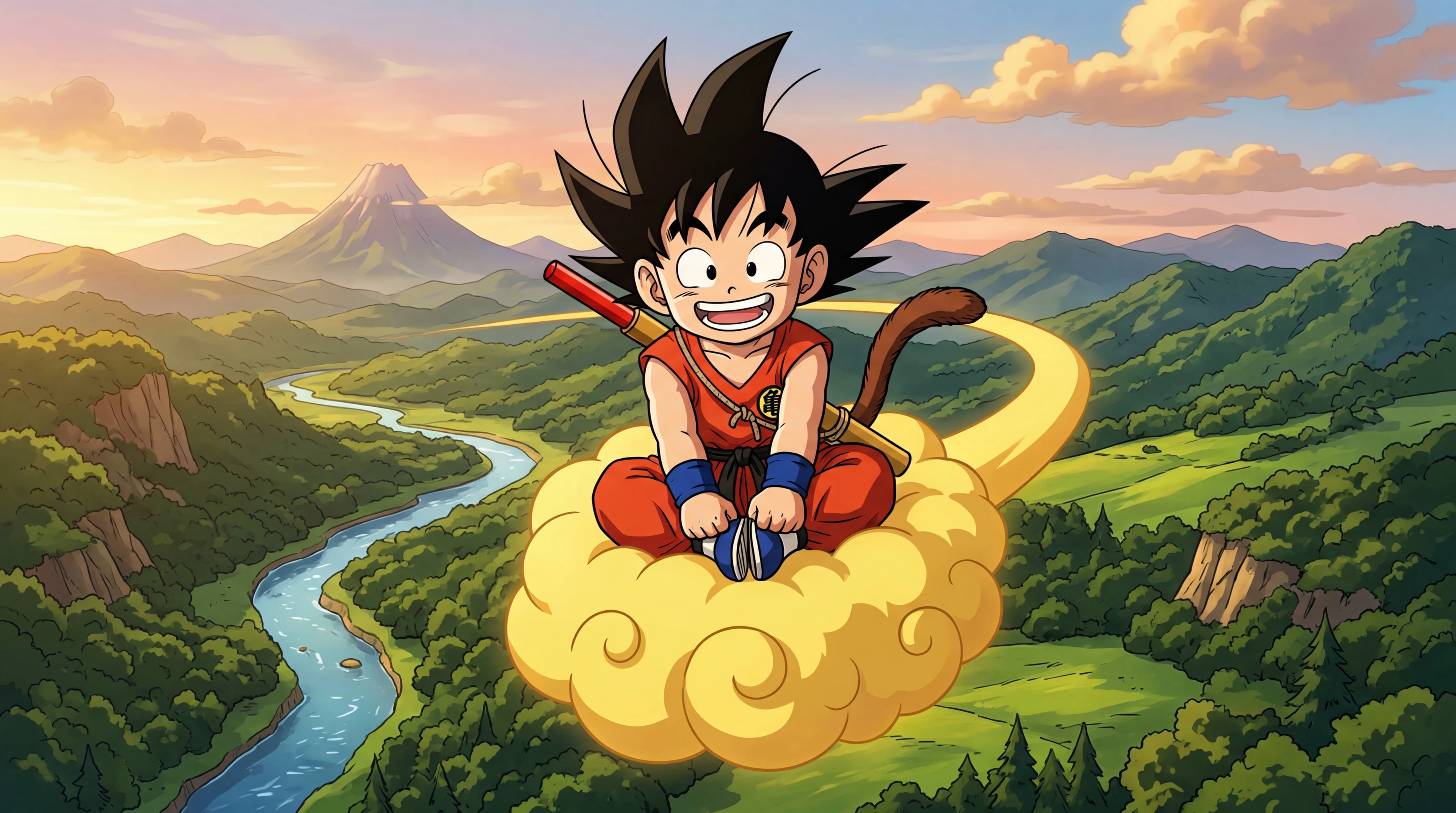
Big Tree Cannon
TechniqueA powerful energy wave technique used by Trunks where he charges energy in both hands spread wide, then brings them together and fires with his index fingers pointed forward like a gun. The stance mirrors his father Vegeta's Final Flash charging pose.
Mechanics
Trunks extends both arms outward to his sides, gathering energy into two separate spheres in each hand. This wide charging stance closely resembles the way Vegeta prepares his Final Flash, reflecting Trunks' Saiyan lineage and fighting instincts. He then snaps his arms together in front of his body, points both index fingers outward, and releases a concentrated golden energy wave. The firing pose resembles a child mimicking a finger gun, giving the technique a distinctly playful quality despite its destructive power.
Key Appearances
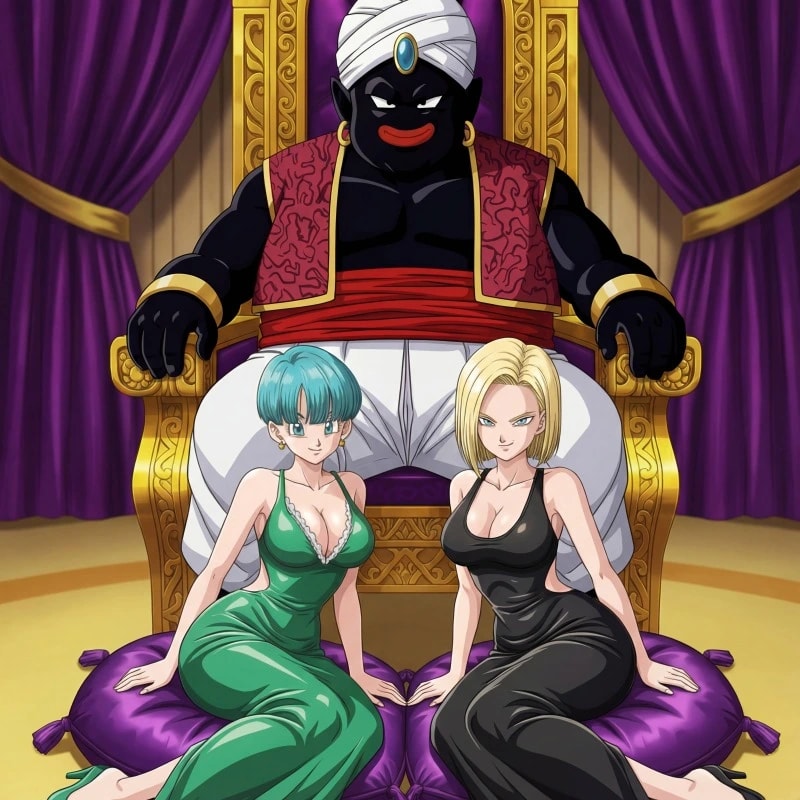
Trunks first fires the Big Tree Cannon during the 25th World Martial Arts Tournament while disguised as Mighty Mask alongside Goten. Stacked on Goten's shoulders under a single costume, Trunks uses the technique in an attempt to blast Android 18 out of the ring during their final match. Despite the power behind the attack, 18 dodges it cleanly.
Film Usage
In the Dragon Ball Z film Bio-Broly, Trunks combines his Big Tree Cannon with Goten's Kamehameha to create a joint energy wave against the titular villain. In this appearance, the beam's color shifts to blue rather than its typical gold.
Variants
Gotenks, the fusion of Trunks and Goten, has access to techniques influenced by the Big Tree Cannon, including the Revenge Cannon mouth blast. The technique appears throughout the Budokai Tenkaichi series, Supersonic Warriors 2, and Xenoverse titles as one of kid Trunks' signature special moves. Its visual connection to Vegeta's Final Flash through the wide-arm charging pose reinforces the father-son parallel that runs through the Vegeta family's fighting style.
Related Reading
See all
Krillin's on the Tinder: How the Ultimate Short King Survived the Height Filter
Tinder built a height filter. Dragon Ball built a five foot legend. What happened when we sent the ultimate short king into the modern dating hellscape....
Infinite Zeni Glitch: When Yamcha Never Pays and Mr. Popo Always Does
The internet found an infinite money glitch. So did Yamcha. A smooth R&B track about the easiest money in the Dragon Ball world and the one man who keeps paying for it....
Frequently Asked Questions
Is it Big Tree Cannon or Victory Cannon?
A powerful energy wave technique used by Trunks where he charges energy in both hands spread wide, then brings them together and fires with his index fingers pointed forward like a gun. The stance mirrors his father Vegeta's Final Flash charging pose.
How does the Big Tree Cannon work?
Trunks extends both arms outward to his sides, gathering energy into two separate spheres in each hand. This wide charging stance closely resembles the way Vegeta prepares his Final Flash, reflecting Trunks' Saiyan lineage and fighting instincts. He then snaps his arms together in front of his body, points both index fingers outward, and releases a concentrated golden energy wave.
Who invented the Big Tree Cannon?
The Big Tree Cannon was invented by Future Trunks. A powerful energy wave technique used by Trunks where he charges energy in both hands spread wide, then brings them together and fires with his index fingers pointed forward like a gun.
Who has used the Big Tree Cannon?
Trunks first fires the Big Tree Cannon during the 25th World Martial Arts Tournament while disguised as Mighty Mask alongside Goten. Stacked on Goten's shoulders under a single costume, Trunks uses the technique in an attempt to blast Android 18 out of the ring during their final match. Despite the power behind the attack, 18 dodges it cleanly.
When does the Big Tree Cannon first appear?
The Big Tree Cannon first appears in Dragon Ball Z Episode 210. In the manga, it debuts in the Dragon Ball Chapter 398 arc. A powerful energy wave technique used by Trunks where he charges energy in both hands spread wide, then brings them together and fires with his index fingers pointed forward like a gun.
Sources & Information
Looking for more on Big Tree Cannon? The Dragon Ball Wiki on Fandom has a dedicated page with community notes.
View on FandomThis content is original writing by Daddy Jim Headquarters based on the Dragon Ball anime series, manga, and official materials. Episode and chapter references are cited where applicable.
Character and scene imagery on this site is original artwork by Daddy Jim Headquarters, not screenshots or licensed imagery. Official cover art is used on three types of pages for editorial commentary:
- Movie pages: theatrical posters and key visuals, credited to Toei Animation and Shueisha.
- Game pages: official box art, credited to Bandai Namco, Atari, and other publishers.
- Manga chapter pages: Jump Comics volume covers, credited to Shueisha and Akira Toriyama.
Browse our episode guides:
Official resources:
Help Us Keep This Wiki Accurate
Daddy Jim Headquarters maintains this encyclopedia. If you spot an error, a translation issue, or something that doesn't look right, let us know.