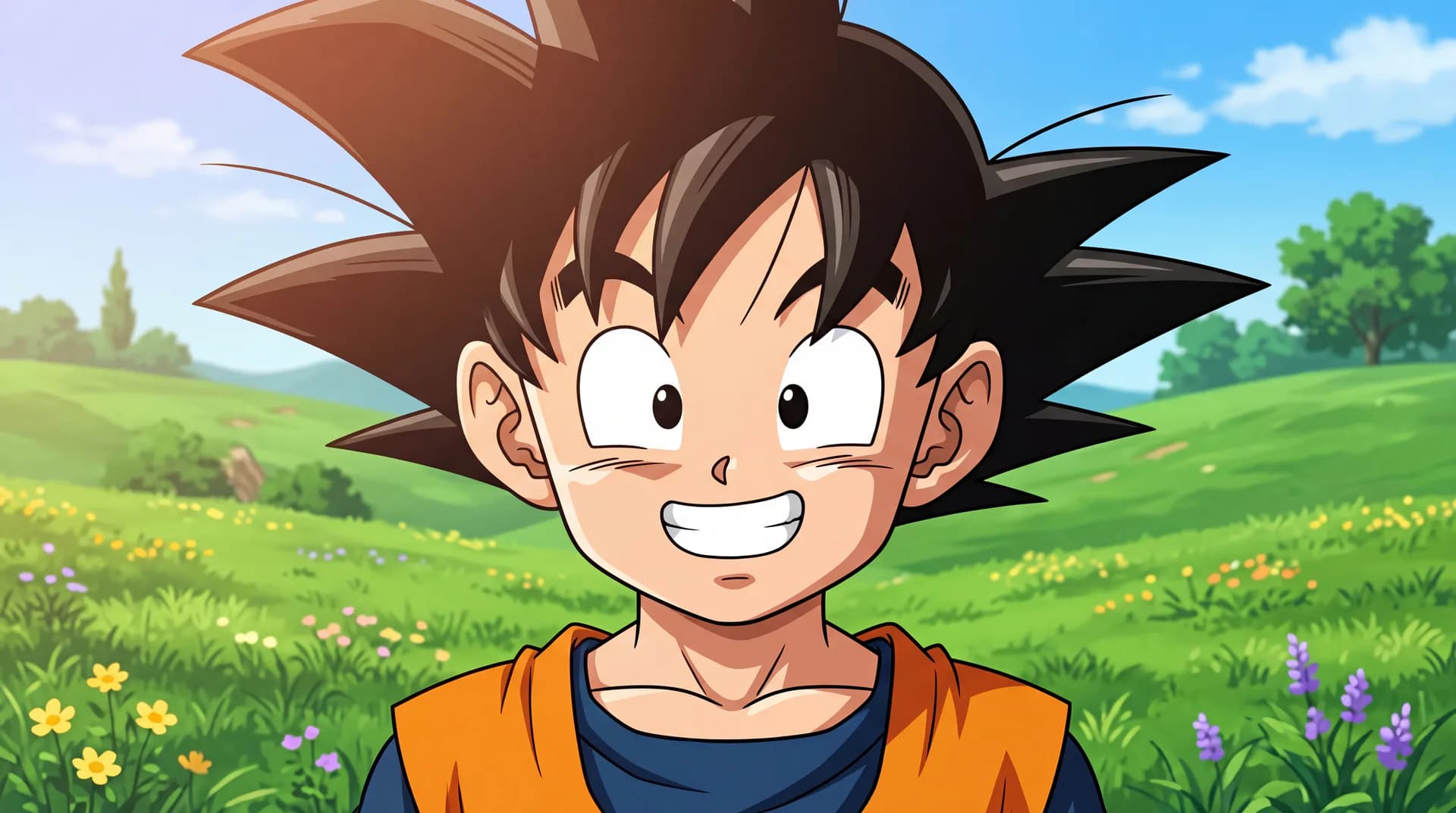
Goten
CharacterGoten is the second son of Goku and Chi-Chi, born shortly after the Cell Games. He bears a striking resemblance to his father as a child and shares Goku's natural fighting talent, though he tends toward a more carefree and less combat-driven personality than either his father or older brother Gohan.
Also Known As
First Appearance
Allegiances
Occupations
The Youngest Super Saiyan
Goten achieved the Super Saiyan transformation at approximately seven years old, making him the youngest known Saiyan to reach that milestone at the time. He accomplished this while training with his mother Chi-Chi, treating the golden-haired form almost casually, as though it were as natural as breathing. This ease of transformation reflects a theory within the Dragon Ball universe that each successive generation of Saiyan hybrids finds it progressively easier to access higher power states. Goten grew up without his father, who had chosen to remain dead after sacrificing himself to stop Cell. Despite this absence, he was a cheerful, well-adjusted child, largely due to Chi-Chi's devoted parenting and the influence of his older brother Gohan.
The World Tournament and Buu
Goten finally met his father when Goku was granted a single day to return to the living world for the World Martial Arts Tournament. The reunion was joyful but brief, as the emergence of Majin Buu cut the tournament short and plunged the world into chaos. Goten and Trunks were tasked with learning the Fusion Dance, a technique that would combine their powers into a single warrior named Gotenks. Training in the Hyperbolic Time Chamber under Piccolo's supervision, the boys mastered the fusion and confronted Super Buu directly. As Gotenks, they achieved Super Saiyan 3 and unleashed a barrage of creative techniques, but their immaturity and overconfidence prevented them from capitalizing on their advantages. Despite these shortcomings, their contribution bought time for the older warriors to formulate a plan.

Growing Up in Peacetime
Following the defeat of Buu, Goten settled into a relatively normal life, attending school and spending time with Trunks. Unlike Gohan, who carried the weight of enormous expectations, Goten was largely free to be a regular kid. In Dragon Ball Super, he and Trunks continued their adventures on a smaller scale, occasionally stumbling into situations that required their combined abilities but generally living the peaceful childhood that their parents had fought to secure for them. Goten participated in training sessions with his father from time to time, and his power continued to grow, though at a much more relaxed pace than the intense, crisis-driven development that characterized Gohan's youth.
Family Dynamics
Goten's relationship with his family forms the emotional core of his character. His bond with Gohan is warm and protective; the older brother frequently looks out for him while also serving as an academic role model that Goten cheerfully ignores. With Chi-Chi, he is an obedient and affectionate son, the more domestically agreeable of her two children. His connection to Goku is complicated by absence. While Goten idolizes his father, their relationship lacks the depth of the bond between Goku and Gohan, simply because Goku was not present for most of Goten's formative years. This dynamic adds a quiet layer of melancholy beneath Goten's sunny personality.
Related Reading
See all
Namek Has No Women, and Piccolo Pulls Anyway
There are no women on Namek. That isn't an oversight, it's the biology. Why we handed Piccolo the one thing his own species rules out, and why it had to be trap soul....
1000 Times Over: Who Is John Dragon Ball Singing To?
Dragon Ball handed us a protagonist with no history and the internet named him John Dragon Ball. So we built him somebody to talk to....
Abilities and Potential
Goten's natural talent is undeniable. He learned the Kamehameha simply by watching Gohan perform it, firing off a version of the technique with no formal instruction. His Super Saiyan form, achieved without any emotional trauma or intense training, comes as effortlessly to him as his base form. In combat, he is instinctive rather than strategic, relying on his natural reflexes and raw ability rather than the calculated approach that defines fighters like Piccolo or Vegeta. This instinctive style makes him unpredictable but also limits his effectiveness against disciplined opponents.
Gotenks and Fusion
The Fusion Dance with Trunks remains Goten's most significant combat asset. Gotenks at Super Saiyan 3 demonstrated power sufficient to challenge Super Buu, placing the fused warrior among the strongest beings in the universe during that era. However, the fusion's thirty-minute time limit, combined with the enormous energy drain of Super Saiyan 3, creates a narrow window of peak performance. Gotenks's unique techniques, including the Super Ghost Kamikaze Attack and the Charging Ultra Buu Buu Volleyball, showcase the boys' creativity and imagination. As Goten matures, his potential to contribute independently grows, though the series has yet to fully explore what he might accomplish on his own. His Saiyan heritage guarantees that his ceiling remains extraordinarily high, even if he has not been pushed to reach it in the way his brother and father were.
Frequently Asked Questions
Is Goten the son of Goku or Gohan?
Goten is the son of Goku and Chi-Chi, born shortly after the Cell Games. Gohan is his older brother, not his father. He bears a striking resemblance to Goku as a child and shares his father's natural fighting talent.
How old was Goten when he became Super Saiyan?
Goten achieved the Super Saiyan transformation at approximately seven years old while training with his mother Chi-Chi, making him the youngest known Saiyan to reach that milestone at the time. He treated the golden-haired form almost casually, as though it were as natural as breathing.
Is Goten stronger than Goku?
No. Goten's power continued to grow but at a much more relaxed pace than the intense, crisis-driven development that characterized Gohan's youth. The series has not pushed him to the same ceiling as his father or brother, though his Saiyan heritage keeps his potential extraordinarily high.
How does Goten fuse with Trunks?
Goten and Trunks use the Fusion Dance, learned in the Hyperbolic Time Chamber under Piccolo's supervision, to combine into a single warrior named Gotenks. As Gotenks they achieved Super Saiyan 3 against Super Buu. The fusion has a thirty-minute time limit.
How did Goten learn the Kamehameha?
Goten learned the Kamehameha simply by watching Gohan perform it, firing off a version of the technique with no formal instruction. His Super Saiyan form, achieved without any emotional trauma or intense training, came just as effortlessly. He is an instinctive rather than strategic fighter.
Sources & Information
Looking for more on Goten? The Dragon Ball Wiki on Fandom has a dedicated page with community notes.
View on FandomThis content is original writing by Daddy Jim Headquarters based on the Dragon Ball anime series, manga, and official materials. Episode and chapter references are cited where applicable.
Rights holders
- Created byAkira Toriyama
- Published byShueisha
- Animated byToei Animation
All rights belong to their respective owners.
Character and scene imagery on this site is original artwork by Daddy Jim Headquarters, not screenshots or licensed imagery. Official cover art is used on three types of pages for editorial commentary:
- Movie pages: theatrical posters and key visuals, credited to Toei Animation and Shueisha.
- Game pages: official box art, credited to Bandai Namco, Atari, and other publishers.
- Manga chapter pages: Jump Comics volume covers, credited to Shueisha and Akira Toriyama.
Browse our episode guides:
Official resources:
Help Us Keep This Wiki Accurate
Daddy Jim Headquarters maintains this encyclopedia. If you spot an error, a translation issue, or something that doesn't look right, let us know.