Copy Ability
TechniqueThe ability to perfectly replicate an opponent's technique after witnessing it once. Several fighters across the series demonstrate this talent, most notably Goku and Cell.
Learning at a Glance
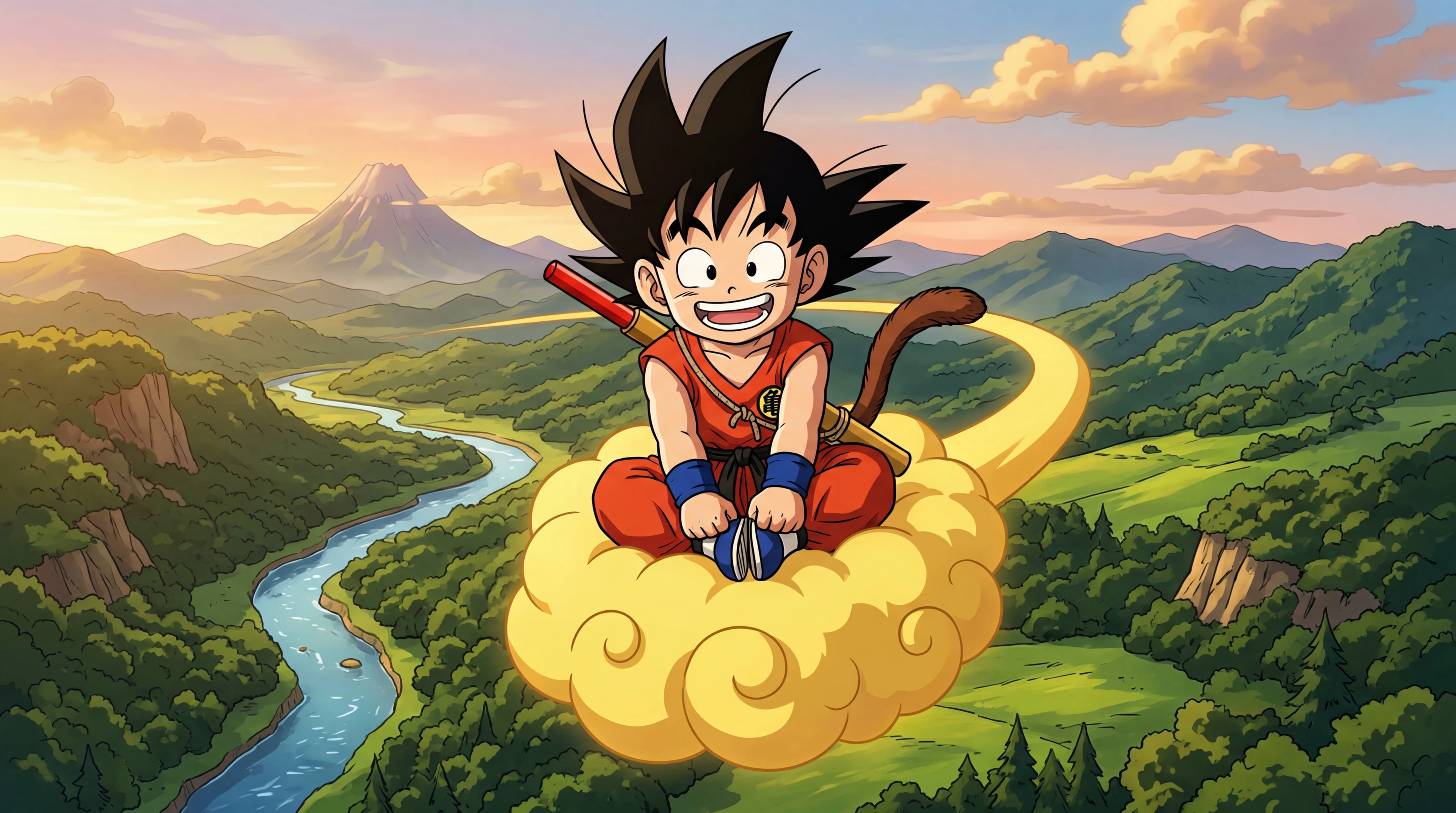
The Copy Ability is not a single technique but a natural talent that certain fighters possess: the capacity to observe a technique and then reproduce it. Goku is the most famous practitioner, having learned the Kamehameha after watching Master Roshi perform it just once. This innate mimicry was present even in childhood and became a defining characteristic of his fighting genius.
The ability requires more than simple observation. The user must be able to understand the flow of ki involved in the technique and possess sufficient control to replicate it. This is why not every fighter can copy techniques on sight; it requires both exceptional ki sensitivity and martial arts intuition.



Famous Copycats of Dragon Ball
Young Goku shocked Master Roshi by firing a Kamehameha after seeing the old master use it only once, though his version was considerably weaker. Over time, Goku copied or adapted numerous techniques from friends and enemies alike, including the Afterimage Technique and even conceptual elements from opponents' fighting styles.
Cell: The Ultimate Copycat
Cell represents the scientific extreme of the Copy Ability. Created with genetic material from Goku, Vegeta, Piccolo, Frieza, and King Cold, Cell has inherent access to all their techniques without ever needing to observe them. He fires Kamehameha waves, Death Beams, Destructo Discs, and Special Beam Cannons with casual ease, making him a walking encyclopedia of the series' most dangerous attacks.
Majin Buu takes the concept even further with his absorption ability, gaining not just techniques but the actual power and memories of those he absorbs. Goku Black copies Goku's fighting style through their encounters, growing stronger with each clash.

Beyond Simple Mimicry
What separates great fighters from mere mimics is what they do after copying a technique. Goku never simply replicates an attack; he adapts it, combines it with his own style, and frequently improves upon it. His Kamehameha evolved from a pale imitation of Roshi's version into one of the most versatile and powerful energy attacks in the universe.
The Copy Ability serves as an important narrative device in Dragon Ball, emphasizing that martial arts mastery comes from understanding principles rather than memorizing forms. The truly dangerous fighters are not those who know the most techniques, but those who can absorb, adapt, and innovate on the fly.
Related Reading
See all
Krillin's on the Tinder: How the Ultimate Short King Survived the Height Filter
Tinder built a height filter. Dragon Ball built a five foot legend. What happened when we sent the ultimate short king into the modern dating hellscape....

Infinite Zeni Glitch: When Yamcha Never Pays and Mr. Popo Always Does
The internet found an infinite money glitch. So did Yamcha. A smooth R&B track about the easiest money in the Dragon Ball world and the one man who keeps paying for it....
Frequently Asked Questions
What is the copy technique in Dragon Ball?
The ability to perfectly replicate an opponent's technique after witnessing it once. Several fighters across the series demonstrate this talent, most notably Goku and Cell.
How does the Copy Ability work?
The Copy Ability is not a single technique but a natural talent that certain fighters possess: the capacity to observe a technique and then reproduce it. Goku is the most famous practitioner, having learned the Kamehameha after watching Master Roshi perform it just once. This innate mimicry was present even in childhood and became a defining characteristic of his fighting genius.
Who has used the Copy Ability?
Young Goku shocked Master Roshi by firing a Kamehameha after seeing the old master use it only once, though his version was considerably weaker. Over time, Goku copied or adapted numerous techniques from friends and enemies alike, including the Afterimage Technique and even conceptual elements from opponents' fighting styles. Cell represents the scientific extreme of the Copy Ability.
How is the Copy Ability represented in Dragon Ball video games?
What separates great fighters from mere mimics is what they do after copying a technique. Goku never simply replicates an attack; he adapts it, combines it with his own style, and frequently improves upon it. His Kamehameha evolved from a pale imitation of Roshi's version into one of the most versatile and powerful energy attacks in the universe.
What type of attack is the Copy Ability?
The Copy Ability is classified as a Support technique within the Dragon Ball series. The ability to perfectly replicate an opponent's technique after witnessing it once. Several fighters across the series demonstrate this talent, most notably Goku and Cell.
Sources & Information
Looking for more on Copy Ability? The Dragon Ball Wiki on Fandom has a dedicated page with community notes.
View on FandomThis content is original writing by Daddy Jim Headquarters based on the Dragon Ball anime series, manga, and official materials. Episode and chapter references are cited where applicable.
Character and scene imagery on this site is original artwork by Daddy Jim Headquarters, not screenshots or licensed imagery. Official cover art is used on three types of pages for editorial commentary:
- Movie pages: theatrical posters and key visuals, credited to Toei Animation and Shueisha.
- Game pages: official box art, credited to Bandai Namco, Atari, and other publishers.
- Manga chapter pages: Jump Comics volume covers, credited to Shueisha and Akira Toriyama.
Browse our episode guides:
Official resources:
Help Us Keep This Wiki Accurate
Daddy Jim Headquarters maintains this encyclopedia. If you spot an error, a translation issue, or something that doesn't look right, let us know.