EX-Fusion
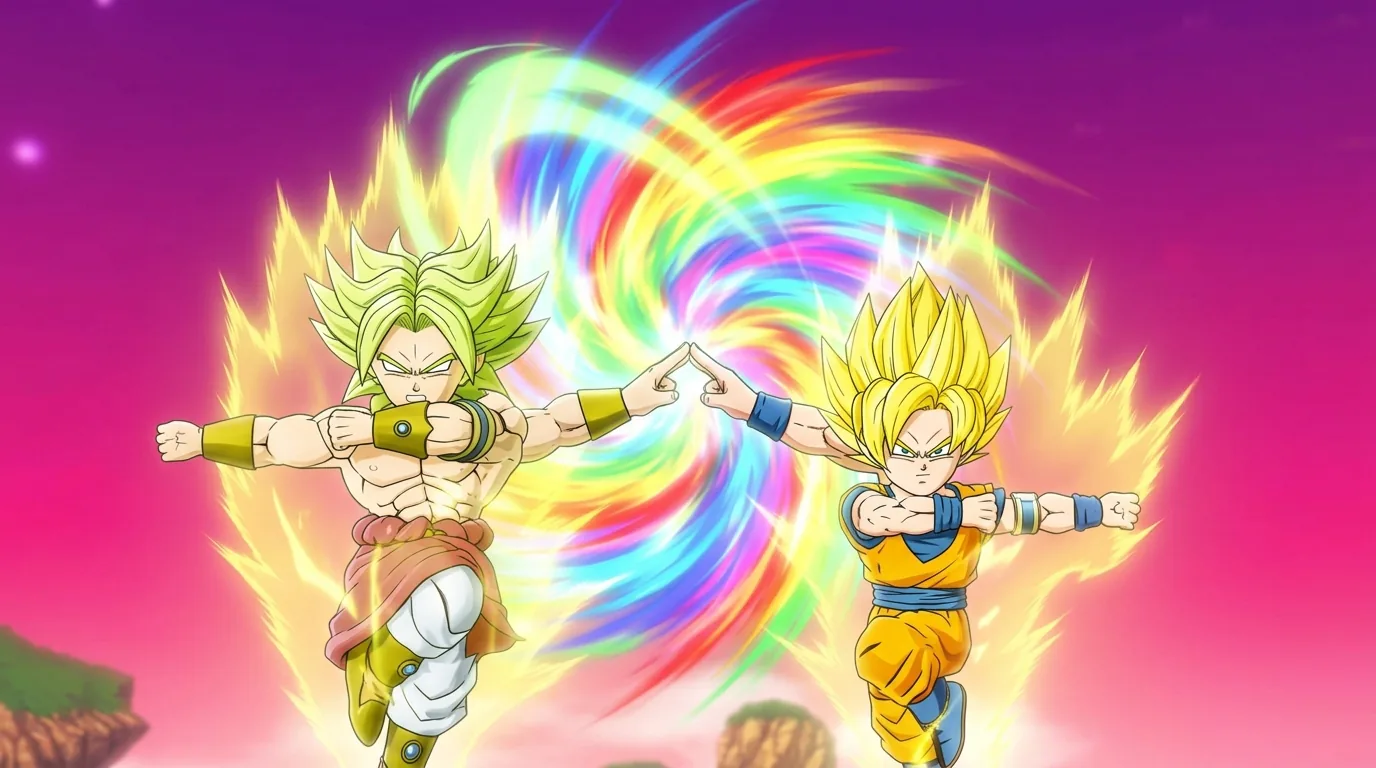
TechniqueEX-Fusion is a scientific adaptation of the Fusion Dance created by Capsule Corporation through Bulma's invention of the Metamo-Ring. Featured exclusively in Dragon Ball Fusions, it trades raw power for unprecedented flexibility, allowing any two compatible fighters to merge without time restrictions.
The Metamo-Ring System
Bulma designed the Metamo-Ring as a technological bridge between the Fusion Dance and Potara methods, attempting to combine the best features of each. Two fighters wearing Metamo-Rings perform the standard Fusion Dance choreography, but the rings stabilize and modify the fusion process in several important ways. The resulting warrior is permanent until they choose to remove the fused Metamo-Ring that forms from the merger of both original rings, giving fighters complete control over their fused state.
According to Bulma, EX-Fusion captures the strengths of both traditional methods. Like Potara, it allows fusion regardless of differences in size, power level, or body type, and it can remain active indefinitely. Like the Fusion Dance, it requires an active choice to initiate, preventing accidental fusions. The tradeoff is power: an EX-Fusion is weaker than what the same two individuals would produce through either the Fusion Dance or Potara. For example, EX Gotenks is noticeably less powerful than the standard Gotenks, but he never has to worry about defusing at a critical moment.
The affinity between the two fusees plays a meaningful role in determining whether EX-Fusion can succeed and how strong the result will be. Close friends, family members, and teammates fuse more easily and produce better results. Even rivals or enemies can fuse if they share enough mutual respect or common purpose, though the process is more difficult. Goten and Trunks, with their extensive fusion experience, can perform EX-Fusion almost effortlessly.


Notable EX-Fusions and Unique Properties
Dragon Ball Fusions features dozens of EX-Fusion combinations, many of which pair characters who could never fuse through traditional methods. Karoly, the fusion of Goku and Broly, was created when Towa forced both fighters to merge using Metamo-Rings. Celluza combined Cell and Frieza into a single terrifying villain. Coolieza merged the two Frieza Race brothers. Even characters from different franchises, like Arale from Dr. Slump, could participate in EX-Fusion within the game's crossover setting.
EX-Fusions inherit physical and mechanical traits from both components in interesting ways. Android EX-Fusions retain cybernetic components like detachable fists and energy absorption capabilities. If one fusee is already in a transformed state when fusing, that transformation becomes permanently incorporated into the EX-Fusion's appearance and power, creating hybrid forms. Karoly, for instance, blends Goku's Super Saiyan traits with Broly's Legendary form into a single permanent state.
The Metamo-Rings themselves appear to be extremely durable, as no instance of one breaking during combat has ever been shown. This is presumably intentional on Bulma's part, since a shattered ring during battle would end the fusion at the worst possible time. Capsule Corporation produces and markets the rings within the Timespace Rift, explaining why both heroes and villains have access to the technology throughout the game.


Sources & Information
Looking for more on EX-Fusion? The Dragon Ball Wiki on Fandom has a dedicated page with community notes.
View on FandomThis content is original writing by Daddy Jim Headquarters based on the Dragon Ball anime series, manga, and official materials. Episode and chapter references are cited where applicable.
Character and scene imagery on this site is original artwork by Daddy Jim Headquarters, not screenshots or licensed imagery. Official cover art is used on three types of pages for editorial commentary:
- Movie pages: theatrical posters and key visuals, credited to Toei Animation and Shueisha.
- Game pages: official box art, credited to Bandai Namco, Atari, and other publishers.
- Manga chapter pages: Jump Comics volume covers, credited to Shueisha and Akira Toriyama.
Browse our episode guides:
Official resources:
Dragon Ball Music by Daddy Jim Headquarters
Come listen to some Dragon Ball R&B.
Help Us Keep This Wiki Accurate
Daddy Jim Headquarters maintains this encyclopedia across 13 languages. If you spot an error, a translation issue, or something that doesn't look right, let us know.