Great Ape
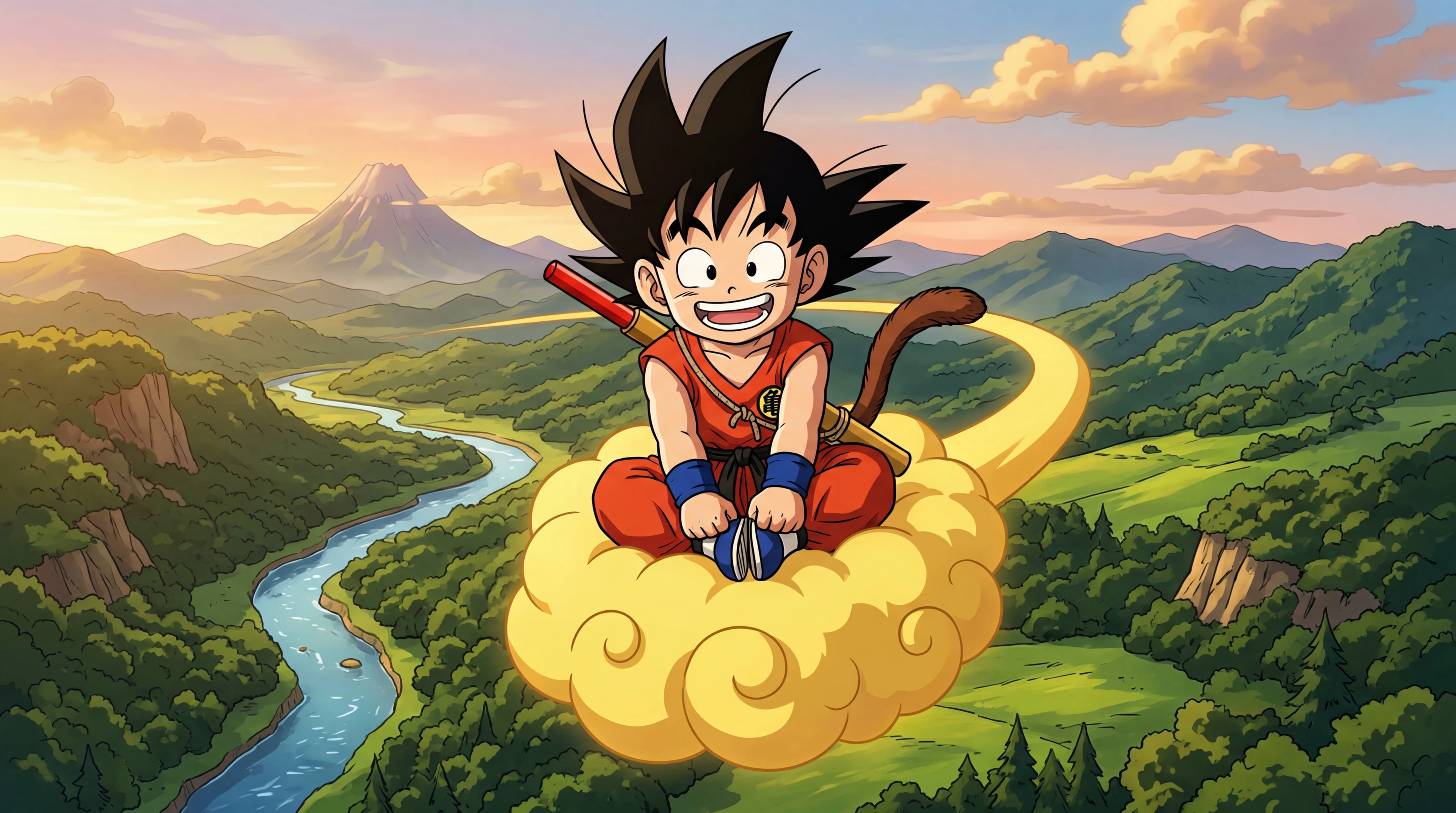
FormThe primal transformation of the Saiyan race, triggered when a Saiyan with a tail absorbs enough Blutz Waves from a full moon. The user becomes a towering ape roughly ten times their normal size, with their power multiplied tenfold. This form was the backbone of the Saiyan army's planetary conquest operations and played a critical role in early Dragon Ball before the Super Saiyan line took center stage.
The Biology of the Great Ape
The Great Ape transformation is fundamentally biological rather than ki-based. When a full moon's light reflects sunlight containing Blutz Waves into a Saiyan's eyes, a chemical reaction triggers in their tail, initiating a rapid and violent physical transformation. The Saiyan's body expands to enormous proportions, their features become ape-like, and their power increases tenfold. The process is automatic and involuntary for Saiyans who have not trained to control it.
The tail is the critical component. Without it, the transformation cannot occur regardless of how many Blutz Waves the Saiyan absorbs. This vulnerability was exploited repeatedly in the series: Goku's tail was removed permanently by Kami during his training as a teenager, and Vegeta's tail was cut by Yajirobe during the Saiyan Saga to force his reversion. Gohan's tail was also removed multiple times throughout Dragon Ball Z to prevent accidental transformations.
Artificial Blutz Wave generators exist as a technological workaround for the need for a natural full moon. Bulma built one in Dragon Ball GT to help Vegeta achieve the Golden Great Ape state, and the Saiyan army historically used similar technology to invade planets that lacked moons.
Loss of Control
The standard Great Ape transformation overwhelms the user's rational mind, turning them into a rampaging beast driven purely by destructive instinct. The young Goku transformed several times during the original Dragon Ball series without ever realizing he was the "monster" that appeared during full moons. He destroyed Grandpa Gohan's home, terrorized the countryside, and even killed his own adoptive grandfather while in this form, all without retaining any memory afterward.
Elite Saiyan warriors, however, could retain their consciousness while transformed. Vegeta demonstrated full rational control during his Great Ape transformation on Earth, speaking, strategizing, and directing his attacks precisely. This control appeared to be a trained ability associated with battle experience and discipline rather than an inherent trait, as lower-class Saiyans like Goku's father Bardock did not display the same level of awareness.


The Great Ape in Dragon Ball History
The Great Ape was one of the earliest and most frightening mysteries of the original Dragon Ball series. Goku's grandfather Gohan had warned him never to look at the full moon, and the audience eventually learned why when Goku transformed during the 21st World Martial Arts Tournament, going on a rampage through the tournament grounds. Master Roshi was forced to destroy the moon itself with a Kamehameha to revert Goku, and it was Roshi's teacher Mutaito's legacy that provided the knowledge that the tail was the root cause.
The most significant Great Ape event in the original series was the revelation that Goku had unknowingly killed his own Grandpa Gohan while transformed as a child. This became a defining moment of tragedy in Goku's origin story, demonstrating that the Great Ape's loss of control could have devastating consequences for the people closest to the transformed Saiyan.
The Saiyan Saga
The Great Ape returned as a major threat during the Saiyan Saga when Vegeta created an artificial moon using a Power Ball technique to transform during his battle with Goku on Earth. The fully controlled Great Ape Vegeta was an overwhelming force that Goku, even with Kaio-ken, could not match. It took the combined efforts of Krillin, Gohan, and Yajirobe to cut Vegeta's tail and stop the transformation. Gohan then accidentally looked at the Power Ball and transformed himself, and his rampaging Great Ape form landed on Vegeta, contributing to the Saiyan prince's eventual defeat.
The Great Ape's Legacy
The Great Ape transformation's most enduring impact on the franchise was providing the biological foundation for Super Saiyan 4 in Dragon Ball GT. The Golden Great Ape, achieved when a Super Saiyan transforms into a Great Ape, serves as the required intermediate step for reaching the fourth Super Saiyan level. By regaining conscious control over the Golden Great Ape state, a Saiyan can condense that primal power into a human-sized form, producing Super Saiyan 4. This gave the Great Ape transformation renewed relevance long after the standard form had been eclipsed by the Super Saiyan line.
The Wrathful state demonstrated by Broly in Dragon Ball Super: Broly offered yet another interpretation, showing that a Saiyan with sufficient innate talent could channel the Great Ape's power through a human-sized body without physically transforming at all. Broly's yellow eyes during this state mimicked the Great Ape's gaze, visually communicating that he was tapping into the same primal power source internally.
A Symbol of Saiyan Heritage
In the broader context of the franchise, the Great Ape represents the untamed, animalistic side of the Saiyan race that the more refined transformations like Super Saiyan and its successors have civilized away. The permanent removal of most Saiyan characters' tails by the middle of Dragon Ball Z symbolized the race moving beyond its primal origins, but the form's DNA lives on in Super Saiyan 4 and Broly's Wrathful state as a reminder that the Saiyans are, at their core, a warrior species with roots in something far more savage than golden hair and colored auras.
Related Reading
See all
Krillin's on the Tinder: How the Ultimate Short King Survived the Height Filter
Tinder built a height filter. Dragon Ball built a five foot legend. What happened when we sent the ultimate short king into the modern dating hellscape....
Infinite Zeni Glitch: When Yamcha Never Pays and Mr. Popo Always Does
The internet found an infinite money glitch. So did Yamcha. A smooth R&B track about the easiest money in the Dragon Ball world and the one man who keeps paying for it....
Frequently Asked Questions
Who is the Great Ape in Dragon Ball?
The Great Ape is the primal transformation of the Saiyan race, triggered when a Saiyan with a tail absorbs enough Blutz Waves from a full moon. The user becomes a towering ape roughly ten times their normal size with their power multiplied tenfold. Goku, Vegeta, Gohan, Bardock, and many other Saiyans have all appeared in this form across the franchise.
Can Goku still go Great Ape?
Goku's tail was removed permanently by Kami during his training as a teenager, which prevents the transformation regardless of how many Blutz Waves he absorbs. The tail is the critical biological component, and without it the Great Ape change cannot occur. In Dragon Ball GT, the Elder Kai later regrew his tail, allowing him to enter the Golden Great Ape state.
What triggers the Great Ape transformation?
When a full moon's light reflects sunlight containing Blutz Waves into a Saiyan's eyes, a chemical reaction triggers in their tail, initiating a rapid and violent physical transformation. The Saiyan's body expands to enormous proportions, their features become ape-like, and their power increases tenfold. Artificial Blutz Wave generators can substitute for natural moonlight when no moon is available.
How is the Great Ape's tenfold power multiplier applied?
The Great Ape multiplies the user's base power by ten. Combined with the form's enormous physical strength and durability proportional to the massive size increase, this places the transformed Saiyan in a different combat tier than their base self. The form also grants the ability to fire energy blasts from the mouth.
How do you stop a Great Ape transformation?
Removing the tail forces immediate reversion, as Yajirobe demonstrated by cutting Vegeta's tail during the Saiyan Saga. Destroying the light source that generates the Blutz Waves also ends the transformation, as Master Roshi did by destroying the moon with a Kamehameha during the 21st World Martial Arts Tournament. Elite Saiyans who train to retain consciousness, like Vegeta, can also direct their actions while transformed.
Sources & Information
Looking for more on Great Ape? The Dragon Ball Wiki on Fandom has a dedicated page with community notes.
View on FandomThis content is original writing by Daddy Jim Headquarters based on the Dragon Ball anime series, manga, and official materials. Episode and chapter references are cited where applicable.
Character and scene imagery on this site is original artwork by Daddy Jim Headquarters, not screenshots or licensed imagery. Official cover art is used on three types of pages for editorial commentary:
- Movie pages: theatrical posters and key visuals, credited to Toei Animation and Shueisha.
- Game pages: official box art, credited to Bandai Namco, Atari, and other publishers.
- Manga chapter pages: Jump Comics volume covers, credited to Shueisha and Akira Toriyama.
Browse our episode guides:
Official resources:
Help Us Keep This Wiki Accurate
Daddy Jim Headquarters maintains this encyclopedia. If you spot an error, a translation issue, or something that doesn't look right, let us know.