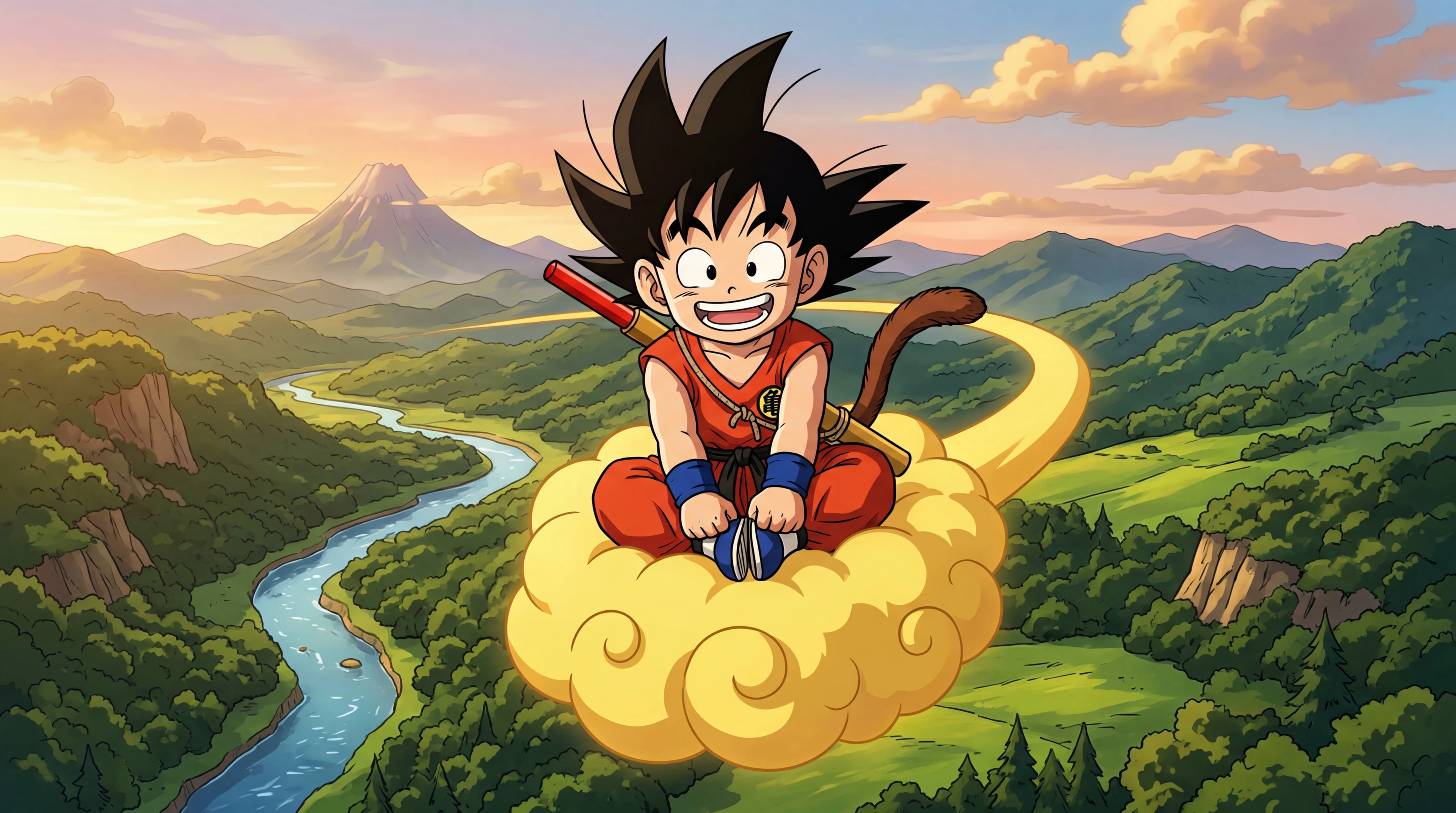
Shadow Dragon
RaceThe Shadow Dragons are seven evil beings born from the accumulated negative energy within the Dragon Balls, created as a consequence of the countless wishes made throughout the Dragon Ball series. They serve as the final villains of Dragon Ball GT, representing the ultimate price the heroes must pay for their long reliance on the Dragon Balls.
The Price of Every Wish
The Shadow Dragons represent one of the most philosophically compelling concepts in Dragon Ball. Every time the Dragon Balls are used to grant a wish, the positive energy that fulfills the wish is accompanied by negative energy. Under normal circumstances, the Dragon Balls absorb this negative energy and disperse it harmlessly over many years. But the heroes of Dragon Ball used the Dragon Balls repeatedly, often with only short intervals between wishes, never giving the Balls enough time to cleanse themselves.
The result was catastrophic. The accumulated negative energy reached a critical mass and gave birth to Black Smoke Shenron, a dark version of the Eternal Dragon who immediately split into seven individual Shadow Dragons, each one born from the negative energy of a specific wish. Every Shadow Dragon corresponds to one of the seven Dragon Balls and carries the corruption of the wish that created it.
The Seven Dragons
Each Shadow Dragon possesses unique abilities and a personality shaped by its origin wish. Syn Shenron, born from the One-Star Ball, is the strongest and most malevolent, eventually absorbing all seven Dragon Balls to become Omega Shenron, the most powerful villain in Dragon Ball GT. The other six range in power and temperament. Haze Shenron pollutes his environment. Eis Shenron commands ice. Nuova Shenron wields fire and is notably the most honorable of the group, willing to fight fairly even against Goku. Rage Shenron uses electricity. Oceanus Shenron controls wind and water. Naturon Shenron absorbs others to increase his power.
Their physical forms vary wildly, from humanoid dragon warriors to more bestial shapes, but all share a draconic quality that reflects their origin from the Dragon Balls themselves.
The Shadow Dragon Saga
The Shadow Dragon Saga forms the climactic final arc of Dragon Ball GT. When Goku attempts to use the Dragon Balls one more time, Black Smoke Shenron emerges instead of the familiar Eternal Dragon, announcing that the Dragon Balls have been corrupted beyond recovery. The seven Shadow Dragons scatter across the Earth, each claiming a territory and terrorizing the surrounding area.
Goku, joined initially by Pan and later by other allies, embarks on a quest to defeat each Shadow Dragon and reclaim the purified Dragon Balls. The battles escalate in difficulty, with each dragon presenting unique challenges that cannot be solved by raw power alone. Nuova Shenron stands out as an anomaly among the group, a Shadow Dragon born from a relatively benign wish who retains a sense of honor and fair play, temporarily allying with Goku against Syn Shenron.
The saga reaches its peak when Syn Shenron absorbs all seven Dragon Balls and transforms into Omega Shenron, a being of such overwhelming power that even Super Saiyan 4 Goku cannot defeat him alone. The final battle requires a Universal Spirit Bomb, drawing energy from across the universe, and ultimately leads to Goku's departure with the Eternal Dragon, bringing Dragon Ball GT to its emotional conclusion.
The Moral of the Dragon Balls
The Shadow Dragons deliver a message that resonates beyond the boundaries of the GT storyline: there is no such thing as a free wish. Every time the heroes took a shortcut by using the Dragon Balls to reverse death, undo destruction, or solve a crisis, they were building a debt of negative energy that would eventually come due. The Shadow Dragons are that debt given form, and defeating them requires the heroes to confront the consequences of their own choices.
Dark Dragons and Lasting Impact
Dark Dragon Ball Variants
Beyond the Earth Shadow Dragons, the Super Dragon Ball Heroes media introduced Dark Shadow Dragons, corrupted entities born from the Dark Dragon Balls. Led by Xeno Syn Shenron, these variants appeared during the Jaaku Missions and Demigra Assault storylines, extending the Shadow Dragon concept into Heroes' expansive crossover universe. While less narratively focused than their GT counterparts, the Dark Shadow Dragons demonstrate that the concept of corrupted Dragon Balls has implications across multiple timelines and dimensions.
Across Dragon Ball Media
The Shadow Dragons have become recurring presences in Dragon Ball video games. Dragon Ball Z: Dokkan Battle refers to them as the Legion of Shadow Dragons and features them as formidable opponents. Dragon Ball Fusions classifies them as part of the Offworlder race. In Dragon Ball Heroes: Victory Mission, the concept is expanded further with the Disciples of Evil, avatars possessed by Shadow Dragon spirits.
A GT Legacy
Dragon Ball GT remains a divisive entry in the franchise, but the Shadow Dragons are consistently cited as one of its strongest concepts. The idea that the Dragon Balls themselves could become the source of the final threat, that the heroes' greatest tool could be turned against them by their own overuse, introduced a level of thematic sophistication that resonated with fans even when other aspects of GT drew criticism. The Shadow Dragons proved that Dragon Ball could still surprise its audience with creative villainy, even after decades of escalating power levels and increasingly cosmic threats.
Related Reading
See all
Krillin's on the Tinder: How the Ultimate Short King Survived the Height Filter
Tinder built a height filter. Dragon Ball built a five foot legend. What happened when we sent the ultimate short king into the modern dating hellscape....
Infinite Zeni Glitch: When Yamcha Never Pays and Mr. Popo Always Does
The internet found an infinite money glitch. So did Yamcha. A smooth R&B track about the easiest money in the Dragon Ball world and the one man who keeps paying for it....
Frequently Asked Questions
What are the shadow dragons in Dragon Ball?
The Shadow Dragons are seven evil beings born from the accumulated negative energy within the Dragon Balls, created as a consequence of the countless wishes made throughout the Dragon Ball series. They serve as the final villains of Dragon Ball GT, representing the ultimate price the heroes must pay for their long reliance on the Dragon Balls.
What do the Shadow Dragon look like?
Varies dramatically. Each Shadow Dragon has a unique form themed around its specific Dragon Ball.
What abilities do the Shadow Dragon have?
The Shadow Dragon possess specific abilities tied to their nature. Each Shadow Dragon possesses unique elemental or special powers: Syn/Omega Shenron (strongest, can absorb other Dragon Balls), Eis Shenron (ice), Nuova Shenron (fire), Rage Shenron (electricity), Oceanus Shenron (wind/water), Haze Shenron (pollution), Naturon Shenron (earth/absorption).
What is the history of the Shadow Dragon?
After decades of Dragon Ball usage, the negative energy reached critical mass and spawned seven Shadow Dragons, one from each Dragon Ball. They scattered across Earth, and Goku and Pan had to defeat each one. The final battle against Omega Shenron (Syn Shenron after absorbing all Dragon Balls) required Goku to achieve Super Saiyan 4 and eventually use the Spirit Bomb.
What is notable trivia about the Shadow Dragon?
Several trivia points about the Shadow Dragon are recorded in Dragon Ball reference material. Nuova Shenron is the only Shadow Dragon who showed genuine honor and briefly allied with Goku.
Sources & Information
Looking for more on Shadow Dragon? The Dragon Ball Wiki on Fandom has a dedicated page with community notes.
View on FandomThis content is original writing by Daddy Jim Headquarters based on the Dragon Ball anime series, manga, and official materials. Episode and chapter references are cited where applicable.
Character and scene imagery on this site is original artwork by Daddy Jim Headquarters, not screenshots or licensed imagery. Official cover art is used on three types of pages for editorial commentary:
- Movie pages: theatrical posters and key visuals, credited to Toei Animation and Shueisha.
- Game pages: official box art, credited to Bandai Namco, Atari, and other publishers.
- Manga chapter pages: Jump Comics volume covers, credited to Shueisha and Akira Toriyama.
Browse our episode guides:
Official resources:
Help Us Keep This Wiki Accurate
Daddy Jim Headquarters maintains this encyclopedia. If you spot an error, a translation issue, or something that doesn't look right, let us know.