Other World Saga
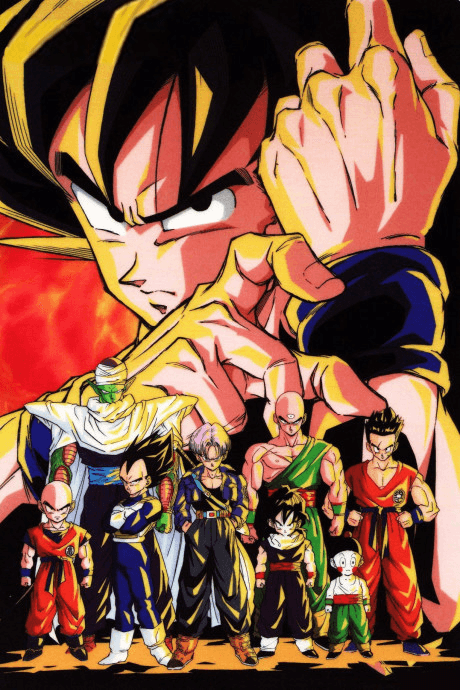
SagaA filler saga set between the Cell Games and the Great Saiyaman arcs. After defeating Cell, a deceased Goku travels to the Grand Kai's Planet where he enters the Other World Tournament, battles former villains in Hell, and faces the powerful warrior Pikkon in a finals match that ends in a controversial double disqualification.
A Dead Man's Tournament
The Other World Saga occupies a unique space in Dragon Ball Z. It is entirely filler, meaning it never appeared in Akira Toriyama's manga, and it was omitted from Dragon Ball Z Kai for that reason. But for fans who grew up watching the original broadcast, this five-episode arc provided a welcome bridge between the emotional devastation of the Cell Games and the time-skip that leads into the Buu Saga.
Trouble in Hell
Goku, now dead after sacrificing himself to stop Cell's self-destruction, travels with King Kai to the Grand Kai's Planet, a celestial hub where deceased heroes from across the four galaxies train and compete. The Grand Kai himself is an eccentric, music-loving old man who oversees the four directional Kais, North, South, East, and West, each of whom has trained their own champion fighters.
Almost immediately, trouble erupts. Down in Hell, Frieza, King Cold, Cell, and the Ginyu Force (minus Captain Ginyu) are terrorizing the guards, demanding to know the way out. Pikkon, the top student of the West Kai, is dispatched to handle the situation, and Goku tags along. Goku makes quick work of the Ginyu Force, but when Cell charges at him, Pikkon steps in and dispatches Cell, Frieza, and King Cold with stunning ease. The scene serves two purposes: it introduces Pikkon as a warrior on par with the Z Fighters' strongest, and it gives fans a satisfying coda to the Cell and Frieza storylines by showing them humiliated once more, this time by a fighter who barely breaks a sweat.
The Other World Tournament
With peace restored, the four Kais bicker about whose fighters are the best. West Kai proposes a tournament, and the Grand Kai agrees, offering a private lesson as the prize. The bracket fills with warriors from all four quadrants of the afterlife, each representing the strongest deceased heroes in history. Goku breezes through his early matches against Caterpy, Arqua, and Maraikoh, while Pikkon dismantles his side of the bracket with equal ease, including a victory over Olibu, a legendary warrior from the West.
Goku vs. Pikkon: The Ceiling Rule
The finals pit Goku against Pikkon, and the fight is genuinely excellent. Both warriors start cautiously, testing each other's defenses. Goku transforms into a Super Saiyan and Pikkon responds by removing his weighted clothing, revealing his true speed and power. The fight escalates rapidly, with Pikkon deploying his signature techniques: the Hyper Tornado, a spinning vortex that traps opponents in a column of wind, and the Thunder Flash Attack, a devastating energy wave that nearly finishes Goku twice.
A Finish Nobody Expected
On the third attempt at Thunder Flash, Goku uses Instant Transmission to vanish from Pikkon's line of fire, reappearing behind him to land a Kamehameha that blasts Pikkon out of the ring. Victory seems certain, until the Grand Kai intervenes. Both fighters touched the ceiling during the battle, which is apparently against the rules. The match is declared a draw, and both are disqualified. The Grand Kai, seemingly satisfied with the entertainment, agrees to train them both in about 200 to 300 years, giving himself time to "get back in shape."
The ruling is intentionally anticlimactic and humorous, deflating the tension of the fight in a way that feels very much in keeping with Dragon Ball's comic sensibility. Neither Goku nor Pikkon seems particularly bothered. The real reward was the fight itself.
Five Episodes, One New Rival
The Other World Saga's lasting contribution to Dragon Ball Z is Pikkon. While he never appears in the manga and remains technically non-canonical, Pikkon became a fan favorite through his calm demeanor, his raw power, and his ability to challenge Goku in a way that felt earned rather than forced. His Thunder Flash Attack and Hyper Tornado became signature moves in multiple Dragon Ball video games, and his character has appeared in titles from Budokai to Dokkan Battle.
A Bridge Between Eras
Structurally, the saga accomplishes something important: it gives the audience time to process Goku's death. The Cell Games ended on a note of profound loss, with Gohan stepping up as Earth's defender and Goku choosing to stay dead. The Other World Saga shows that death in Dragon Ball is not an ending but a transition. Goku is still training, still fighting, still grinning before a punch. The afterlife is not a void; it is another arena. This reframing softens the blow of Goku's absence and makes the seven-year gap that follows feel less like abandonment and more like preparation.
The saga's final scene, a brief cut to a teenaged Gohan heading off to his first day of high school, connects the lighthearted afterlife adventures to the grounded, slice-of-life tone of the Great Saiyaman Saga that follows. It is a small but effective pivot, reminding the audience that while Goku fights in the next world, life on Earth has moved forward without him.
Related Reading
See all
Chiaotzu is Chi-Chi's Boo: Why the Guy Who Never Wins Finally Wins
The least likely man in Dragon Ball just took the biggest win in our catalog. The story behind our R&B record about Chiaotzu, Chi-Chi, and a house Goku is never in....
Krillin's on the Tinder: How the Ultimate Short King Survived the Height Filter
Tinder built a height filter. Dragon Ball built a five foot legend. What happened when we sent the ultimate short king into the modern dating hellscape....
Frequently Asked Questions
Is the Other World Saga filler?
A filler saga set between the Cell Games and the Great Saiyaman arcs. After defeating Cell, a deceased Goku travels to the Grand Kai's Planet where he enters the Other World Tournament, battles former villains in Hell, and faces the powerful warrior Pikkon in a finals match that ends in a controversial double disqualification.
Which episodes cover the Other World Saga?
The Other World Saga spans episodes 195-199 of Dragon Ball Z. A filler saga set between the Cell Games and the Great Saiyaman arcs. After defeating Cell, a deceased Goku travels to the Grand Kai's Planet where he enters the Other World Tournament, battles former villains in Hell, and faces the powerful warrior Pikkon in a finals match that ends in a controversial double disqualification.
Who is the main villain of the Other World Saga?
The main villain of the Other World Saga is Pikkon (rival, not villain). A filler saga set between the Cell Games and the Great Saiyaman arcs. After defeating Cell, a deceased Goku travels to the Grand Kai's Planet where he enters the Other World Tournament, battles former villains in Hell, and faces the powerful warrior Pikkon in a finals match that ends in a controversial double disqualification.
What are the key events of the Other World Saga?
Key events in the Other World Saga include Other World Tournament takes place, Pikkon is introduced, Goku and Pikkon fight to a draw, Grand Kai is introduced, and the scope of the afterlife is expanded. A filler saga set between the Cell Games and the Great Saiyaman arcs.
Where does the Other World Saga fall in the Dragon Ball saga order?
The Other World Saga is the 12th saga in Dragon Ball Z. A filler saga set between the Cell Games and the Great Saiyaman arcs. After defeating Cell, a deceased Goku travels to the Grand Kai's Planet where he enters the Other World Tournament, battles former villains in Hell, and faces the powerful warrior Pikkon in a finals match that ends in a controversial double disqualification.
Sources & Information
Looking for more on Other World Saga? The Dragon Ball Wiki on Fandom has a dedicated page with community notes.
View on FandomThis content is original writing by Daddy Jim Headquarters based on the Dragon Ball anime series, manga, and official materials. Episode and chapter references are cited where applicable.
Character and scene imagery on this site is original artwork by Daddy Jim Headquarters, not screenshots or licensed imagery. Official cover art is used on three types of pages for editorial commentary:
- Movie pages: theatrical posters and key visuals, credited to Toei Animation and Shueisha.
- Game pages: official box art, credited to Bandai Namco, Atari, and other publishers.
- Manga chapter pages: Jump Comics volume covers, credited to Shueisha and Akira Toriyama.
Browse our episode guides:
Official resources:
Help Us Keep This Wiki Accurate
Daddy Jim Headquarters maintains this encyclopedia. If you spot an error, a translation issue, or something that doesn't look right, let us know.