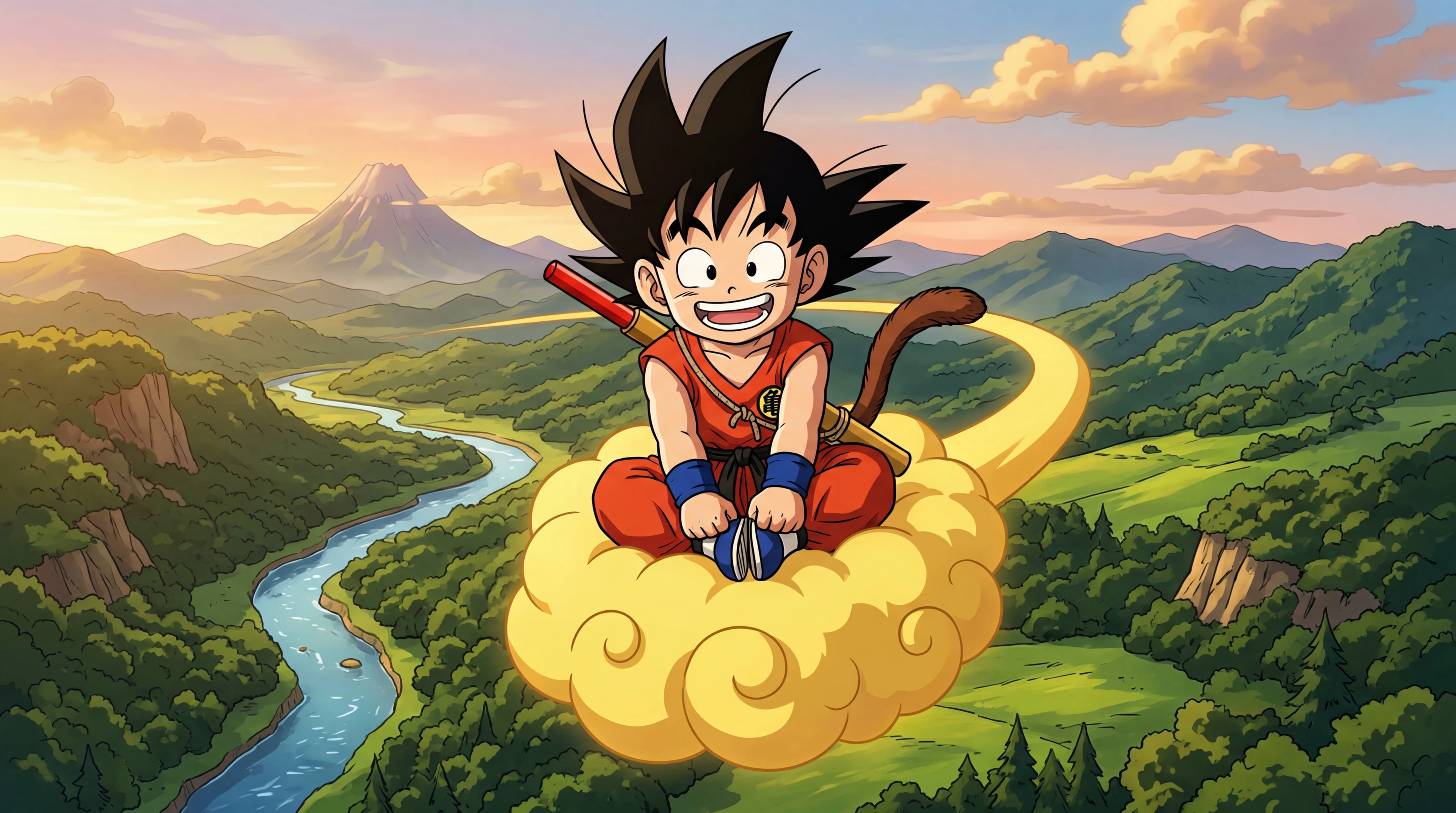
Masenko
TechniqueAn energy wave technique developed by Piccolo and passed down to his student Gohan, who made it his own signature attack. Performed by placing both hands above the head and firing a golden beam, it became the young half-Saiyan's go-to move.
Piccolo's Gift to His Student
The Masenko holds a special place in Dragon Ball because of what it represents: the bond between Piccolo and Gohan. Piccolo developed the technique as part of the Demon Clan's energy wave tradition, and during the year he spent training Gohan in preparation for the Saiyan invasion, he taught the young boy this attack. To perform it, the user places both hands above their head, one palm on top of the other, and charges a yellow-orange energy wave before thrusting both hands forward to release it.
For Gohan, the Masenko became his primary offensive technique throughout the Saiyan and Namek Sagas, a period when the Kamehameha had not yet entered his repertoire. Every time Gohan fired a Masenko, it was a reminder that Piccolo's influence shaped him as a warrior.
Gohan's Battle Cry
Against the Saiyans
Gohan's very first Masenko came during the battle against Nappa, when the four-year-old unleashed the technique in a burst of rage. The attack was powerful enough to get Nappa's attention and demonstrated that Gohan possessed real fighting potential despite his young age. Piccolo had trained him well.
On Namek and Beyond
During the Frieza Saga, Gohan used the Masenko repeatedly. He fired it at Frieza's second form during the desperate struggle on Namek, buying time for his allies. Future Trunks also demonstrated the Masenko in The History of Trunks special, having learned it from Future Gohan during their training together in the apocalyptic timeline. This detail emphasized that the technique was passed from Piccolo to Gohan to Trunks across generations of warriors.
Pan inherited the Masenko as well, using it in Dragon Ball GT and Dragon Ball Super, making it a three-generation lineage technique. From Piccolo's demonic origins through Gohan's hybrid Saiyan fury to Pan's youthful determination, the Masenko traveled further through the cast than almost any other non-Kamehameha move.
Standing in the Kamehameha's Shadow
The Masenko gradually took a backseat as Gohan grew older and added the Kamehameha to his arsenal. By the Cell Saga, Gohan was using Kamehameha variants for his biggest moments, and the Father-Son Kamehameha against Cell cemented that as his ultimate finisher. The Masenko became more of an opening salvo or quick-draw attack, used when Gohan needed to fire fast rather than charge up a full Kamehameha.
Despite being overshadowed, the Masenko has maintained a strong presence in video games. It is one of Gohan's core techniques across the Budokai, Tenkaichi, Xenoverse, and FighterZ series. The Xenoverse games make it a learnable skill for custom characters, and its quick execution speed makes it a popular choice for players who want a fast, reliable energy wave without the charge time of bigger attacks.
Related Reading
See all
Krillin's on the Tinder: How the Ultimate Short King Survived the Height Filter
Tinder built a height filter. Dragon Ball built a five foot legend. What happened when we sent the ultimate short king into the modern dating hellscape....
Infinite Zeni Glitch: When Yamcha Never Pays and Mr. Popo Always Does
The internet found an infinite money glitch. So did Yamcha. A smooth R&B track about the easiest money in the Dragon Ball world and the one man who keeps paying for it....
Frequently Asked Questions
What is a Masenko in DBZ?
The Masenko is an energy wave technique developed by Piccolo and passed down to his student Gohan, who made it his own signature attack. It is performed by placing both hands above the head, one palm on top of the other, charging a yellow-orange energy wave, and thrusting both hands forward to release it.
What's the difference between Masenko and Kamehameha?
The Masenko is fired from above the head with both palms stacked, producing a golden or yellow-orange beam, while the Kamehameha is charged at the user's side and fired with cupped hands. The Masenko belongs to the Demon Clan's energy wave tradition that Piccolo passed to Gohan, whereas the Kamehameha originates with Master Roshi's Turtle School.
Does Piccolo ever use Masenko?
Piccolo developed the Masenko as part of the Demon Clan's energy wave tradition. He taught the technique to Gohan during the year he spent training the young boy in preparation for the Saiyan invasion, and the move's lineage traces directly back to him.
Why doesn't Gohan use Masenko anymore?
The Masenko gradually took a backseat as Gohan grew older and added the Kamehameha to his arsenal. By the Cell Saga, Gohan was using Kamehameha variants for his biggest moments, and the Father-Son Kamehameha against Cell cemented that as his ultimate finisher. The Masenko became more of an opening salvo or quick-draw attack.
When did Gohan first use the Masenko?
Gohan's very first Masenko came during the battle against Nappa, when the four-year-old unleashed the technique in a burst of rage. The attack was powerful enough to get Nappa's attention and demonstrated that Gohan possessed real fighting potential despite his young age.
Sources & Information
Looking for more on Masenko? The Dragon Ball Wiki on Fandom has a dedicated page with community notes.
View on FandomThis content is original writing by Daddy Jim Headquarters based on the Dragon Ball anime series, manga, and official materials. Episode and chapter references are cited where applicable.
Character and scene imagery on this site is original artwork by Daddy Jim Headquarters, not screenshots or licensed imagery. Official cover art is used on three types of pages for editorial commentary:
- Movie pages: theatrical posters and key visuals, credited to Toei Animation and Shueisha.
- Game pages: official box art, credited to Bandai Namco, Atari, and other publishers.
- Manga chapter pages: Jump Comics volume covers, credited to Shueisha and Akira Toriyama.
Browse our episode guides:
Official resources:
Help Us Keep This Wiki Accurate
Daddy Jim Headquarters maintains this encyclopedia. If you spot an error, a translation issue, or something that doesn't look right, let us know.