Stardust Breaker
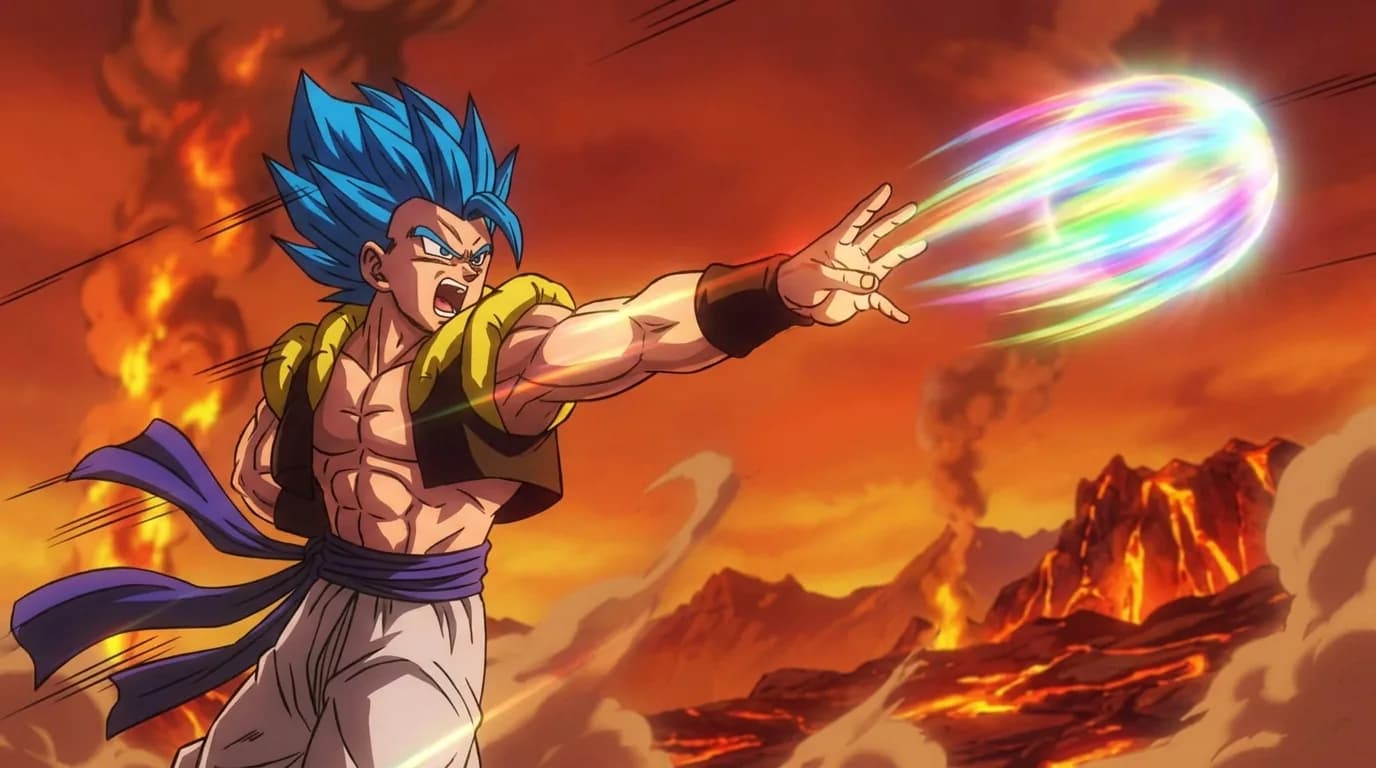
TechniqueGogeta's signature finishing move, a dazzling combination of prismatic physical strikes followed by a rainbow energy sphere that purifies evil on contact. Also known as Soul Punisher.
Rainbow Violence
The Stardust Breaker is one of the most visually spectacular techniques in the entire Dragon Ball franchise. Gogeta opens with a barrage of shimmering, multicolored physical strikes, warping behind his opponent to deliver devastating knee strikes to the back of the neck before launching them skyward with a backflipping kick. After landing, he raises one hand above his head and generates a sphere of shifting rainbow light. He then either crushes it in his palm and flings the scattered energy forward, or hurls the intact sphere directly at the target. The resulting explosion is enormous and carries the unique property of purifying malevolent energy from its victim.
In the Funimation dub of Fusion Reborn, Gogeta warns Janemba that "every force you create has an echo" and that his own evil energy will be his undoing. This implies the technique deals damage proportional to the darkness within the target's soul. While the original Japanese dialogue does not include this detail, Dragon Ball Super Card Game later reinforced the idea by naming the technique "Soul Punisher, the Cleansing Light."

Erasing Janemba
The Stardust Breaker makes its debut in Dragon Ball Z: Fusion Reborn. After Goku and Vegeta finally perform the Fusion Dance correctly, Super Gogeta appears before the monstrous Janemba. Pikkon had been holding Janemba off and getting beaten badly for his trouble. Gogeta wastes no time, rushing Janemba with the full Punisher Drive combo before finishing with the rainbow sphere. The attack completely obliterates Janemba, and the evil energy that had corrupted the young ogre Saike Demon is purged entirely, restoring him to his original harmless self.
The Broly Movie Comeback
Years later, Super Saiyan Blue Gogeta brings the Stardust Breaker back in Dragon Ball Super: Broly. After dodging Broly's Gigantic Breath, Gogeta hammers him in the back with multiple God Punisher blasts before capping it off with a full Stardust Breaker. The prismatic explosion is massive, and while it does not destroy Broly outright (he's far from evil, just uncontrollably enraged), it deals serious damage to the Legendary Super Saiyan.
Related Reading
See all
Namek Has No Women, and Piccolo Pulls Anyway
There are no women on Namek. That isn't an oversight, it's the biology. Why we handed Piccolo the one thing his own species rules out, and why it had to be trap soul....
1000 Times Over: Who Is John Dragon Ball Singing To?
Dragon Ball handed us a protagonist with no history and the internet named him John Dragon Ball. So we built him somebody to talk to....
A Legacy of Sparkle
The Stardust Breaker has become one of the most iconic fusion techniques in the franchise, largely because Gogeta himself appears so rarely. Every appearance carries weight. The technique's visual identity, with its rainbow color palette and purifying properties, sets it apart from the standard ki blasts and beams that dominate Dragon Ball combat. It suggests that fusion produces something qualitatively different, not just stronger energy but energy with a fundamentally different nature.
This concept connects to Gogeta's use of positive energy against Omega Shenron's Negative Karma Ball in Dragon Ball GT, reinforcing the idea that Gogeta's power carries a cleansing, purifying quality that other warriors simply cannot replicate.
Frequently Asked Questions
What does the Stardust Breaker do in Dragon Ball?
The Stardust Breaker is Gogeta's signature finishing move, a dazzling combination of prismatic physical strikes followed by a rainbow energy sphere that purifies evil on contact. Gogeta opens with a barrage of shimmering, multicolored physical strikes, warping behind his opponent to deliver knee strikes and a backflipping kick. He then generates a sphere of shifting rainbow light, either crushing it in his palm to fling the scattered energy forward or hurling the intact sphere directly at the target.
Is the Stardust Breaker the same as Soul Punisher?
Yes, the Stardust Breaker and Soul Punisher are the same technique. The Dragon Ball Super Card Game named it "Soul Punisher, the Cleansing Light," reinforcing the idea that the attack deals damage proportional to the darkness within the target's soul. The Funimation dub of Fusion Reborn supports this reading with Gogeta's warning to Janemba that "every force you create has an echo."
What makes the Stardust Breaker so powerful?
The Stardust Breaker is uniquely powerful because of its purifying property, which deals damage proportional to the darkness within the target's soul. The technique completely obliterated Janemba in Fusion Reborn and purged the evil energy that had corrupted the young ogre Saike Demon, restoring him to his original harmless self. Its visual identity, with rainbow color palette and cleansing effect, sets it apart from the standard ki blasts that dominate Dragon Ball combat.
When did Gogeta first use the Stardust Breaker?
The Stardust Breaker debuted in Dragon Ball Z: Fusion Reborn after Goku and Vegeta finally performed the Fusion Dance correctly. Super Gogeta appeared before the monstrous Janemba, rushed him with the full Punisher Drive combo, and finished him with the rainbow sphere. The attack completely obliterated Janemba and purged the corruption from the Saike Demon ogre.
Did Gogeta use the Stardust Breaker in the Broly movie?
Yes, Super Saiyan Blue Gogeta brought the Stardust Breaker back in Dragon Ball Super: Broly. After dodging Broly's Gigantic Breath, Gogeta hammered him in the back with multiple God Punisher blasts before capping it off with a full Stardust Breaker. The prismatic explosion was massive and dealt serious damage to the Legendary Super Saiyan, though it did not destroy Broly outright because he is enraged rather than evil.
Sources & Information
Looking for more on Stardust Breaker? The Dragon Ball Wiki on Fandom has a dedicated page with community notes.
View on FandomThis content is original writing by Daddy Jim Headquarters based on the Dragon Ball anime series, manga, and official materials. Episode and chapter references are cited where applicable.
Rights holders
- Created byAkira Toriyama
- Published byShueisha
- Animated byToei Animation
All rights belong to their respective owners.
Character and scene imagery on this site is original artwork by Daddy Jim Headquarters, not screenshots or licensed imagery. Official cover art is used on three types of pages for editorial commentary:
- Movie pages: theatrical posters and key visuals, credited to Toei Animation and Shueisha.
- Game pages: official box art, credited to Bandai Namco, Atari, and other publishers.
- Manga chapter pages: Jump Comics volume covers, credited to Shueisha and Akira Toriyama.
Browse our episode guides:
Official resources:
Help Us Keep This Wiki Accurate
Daddy Jim Headquarters maintains this encyclopedia. If you spot an error, a translation issue, or something that doesn't look right, let us know.