
Seven years after the Cell Games, teenage Gohan stops a bank robbery in Satan City by going Super Saiyan, earning the label "Gold Fighter." He starts at Orange Star High School, meets Videl, Erasa, and Sharpner, and reveals his superhuman abilities during a baseball game before heading to Bulma for help.
The Scholar Who Punches Back
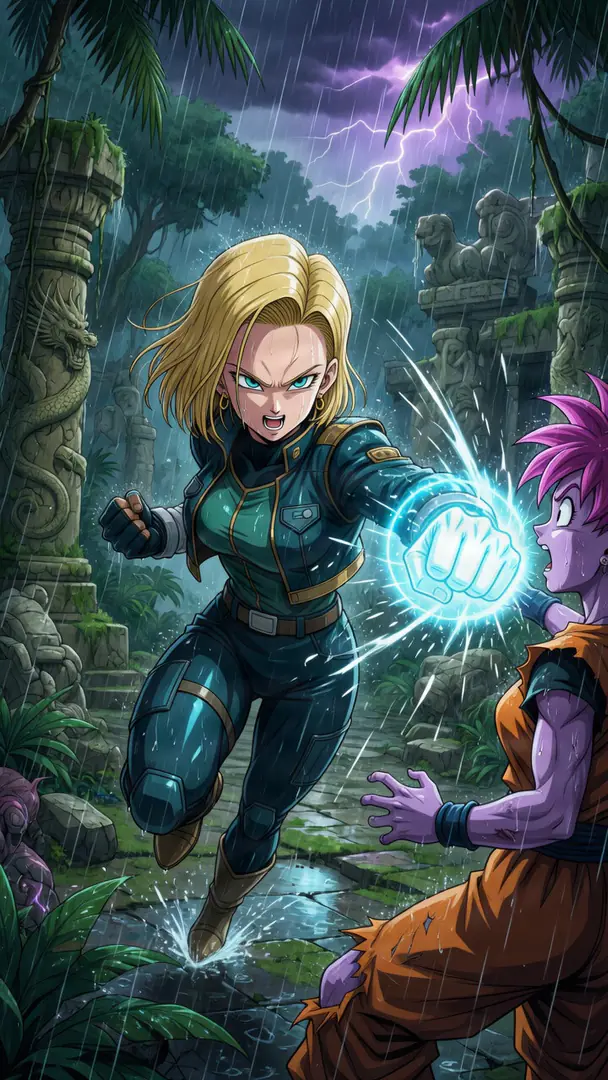
Seven years have passed since Cell's defeat. Gohan, now a focused teenager devoted to academics, flies toward Satan City on the Nimbus for his first day at Orange Star High School. The peaceful commute is interrupted when he spots a bank robbery in progress. Determined to help but unwilling to be recognized, Gohan transforms into a Super Saiyan and dispatches the criminals in seconds. He slips away before anyone can identify him, though an elderly bystander describes the "Gold Fighter" to a young woman named Videl, the daughter of Mr. Satan and an accomplished crime fighter in her own right.
At school, Gohan is introduced to his class and seated near Videl, Erasa, and Sharpner. Videl notices that Gohan's outfit matches the Gold Fighter's description, and her suspicions take root immediately. Gohan deflects her observation with a nervous laugh. Gym class escalates the situation. During a baseball game, Gohan leaps twenty-five feet to rob Sharpner of a home run and fires the ball to third base with enough force to singe the fielder's glove. When Sharpner pitches a fastball straight at Gohan's face in retaliation, the ball bounces off without leaving a mark.
After school, Videl trails Gohan through Satan City, but he escapes her easily by taking to the sky once he is out of sight. The problem is now clear: Gohan cannot keep using his powers without someone connecting him to the Gold Fighter. He heads straight to Capsule Corporation, confident that Bulma can help him find a solution.

Gohan's Impossible Balancing Act
This episode reintroduces Gohan not as a warrior but as a teenager trying to live a normal life, and the comedy flows naturally from the contradiction. He possesses enough power to destroy planets, yet his biggest concern is whether his classmates think he is weird. The baseball scene is a masterclass in dramatic irony. Every spectator sees an inexplicable athletic feat; the audience knows they are watching a half-Saiyan barely restraining himself. Chi-Chi's dream of Gohan as a scholar has technically come true, but the universe keeps dragging him back toward conflict. Even a routine commute to school turns into a crime-fighting detour.
Episode 200 and a Brand New Dragon Ball Z
This milestone marks the 200th episode of Dragon Ball Z and the debut of the "We Gotta Power" opening theme, which will remain until the series finale. It also introduces a new ending theme, new eyecatch cards, and a refreshed visual style that reflects the time skip. In terms of the cast, this is the first appearance of Videl, Erasa, and Sharpner, three characters who anchor the high school subplot throughout the Great Saiyaman Saga.
The episode's manga counterpart is titled "Herculopolis High," which is the localized name for Satan City. This is where Dragon Ball Z begins to feel more like a slice-of-life comedy than a battle series, at least temporarily.
Related Reading
See all
Krillin's on the Tinder: How the Ultimate Short King Survived the Height Filter
Tinder built a height filter. Dragon Ball built a five foot legend. What happened when we sent the ultimate short king into the modern dating hellscape....
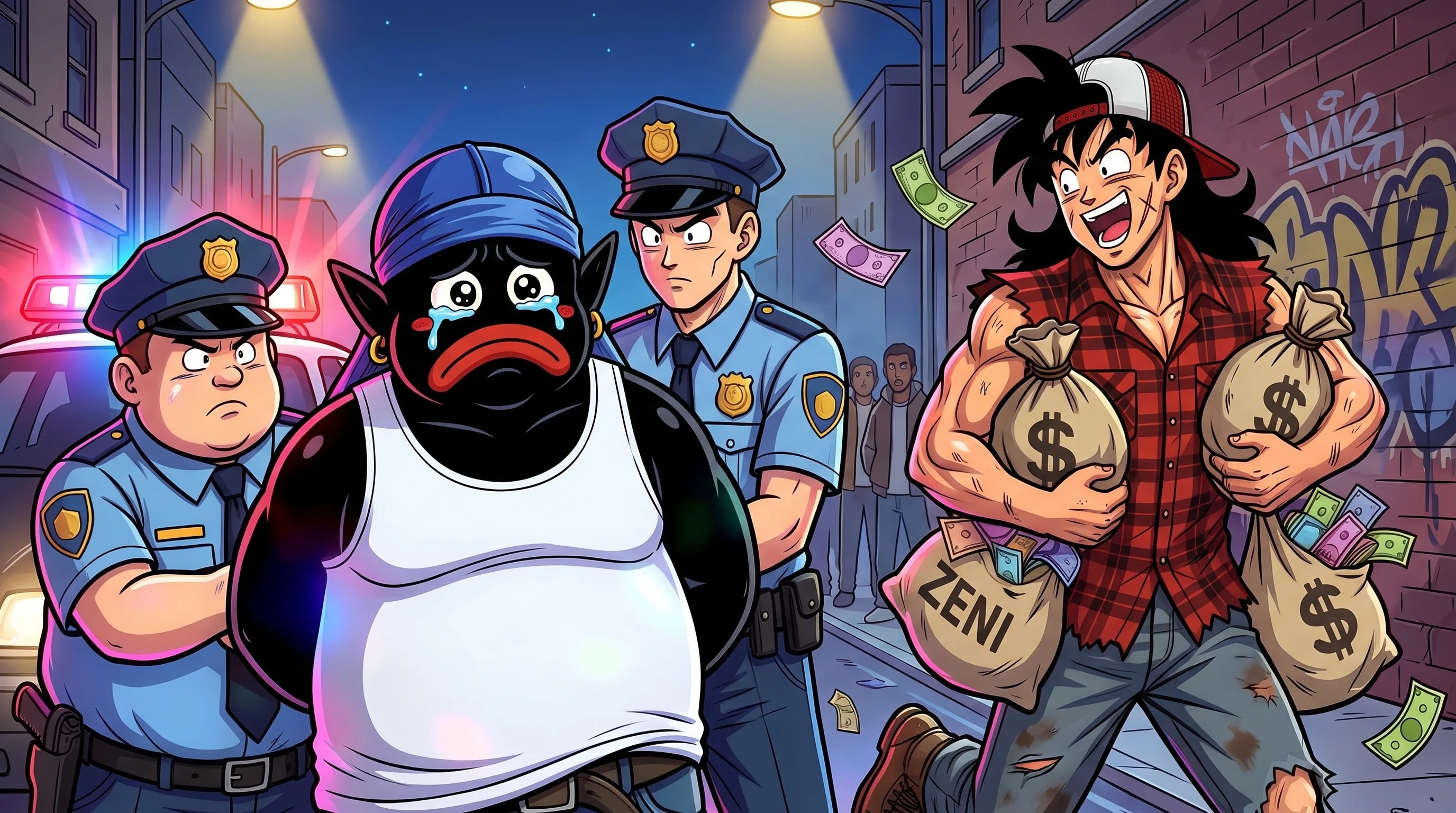
Infinite Zeni Glitch: When Yamcha Never Pays and Mr. Popo Always Does
The internet found an infinite money glitch. So did Yamcha. A smooth R&B track about the easiest money in the Dragon Ball world and the one man who keeps paying for it....
Frequently Asked Questions
What episode of Dragon Ball Z is Gohan Goes to High School?
"Gohan Goes to High School" is episode 200 of Dragon Ball Z. It airs during the Great Saiyaman Saga.
In what episode did Gohan go to high school?
Seven years after the Cell Games, teenage Gohan stops a bank robbery in Satan City by going Super Saiyan, earning the label "Gold Fighter." He starts at Orange Star High School, meets Videl, Erasa, and Sharpner, and reveals his superhuman abilities during a baseball game before heading to Bulma for help. Seven years have passed since Cell's defeat. Gohan, now a focused teenager devoted to academics, flies toward Satan City on the Nimbus for his first day at Orange Star High School.
Which characters appear in Gohan Goes to High School?
The episode features Cell, Gohan, Videl, Erasa, Sharpner, and Bulma. Cell carries the action across this Great Saiyaman Saga episode.
What is the standout moment in Gohan Goes to High School?
This episode reintroduces Gohan not as a warrior but as a teenager trying to live a normal life, and the comedy flows naturally from the contradiction. He possesses enough power to destroy planets, yet his biggest concern is whether his classmates think he is weird.
Why is Gohan Goes to High School important in Dragon Ball Z?
This milestone marks the 200th episode of Dragon Ball Z and the debut of the "We Gotta Power" opening theme, which will remain until the series finale. It also introduces a new ending theme, new eyecatch cards, and a refreshed visual style that reflects the time skip.
Sources & Information
Looking for more on Gohan Goes to High School? The Dragon Ball Wiki on Fandom has a dedicated page with community notes.
View on FandomThis content is original writing by Daddy Jim Headquarters based on the Dragon Ball anime series, manga, and official materials. Episode and chapter references are cited where applicable.
Character and scene imagery on this site is original artwork by Daddy Jim Headquarters, not screenshots or licensed imagery. Official cover art is used on three types of pages for editorial commentary:
- Movie pages: theatrical posters and key visuals, credited to Toei Animation and Shueisha.
- Game pages: official box art, credited to Bandai Namco, Atari, and other publishers.
- Manga chapter pages: Jump Comics volume covers, credited to Shueisha and Akira Toriyama.
Browse our episode guides:
Official resources:
Help Us Keep This Wiki Accurate
Daddy Jim Headquarters maintains this encyclopedia. If you spot an error, a translation issue, or something that doesn't look right, let us know.