Multi-Form
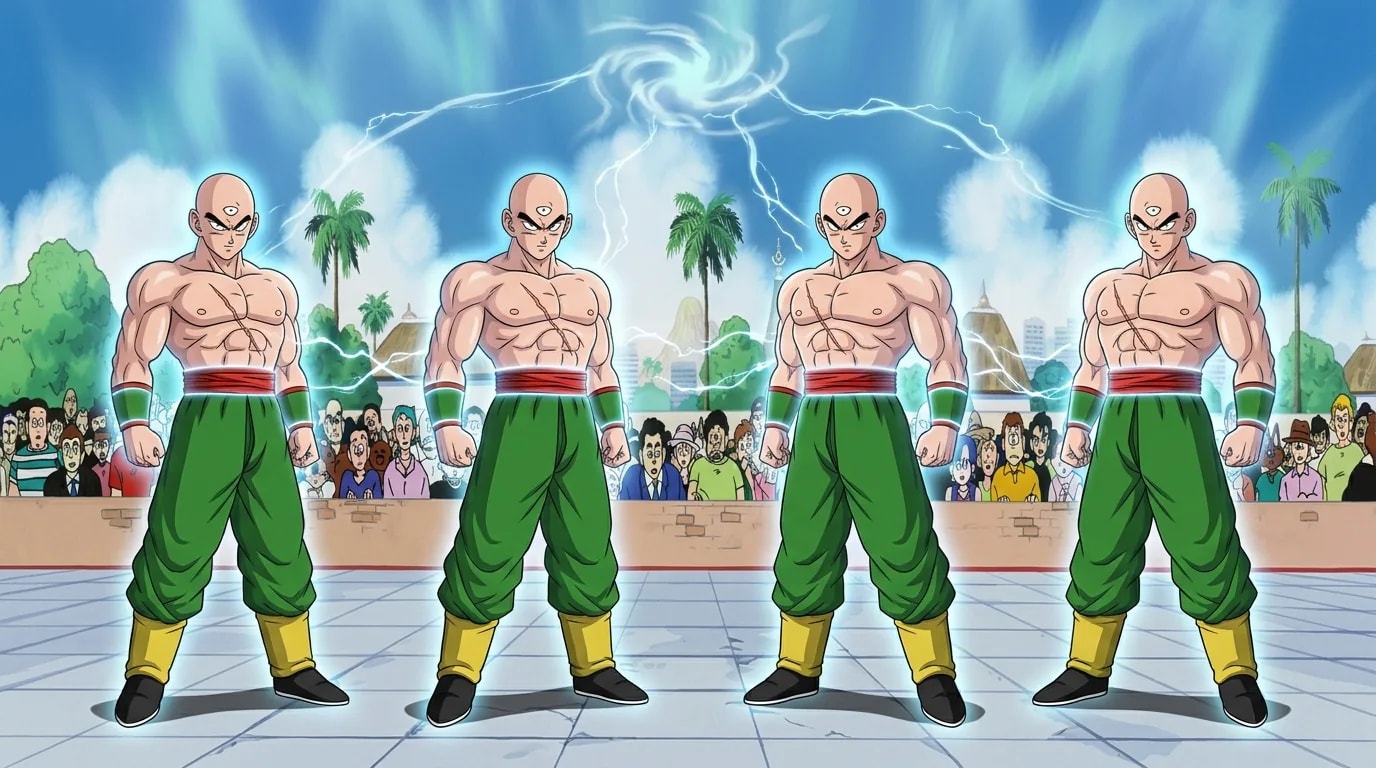
TechniqueA cloning technique that splits the user into four tangible copies, each capable of independent action. The trade-off is severe: each clone possesses only one quarter of the original's power.
Four Bodies, One Quarter Each
The Multi-Form is one of Dragon Ball's most tactically interesting techniques. Created by the Triclops race, it allows the user to physically split into four identical copies of themselves. Unlike the Afterimage Technique, which creates momentary visual illusions through speed, the Multi-Form produces tangible, independent bodies that can fight, speak, and use techniques on their own. The process involves the user powering up and splitting first into two, then each half splits again into four.
The catch is devastating. The user's total power is divided equally among the four clones. Each copy operates at roughly one quarter of the original's strength, speed, and durability. This makes the Multi-Form a high-risk strategy: four weak copies can be individually overwhelmed by a single strong opponent, and losing any clone means losing a portion of the user's combat effectiveness.

Tien's Tournament Gambit
Tien Shinhan first deployed the Multi-Form during his match against Goku at the 23rd World Martial Arts Tournament. Facing Goku's dramatically improved speed, Tien split into four copies to attack from all sides simultaneously. At first, the strategy worked, as Goku struggled to deal with four attackers at once. The four Tiens positioned themselves at the four corners of the ring and fired Ki Blast Cannons toward the center, forcing Goku to leap into the sky.
Goku's counter was brilliant. He hit all four Tiens with a Solar Flare, blinding every copy at once. Then, exploiting the Multi-Form's quarter-power weakness, Goku systematically knocked all four clones out of the ring one by one. The fight established a template for how Multi-Form encounters play out: impressive at first, vulnerable once the opponent figures out the power split.
Cell's Perfected Version
During the Cell Games, Cell demonstrated what appeared to be a superior version of the Multi-Form. His four copies did not seem to suffer the usual power reduction, with each clone fighting at something close to Cell's normal level. This gave Goku real trouble for a time, as he faced four opponents who were each individually dangerous. Goku eventually lured the clones above the ring and pummeled them into a pile, forcing them to recombine.
The discrepancy between Cell's version and Tien's is never fully explained, though one theory is that Cell was fighting well below his maximum at the time, meaning his clones simply used a larger percentage of their available power to appear as strong as his suppressed state. After the Buu Saga, Tien found a more practical use for the Multi-Form: he combined it with the Four Witches Technique to become an extremely efficient farmer, using multiple copies of himself with four arms each to harvest crops at incredible speed.
Related Reading
See all
Krillin's on the Tinder: How the Ultimate Short King Survived the Height Filter
Tinder built a height filter. Dragon Ball built a five foot legend. What happened when we sent the ultimate short king into the modern dating hellscape....
Infinite Zeni Glitch: When Yamcha Never Pays and Mr. Popo Always Does
The internet found an infinite money glitch. So did Yamcha. A smooth R&B track about the easiest money in the Dragon Ball world and the one man who keeps paying for it....
Frequently Asked Questions
What is the Multi-Form technique in Dragon Ball?
The Multi-Form is a cloning technique created by the Triclops race that splits the user into four tangible copies, each capable of independent action. Unlike the Afterimage Technique, which creates momentary visual illusions through speed, Multi-Form produces real bodies that can fight, speak, and use techniques on their own.
What is the downside of the Multi-Form?
The trade-off is severe: the user's total power is divided equally among the four clones. Each copy operates at roughly one quarter of the original's strength, speed, and durability, making the technique a high-risk strategy that can be punished by stronger individual opponents.
When did Tien first use Multi-Form against Goku?
Tien Shinhan first deployed the Multi-Form during his match against Goku at the 23rd World Martial Arts Tournament. Facing Goku's dramatically improved speed, Tien split into four copies that positioned themselves at the four corners of the ring and fired Ki Blast Cannons toward the center, forcing Goku into the sky.
How did Goku defeat Tien's Multi-Form?
Goku hit all four Tiens with a Solar Flare, blinding every copy at once. He then exploited the Multi-Form's quarter-power weakness and systematically knocked all four clones out of the ring one by one, establishing the template for how Multi-Form encounters tend to play out.
Why does Cell's Multi-Form seem stronger than Tien's?
During the Cell Games, Cell's four copies did not appear to suffer the usual power reduction. One theory is that Cell was fighting well below his maximum at the time, meaning his clones simply used a larger percentage of their available power to appear as strong as his suppressed state.
Sources & Information
Looking for more on Multi-Form? The Dragon Ball Wiki on Fandom has a dedicated page with community notes.
View on FandomThis content is original writing by Daddy Jim Headquarters based on the Dragon Ball anime series, manga, and official materials. Episode and chapter references are cited where applicable.
Character and scene imagery on this site is original artwork by Daddy Jim Headquarters, not screenshots or licensed imagery. Official cover art is used on three types of pages for editorial commentary:
- Movie pages: theatrical posters and key visuals, credited to Toei Animation and Shueisha.
- Game pages: official box art, credited to Bandai Namco, Atari, and other publishers.
- Manga chapter pages: Jump Comics volume covers, credited to Shueisha and Akira Toriyama.
Browse our episode guides:
Official resources:
Help Us Keep This Wiki Accurate
Daddy Jim Headquarters maintains this encyclopedia. If you spot an error, a translation issue, or something that doesn't look right, let us know.