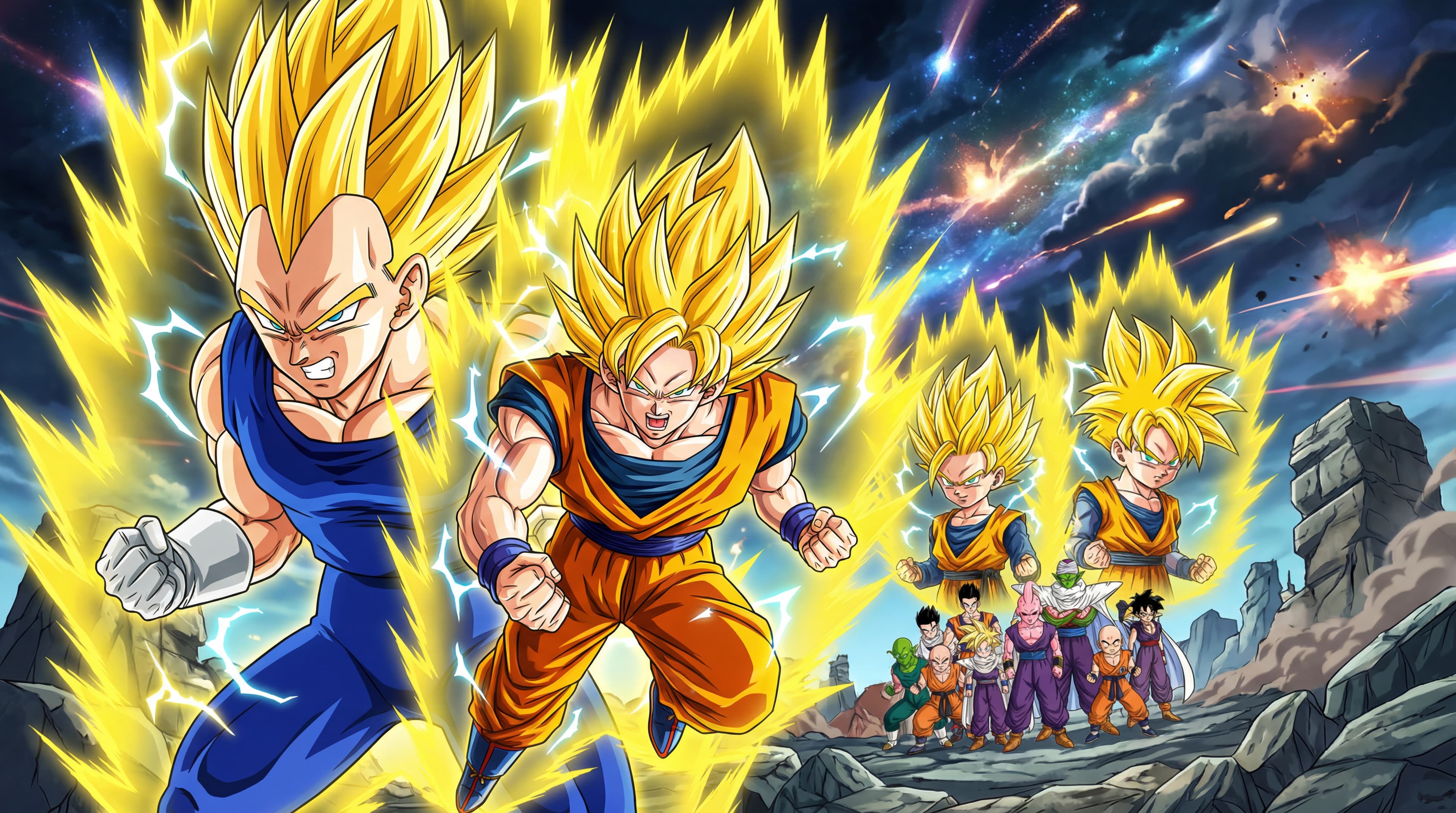
Kibito Kai explains the ancient history of the Supreme Kais and how each absorption shaped Buu into different forms. Kid Buu wastes no time, destroying the Earth with a single attack. Goku, Vegeta, Dende, Mr. Satan, and Bee barely escape to the Sacred World of the Kai.
The History of Majin Buu
Kibito Kai reveals the full history of Majin Buu to Old Kai, providing context for the terrifying creature now standing before the heroes. Millions of years ago, five Supreme Kais governed the universe. Kid Buu, the original form, attacked them without warning. He killed the North and West Supreme Kais outright. The South Supreme Kai fought valiantly and held his own for a time, but was eventually absorbed, transforming Kid Buu into a massive muscular version of himself.
When Kid Buu turned on the Grand Supreme Kai, the gentle leader sacrificed himself by allowing the absorption to happen, knowing it would dilute the monster's destructive focus. This final absorption created the fat, childlike Buu that Bibidi sealed away and Babidi later released. Every version the heroes have fought until now was a diluted iteration of the true original.
On Earth, Kid Buu demonstrates why the Supreme Kais feared him above all others. He generates an enormous energy sphere and hurls it at the planet. Vegeta deflects it, but Kid Buu immediately creates a second one ten times larger. With no way to stop it, Goku and Vegeta try to gather everyone and teleport away. They manage to grab only Dende, Mr. Satan, and Bee before Kibito Kai appears and transports them all to the Sacred World of the Kai. Earth is destroyed, taking Gohan, Goten, Trunks, Piccolo, and the unconscious Fat Buu with it.

A Universe of Lost Gods
The backstory of the Supreme Kais reframes the entire Buu Saga. These were not minor deities; they were the highest divine authorities in the universe, and Kid Buu annihilated most of them single-handedly. The Grand Supreme Kai's sacrifice was not a victory but a containment strategy. He traded his own existence to make Buu less dangerous, and even that compromise only lasted until Babidi undid it.
Vegeta's fury at Goku for failing to save their sons is raw and justified. The loss of Earth means the Dragon Balls are gone, making every death permanent unless an alternative can be found. Dende's mention of the Namekian Dragon Balls provides a thin thread of hope in an otherwise devastating situation.
Related Reading
See all
Namek Has No Women, and Piccolo Pulls Anyway
There are no women on Namek. That isn't an oversight, it's the biology. Why we handed Piccolo the one thing his own species rules out, and why it had to be trap soul....
1000 Times Over: Who Is John Dragon Ball Singing To?
Dragon Ball handed us a protagonist with no history and the internet named him John Dragon Ball. So we built him somebody to talk to....
A Rampage Begins
Kid Buu's destruction of Earth is not strategic or calculated. He does not threaten, negotiate, or warn. He simply attacks, and when the first attempt fails, he immediately escalates. This behavior confirms what Kibito Kai warned about: Kid Buu has no restraint, no patience, and no agenda beyond annihilation. He will keep destroying until nothing remains.
The fact that Kid Buu regenerates from Earth's destruction and begins teleporting from planet to planet looking for Goku and Vegeta transforms the conflict from a battlefield confrontation into a universal manhunt.
Frequently Asked Questions
What happens in "Earth Destroyed! The Initial Buu's Nefarious Strike"?
Kibito Kai explains the ancient history of the Supreme Kais and how each absorption shaped Buu into different forms. Kid Buu wastes no time, destroying the Earth with a single attack. Goku, Vegeta, Dende, Mr. Satan, and Bee barely escape to the Sacred World of the Kai.
Which Dragon Ball series is "Earth Destroyed! The Initial Buu's Nefarious Strike" from?
"Earth Destroyed! The Initial Buu's Nefarious Strike" is episode 157 of Dragon Ball Z Kai. Kibito Kai explains the ancient history of the Supreme Kais and how each absorption shaped Buu into different forms.
How does "Earth Destroyed! The Initial Buu's Nefarious Strike" begin?
Kibito Kai reveals the full history of Majin Buu to Old Kai, providing context for the terrifying creature now standing before the heroes. Millions of years ago, five Supreme Kais governed the universe. Kid Buu, the original form, attacked them without warning.
What is the middle act of "Earth Destroyed! The Initial Buu's Nefarious Strike"?
The backstory of the Supreme Kais reframes the entire Buu Saga. These were not minor deities; they were the highest divine authorities in the universe, and Kid Buu annihilated most of them single-handedly. The Grand Supreme Kai's sacrifice was not a victory but a containment strategy.
How does "Earth Destroyed! The Initial Buu's Nefarious Strike" end?
This behavior confirms what Kibito Kai warned about: Kid Buu has no restraint, no patience, and no agenda beyond annihilation. He will keep destroying until nothing remains. The fact that Kid Buu regenerates from Earth's destruction and begins teleporting from planet to planet looking for Goku and Vegeta transforms the conflict from a battlefield confrontation into a universal manhunt.
Sources & Information
Looking for more on Earth Destroyed! The Initial Buu's Nefarious Strike? The Dragon Ball Wiki on Fandom has a dedicated page with community notes.
View on FandomThis content is original writing by Daddy Jim Headquarters based on the Dragon Ball anime series, manga, and official materials. Episode and chapter references are cited where applicable.
Rights holders
- Created byAkira Toriyama
- Published byShueisha
- Animated byToei Animation
All rights belong to their respective owners.
Character and scene imagery on this site is original artwork by Daddy Jim Headquarters, not screenshots or licensed imagery. Official cover art is used on three types of pages for editorial commentary:
- Movie pages: theatrical posters and key visuals, credited to Toei Animation and Shueisha.
- Game pages: official box art, credited to Bandai Namco, Atari, and other publishers.
- Manga chapter pages: Jump Comics volume covers, credited to Shueisha and Akira Toriyama.
Browse our episode guides:
Official resources:
Help Us Keep This Wiki Accurate
Daddy Jim Headquarters maintains this encyclopedia. If you spot an error, a translation issue, or something that doesn't look right, let us know.