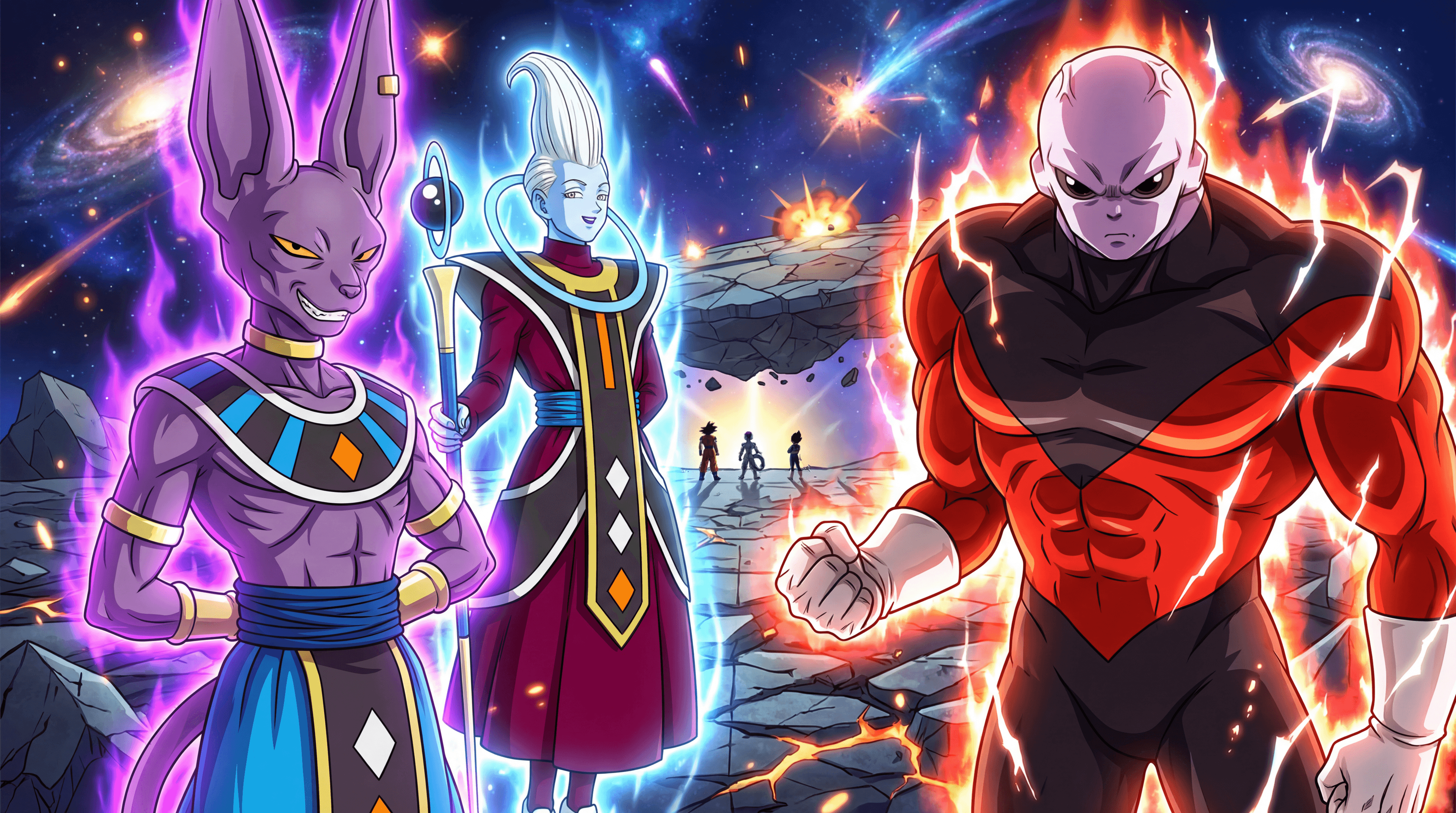
Goku Black recounts how he murdered Goku, Chi-Chi, and Goten in the original timeline, then explains the full scope of the Zero Mortal Plan. Consumed by rage and guilt, Future Trunks transforms into Super Saiyan Rage for the first time.
The Zero Mortal Plan Revealed
Goku Black lays out the full scope of his and Future Zamasu's scheme. After switching bodies with Goku using the Super Dragon Balls, he killed Gowasu to claim the Potara and become a Supreme Kai, granting access to the Time Rings. He then traveled to Future Trunks's timeline and recruited that era's Zamasu, who shared identical beliefs. Future Zamasu used the Super Dragon Balls to wish for immortality, and they destroyed the Dragon Balls afterward to prevent anyone from reversing their wishes. Goku Black then traveled to every universe and killed every Supreme Kai, which indirectly destroyed every God of Destruction as well, leaving them as the only divine powers in the multiverse.
The most devastating revelation comes when Goku Black describes how he killed Goku's family. After the body swap, Chi-Chi and Goten watched in confusion and terror as the person they thought was Goku transformed into someone else entirely. Zamasu, now wearing Goku's body, murdered them both. As he tells this story, Goku Black stabs Goku through Future Zamasu's immortal body, pinning him to a wall. The story pushes Goku into a blinding rage, and his power surge shatters Goku Black's energy blade.
The villains then turn their cruelty on Future Trunks, calling him the true sinner whose time travel created the conditions for their plan. They point to his saving of Goku from the heart virus and his destruction of the Androids as the chain of events that led to this catastrophe. Overwhelmed by guilt, rage, and determination, Future Trunks undergoes a new transformation: Super Saiyan Rage, a bulky, pupil-less form radiating immense power.

Weaponizing Guilt
Goku Black and Future Zamasu are not just powerful; they are psychologically manipulative. By blaming Future Trunks for the entire chain of events, they attack his deepest vulnerability: the knowledge that his time travel, while saving lives, also created unintended consequences. The accusation is partially true, which makes it all the more painful. Future Trunks did create alternate timelines through his interventions. But the villains conveniently ignore that Zamasu's hatred would have festered regardless, using selective logic to justify genocide. Vegeta's command to stop listening cuts through the manipulation, reminding Trunks that his actions saved billions.
Related Reading
See all
Namek Has No Women, and Piccolo Pulls Anyway
There are no women on Namek. That isn't an oversight, it's the biology. Why we handed Piccolo the one thing his own species rules out, and why it had to be trap soul....
1000 Times Over: Who Is John Dragon Ball Singing To?
Dragon Ball handed us a protagonist with no history and the internet named him John Dragon Ball. So we built him somebody to talk to....
Born from Fury
Super Saiyan Rage is unique among Saiyan transformations because it emerges not from battle pressure but from an overwhelming collision of emotions: grief for the murdered, guilt over his perceived role, and a desperate need to protect what remains. The form blends elements of several previous transformations with its bulky frame, wild hair, and mixed blue and golden aura. It exists only in the anime, marking one of the largest divergences between the anime and manga versions of this saga. Its appearance signals that Future Trunks has reached a level beyond what training alone could provide.
Frequently Asked Questions
What happens in "Zamasu's Ambition The Storied "Project 0 Mortals" of Terror"?
Goku Black recounts how he murdered Goku, Chi-Chi, and Goten in the original timeline, then explains the full scope of the Zero Mortal Plan. Consumed by rage and guilt, Future Trunks transforms into Super Saiyan Rage for the first time.
Which Dragon Ball series is "Zamasu's Ambition The Storied "Project 0 Mortals" of Terror" from?
"Zamasu's Ambition The Storied "Project 0 Mortals" of Terror" is episode 61 of Dragon Ball Super. Goku Black recounts how he murdered Goku, Chi-Chi, and Goten in the original timeline, then explains the full scope of the Zero Mortal Plan.
How does "Zamasu's Ambition The Storied "Project 0 Mortals" of Terror" begin?
Goku Black lays out the full scope of his and Future Zamasu's scheme. After switching bodies with Goku using the Super Dragon Balls, he killed Gowasu to claim the Potara and become a Supreme Kai, granting access to the Time Rings. He then traveled to Future Trunks's timeline and recruited that era's Zamasu, who shared identical beliefs.
What is the middle act of "Zamasu's Ambition The Storied "Project 0 Mortals" of Terror"?
Goku Black and Future Zamasu are not just powerful; they are psychologically manipulative. By blaming Future Trunks for the entire chain of events, they attack his deepest vulnerability: the knowledge that his time travel, while saving lives, also created unintended consequences. The accusation is partially true, which makes it all the more painful.
How does "Zamasu's Ambition The Storied "Project 0 Mortals" of Terror" end?
The form blends elements of several previous transformations with its bulky frame, wild hair, and mixed blue and golden aura. It exists only in the anime, marking one of the largest divergences between the anime and manga versions of this saga. Its appearance signals that Future Trunks has reached a level beyond what training alone could provide.
Sources & Information
Looking for more on Zamasu's Ambition The Storied "Project 0 Mortals" of Terror? The Dragon Ball Wiki on Fandom has a dedicated page with community notes.
View on FandomThis content is original writing by Daddy Jim Headquarters based on the Dragon Ball anime series, manga, and official materials. Episode and chapter references are cited where applicable.
Rights holders
- Created byAkira Toriyama
- Published byShueisha
- Animated byToei Animation
All rights belong to their respective owners.
Character and scene imagery on this site is original artwork by Daddy Jim Headquarters, not screenshots or licensed imagery. Official cover art is used on three types of pages for editorial commentary:
- Movie pages: theatrical posters and key visuals, credited to Toei Animation and Shueisha.
- Game pages: official box art, credited to Bandai Namco, Atari, and other publishers.
- Manga chapter pages: Jump Comics volume covers, credited to Shueisha and Akira Toriyama.
Browse our episode guides:
Official resources:
Help Us Keep This Wiki Accurate
Daddy Jim Headquarters maintains this encyclopedia. If you spot an error, a translation issue, or something that doesn't look right, let us know.