Orihime Inoue
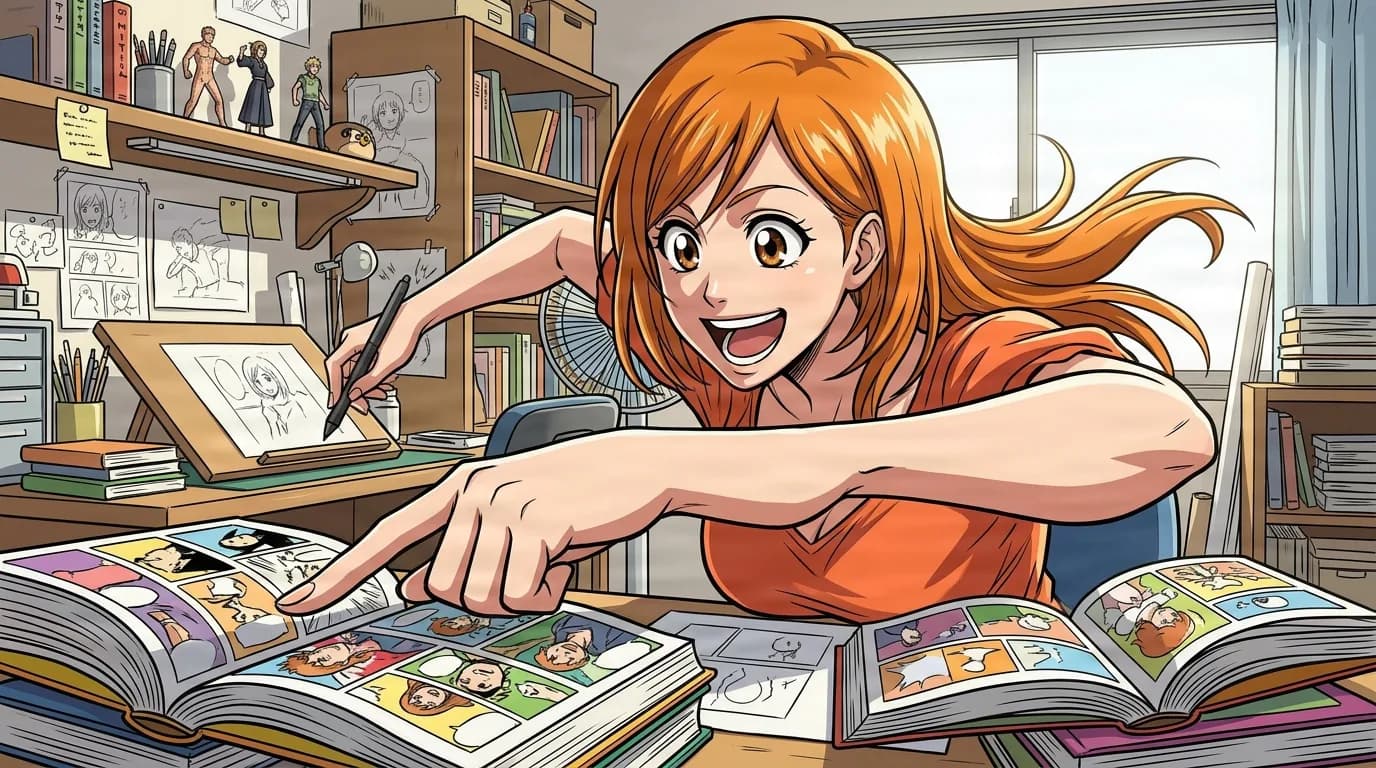
CharacterOrihime Inoue is a warm, dreamy Karakura High student whose grief for her late brother lives in a pair of hairpins that turn out to hold the Shun Shun Rikka, six fairy spirits with the power to reject reality itself. Devoted to Ichigo Kurosaki, she grows from bystander into healer, fighter, and eventually his wife.
Appearance
Of average height for a teenager, Orihime has brown eyes and wears her burnt-orange hair long enough to reach her waist, framed at the top by short bangs. Her build is slender but distinctly curvy. The flower-shaped hairpins tucked into her bangs were a gift from her late brother, so she keeps them on at all times except when she sleeps. Her look changes across the story: in the months after Aizen's downfall her hair grows fuller and wavier and she moves the clips to her collar, and a decade after Yhwach's defeat she ties her hair back and wears the pins once more.

Personality
Cheerful, warm, and irrepressibly optimistic, Orihime is also sensitive, kind, and fiercely independent. She often comes across as dreamy or scatterbrained, drifting off mid-thought, which sits oddly against her record as one of the top students in her year, kept high partly because slipping grades would cut the allowance her relatives send. She belongs to the handicrafts club, has a wildly overactive imagination, invents absurd games, and cooks meals so strange that others rarely share her enthusiasm for them. She is unusually attuned to what people are feeling, above all Ichigo Kurosaki, whom she can sense and read with uncanny precision and eventually comes to love. As the story goes on she hardens into someone determined not to be a burden in a fight, developing a technique that both guards and strikes.
Related Reading
See all
The Bleach Female Characters Nobody Can Agree On, Settled
Five Bleach female characters, ranked and settled. Yoruichi sits at number five, the spot nobody expects, and our number one is an Arrancar with a soft heart....
Naruto vs Luffy: Does the Fight Change if Luffy Tickles Hinata?
Naruto vs Luffy with the twist nobody asked for: Luffy tickled Hinata on date night, and she kind of liked it. We break down the whole fight and commit to a winner....
History
Orihime and her older brother Sora grew up under abusive, quarreling parents. When Sora turned eighteen he fled with the three-year-old Orihime and raised her himself. The two lived contentedly for nine years despite the teasing she drew for her unusual hair color. Sora gave her a pair of hairpins, which she at first rejected as too childish, and he died that very day. From then on she wore them daily and prayed for him, a habit that eased once she befriended Tatsuki Arisawa. She has lived alone in Karakura Town ever since, supported from afar by a distant aunt.
Her spiritual life begins when a Hollow's attack pushes her to awaken the Shun Shun Rikka, the six flower spirits sleeping in her hairpins. Pulled into the world Ichigo now moves through, she trains her new powers and joins the mission into Soul Society to rescue Rukia Kuchiki, taking her place among his close circle of allies.
During the war against Sōsuke Aizen's Arrancar, Orihime is carried off to Hueco Mundo and held in the fortress of Las Noches, where much of her role becomes mending the wounded while enduring captivity under Ulquiorra Cifer. Her rejection powers, able to undo injury and even death, make her as much a target as an asset.
By seventeen months past Aizen's fall, she has grown far steadier in combat and swears, alongside Sado, to be strong enough not to weigh Ichigo down. She stands with his group through the Thousand-Year Blood War against Yhwach's Wandenreich. In the years that follow she marries Ichigo Kurosaki, and the two have a son named Kazui.
Her signature power, the Shun Shun Rikka, takes the form of six named fairy spirits housed in her hairpins and visible only to the spiritually aware. By combining them in different arrangements she can reject phenomena, denying or reversing events to attack, to shield, or to heal. Aizen claimed the ability was in truth awakened by the Hōgyoku in answer to her wish for strength. Beyond that gift she carries a high, golden reiatsu, sharp spiritual senses, and, thanks to Tatsuki's training, a respectable hand in unarmed combat.
Frequently Asked Questions
Who does Orihime end up with?
Orihime Inoue marries Ichigo Kurosaki in the years after the war with Yhwach, and the two have a son named Kazui.
What is Orihime's true power?
Orihime's signature power is the Shun Shun Rikka, six named fairy spirits living in her hairpins that let her reject phenomena, denying or reversing events to attack, shield, or heal.
What are the Shun Shun Rikka?
The Shun Shun Rikka are six named fairy spirits that live in Orihime's hairpins, visible only to the spiritually aware. By combining them in different arrangements, she can reject phenomena to attack, shield, or heal.
Where did Orihime get her hairpins?
Orihime's flower-shaped hairpins were a gift from her older brother Sora, who died the same day he gave them to her. She has worn them daily ever since, praying for him.
What happens to Orihime during the war with Aizen's Arrancar?
Orihime is abducted to Hueco Mundo and held in the fortress of Las Noches, where she spends much of her captivity healing the wounded under the watch of Ulquiorra Cifer.
Sources & Information
Looking for more on Orihime Inoue? The Bleach Wiki on Fandom has a dedicated page with community notes.
View on FandomThis content is original writing by Daddy Jim Headquarters based on the Bleach anime series, manga, and official materials. Episode and chapter references are cited where applicable.
Rights holders
- Created byTite Kubo
- Published byShueisha
- Animated byStudio Pierrot
All rights belong to their respective owners.
Character and scene imagery on this site is original artwork by Daddy Jim Headquarters, not screenshots or licensed imagery. Official cover art is used on three types of pages for editorial commentary:
- Movie pages: theatrical posters and key visuals, credited to Studio Pierrot and the production committee.
- Game pages: official box art for the Bleach console and mobile games, credited to Bandai Namco and other publishers.
- Manga chapter pages: Jump Comics volume covers, credited to Shueisha and Tite Kubo.
Official resources:
Help Us Keep This Wiki Accurate
Daddy Jim Headquarters maintains this encyclopedia. If you spot an error, a translation issue, or something that doesn't look right, let us know.